
Halušky - Slovak Potato Dumplings with Bryndza
- Preparation time
- 20 minutes
- Total time
- 40 minutes
- Yield
- 4 servings

Explore traditional Slovak recipes, from potato dumplings and hearty soups to regional baking. Discover comforting everyday meals and festive dishes to make at home.
Region: Bratislavský kraj

Region: Žilina Region

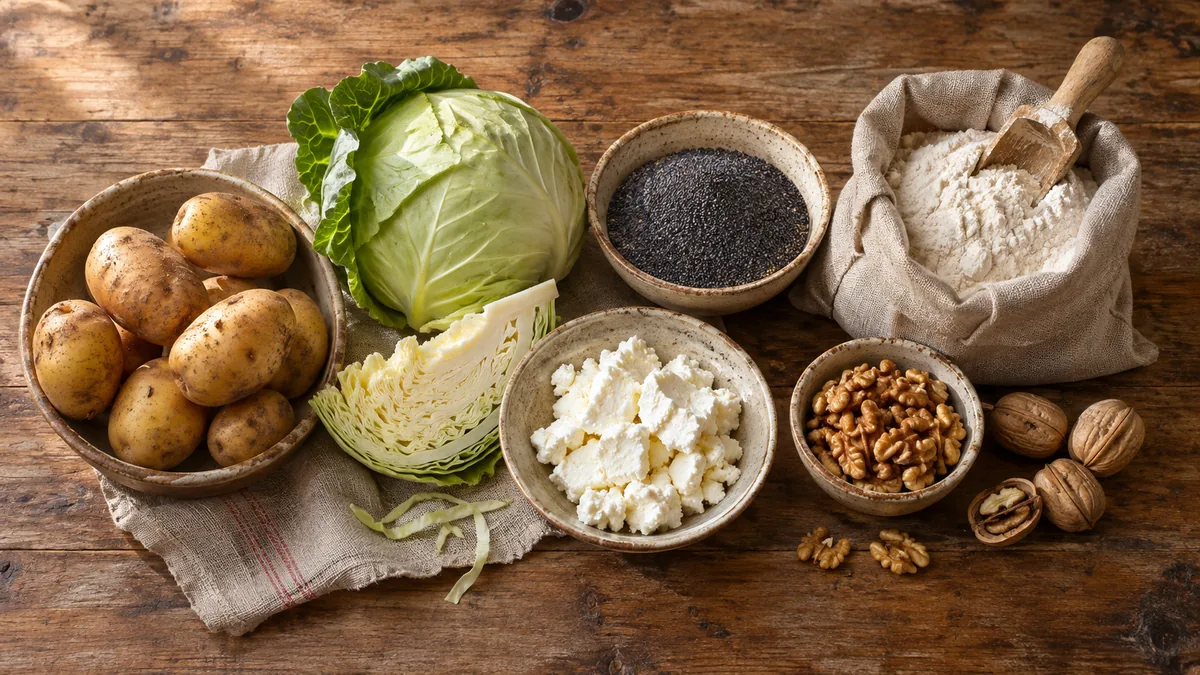
Slovak home cooking draws on the sheep pastures of the Carpathians as well as the grain-growing lowlands. Sheep cheese brings a sharp, salty note to soft potato doughs, while cabbage can be used fresh or fermented for meals through the colder months. Flour and potatoes give the cook several ways to stretch a meal, from boiled doughs to savoury baking. Poppy seeds and walnuts belong to a different side of the kitchen, where the filling often gives sweet pastries their character.
Traditional Slovak cuisine reflects the contrast between the Carpathian mountains and the warmer agricultural lowlands. Potatoes, cabbage and dairy products became three of its most important everyday ingredients, alongside grains, legumes, pork and seasonal vegetables. Sheep farming created a particularly strong tradition of bryndza and other sheep's milk cheeses.
Bryndzové halušky, small potato dumplings mixed with bryndza and usually topped with bacon, are the best-known Slovak dish. Other traditional foods include strapačky with sauerkraut, potato lokše, cabbage soups, bean soups, dumplings, filled yeast cakes and dishes based on sour milk and cheese.
For centuries, the territory of present-day Slovakia formed part of the Kingdom of Hungary and later the Habsburg monarchy. Slovak cooking therefore developed in continuous exchange with Hungarian, Austrian, Czech, Polish, Ruthenian and Balkan food traditions. Mountain communities relied more heavily on sheep farming, potatoes, cabbage and preserved foods, while the fertile southern regions produced more grain, fruit, vegetables and wine.
The shared twentieth-century history of Czechoslovakia increased culinary exchange between Czech and Slovak households, but the two cuisines retain clear regional differences. Slovak cooking remains particularly associated with bryndza, sheep dairy products and the food traditions of the Carpathian countryside.
Liptov, Orava and other northern and central mountain areas are strongly associated with sheep's milk products. Bryndza, smoked and fresh sheep cheeses, potatoes, cabbage and simple dumpling dishes developed naturally in communities where pastoral farming played a major economic role.
Lower and warmer areas have stronger grain, wine and goose traditions. Cabbage dishes, lokše and richer meat preparations are common, and vineyards extend along the southern slopes of the Carpathians and into the Slovak part of the Tokaj wine region.
Slovak baking includes yeast cakes filled with poppy seed, walnuts, quark or plum jam. Skalický trdelník is a protected regional specialty from Skalica, while many other cakes and filled breads are associated with Christmas, Easter, weddings and village celebrations.