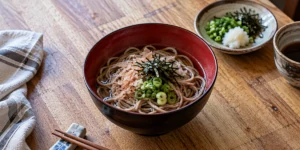
Wanko Soba: Traditional Iwate-Style Buckwheat Noodles
Region: Iwate Prefecture, Tohoku
- Preparation time
- 15 minutes
- Total time
- 25 minutes
- Yield
- 4 servings

Region: Iwate Prefecture, Tohoku
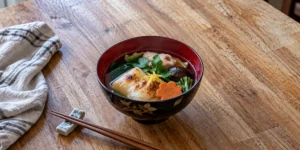
Region: Kanto, Tokyo
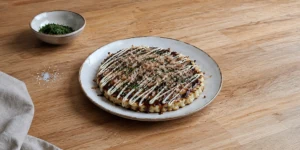
Region: Kansai, Osaka
Traditional Japanese cuisine, broadly described by the term washoku, places strong emphasis on seasonality, balance and the character of individual ingredients. Rice, vegetables, seafood, seaweed, soy products, noodles, pickles and dashi form the foundation of many meals. Fermented foods such as miso, soy sauce and pickles add depth, while dashi made from kombu, dried bonito or other ingredients provides the umami-rich base for numerous soups and simmered dishes.
Washoku was added to UNESCO's Representative List of the Intangible Cultural Heritage of Humanity in 2013. The recognition concerns not one fixed menu but a set of food-related skills, traditions and social practices, including respect for seasonal ingredients and the relationship between food and annual celebrations.
Rice cultivation, fishing, preservation and fermentation shaped Japanese food over many centuries. Buddhist ideas and government restrictions affected meat consumption at different periods, particularly for certain land animals, but Japan was never completely meat-free. Seafood, vegetables and plant proteins nevertheless became especially important in many forms of traditional cooking.
Foreign contact also changed Japanese food. Portuguese and other European traders arriving in the sixteenth century contributed to new confectionery and frying traditions that were adapted in Japan. During the Edo period, growing cities supported foods that could be prepared and served quickly, including soba, sushi and tempura. After the Meiji Restoration, meat consumption became more visible and Western-inspired yōshoku dishes developed alongside older washoku traditions.
Eastern and western Japan developed different preferences, although the division should not be treated as absolute. Kanto cooking commonly uses darker koikuchi soy sauce and strong bonito-based flavors, while Kansai cooking often emphasizes lighter-colored seasoning and kombu-rich dashi. These differences can be seen in noodle broths, simmered foods and regional styles of sushi.
Hokkaido is known for seafood, salmon, dairy products, potatoes, corn and dishes suited to its colder climate. Kyushu has its own ramen, shochu, chicken, pork and seafood traditions. Okinawan food developed within the former Ryukyu Kingdom and shows connections with China, Southeast Asia and later mainland Japan; pork, bitter melon, tofu, seaweed and sweet potatoes are characteristic ingredients.
Between these regions are hundreds of local specialties known as kyōdo ryōri. Japanese cuisine is therefore much broader than sushi and ramen: it is a network of regional cooking traditions shaped by local climate, agriculture, fisheries and history.