
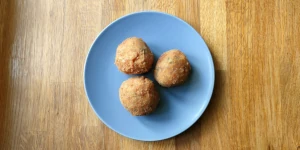
Arancini / Arancine: Sicilian rice balls
Today we’d like to share with you the history and secrets of one of Italy’s most beloved delicacies-arancini. It’s a dish that fully embodies a love for Italian cuisine, a passion for experimentation, and a commitment to local traditions.
Arancini is a culinary marvel that has come to us straight from Sicily. The name itself derives from the word arancia, meaning orange. Why this zesty citrus reference? It’s all due to their characteristic round shape and golden color, which bears a striking resemblance to the fruit. In reality, however, you won’t find a single gram of orange in them-these are small, crispy works of art made from rice.
They’re perfect as a hot snack at parties or as street food, but they can also easily serve as a filling main course. It’s a dish that always catches the eye, offering an unforgettable taste experience and a perfect blend of aesthetics and flavor.
A bit of history: Where do arancini really come from?
It’s hard to pinpoint the exact origin of arancini. There’s no point in searching the historical records for a specific date or the name of the creator. What’s more, in Sicily alone, several cities lay claim to being the "birthplace" of this dish-naming just one without offending the others borders on the impossible. It is therefore safest to stick to the version that the entire island is simply its cradle.
Most culinary historians, analyzing the ingredients (primarily the presence of saffron in classic recipes), assume the dish has early medieval origins. The most likely theory links the origin of the rice balls to the period of Arab rule in Sicily, which lasted from the 9th to the 11th century. The Arabs commonly used rice and saffron in their cuisine and formed balls with the addition of lamb.
Another theory holds that the evolution of arancini into the form we know today (that is, with a crispy coating) took place in Sicilian courts in the 12th century during the reign of King Frederick II. The golden, compact, deep-fried form was not only a symbol of wealth (saffron!), but above all an extremely practical solution-the crispy breadcrumb crust protected the interior and made it easier to transport food during long royal hunts and journeys.
Interestingly, the first documented mention of arancini appeared as late as 1857 in Giuseppe Biundi’s Sicilian-Italian dictionary. There, however, they were described as... "a sweet rice dish shaped like an orange." Today, arancini has evolved into the undisputed king of street food in Italy and far beyond its borders.
Where do people eat arancini? The famous debate over shape and name.
Although you can eat arancini today in Rome, Milan, and even in New York or London, southern Italy remains their undisputed kingdom. In Sicily itself, however, this dish is the subject of a fierce cultural dispute between the east and west of the island.
- Palermo (western Sicily): Here, they are referred to in the feminine form-arancina (plural: arancine). They have a perfectly round shape, actually resembling an orange.
- Catania (eastern Sicily): The people of Catania use the masculine form-arancino (plural: arancini). Furthermore, they shape them into a distinctive cone or teardrop shape, which is meant to pay homage to Mount Etna, the volcano towering over the city.
This dish, in a slightly modified form, has also gained popularity in the Campania region (Naples), where smaller, fried rice balls are called pall'e riso and are a staple of the local fritto misto (assorted fried snacks).
Local Varieties: What’s Hidden Under the Crispy Crust?
What makes arancini truly unique is their endless variety. While the base is the same, the filling varies depending on the province and the chef’s creativity. Each variety has its own unique character:
- Al Ragù (The Absolute Classic): A traditional filling with a thick meat-and-tomato sauce, green peas, and stringy cheese (often caciocavallo or mozzarella).
- Al Burro (With Butter): An exceptionally creamy version filled with béchamel sauce, butter, pieces of cooked ham (prosciutto cotto), and cheese. This version is usually oval and elongated in shape to easily distinguish it from the meat-filled version.
- Alla Norma: A tribute to the cuisine of eastern Sicily. Inside, it features fried eggplant, a thick tomato sauce, and salted ricotta (ricotta salata)-just like in the famous Pasta alla Norma.
- Al Pistacchio: A version from Bronte, Sicily, famous for the best pistachios. The rice is enveloped in cheese and a thick, aromatic pistachio cream.
- Sweet Varieties: Drawing on records from 1857, in some cafés you can still find arancini stuffed with chocolate cream, gianduja, or dusted with powdered sugar.
How is this culinary masterpiece made?
As mentioned earlier, the main ingredient is properly cooked, sticky rice. Making arancini requires time, patience, and precision, but the end result is well worth every minute spent in the kitchen.
The process begins with cooking the rice (often in broth with saffron), which must then cool completely. The next step is shaping: selected filling ingredients-tomato sauce, ground meat, peas, vegetables, or seafood, seasoned with fresh basil or oregano-are placed in a hollow in the rice. The whole thing is carefully shaped into a round (or cone-shaped) ball. The arancini are then dipped in a thin batter made of flour and water (called pastella), thoroughly coated in breadcrumbs, and deep-fried until golden brown.
The finished arancini are culinary perfection-extremely crispy on the outside and irresistibly soft, hot, and juicy on the inside.
Recipe information:
Ingredients for rice base
Ingredients for traditional meat sauce (Ragù)
Ingredients for breading and frying
Steps
1. Step
2. Step
3. Step
4. Step
5. Step
6. Step
7. Step
8. Step
9. Step
10. Step
Frequently Asked Questions (FAQ):
Why should risotto be cooled before shaping Arancini?
Cooling allows the starch in the rice to firm up, making it easier to form compact balls that hold their shape during breading and frying. Warm risotto is too soft and may fall apart when handled.
What is the best oil temperature for frying Arancini?
Maintain an oil temperature of about 175-190°C (350-375°F). This range ensures a crispy golden crust while preventing excessive oil absorption or uneven heating inside the rice ball.
How can I keep Arancini from breaking during frying?
Shape the rice firmly around the filling and coat evenly with flour, egg, and breadcrumbs. Chilling the formed balls before frying helps them stay compact and prevents splitting in hot oil.
Can Arancini be prepared ahead of time?
Yes, shaped and breaded Arancini can be refrigerated for up to 24 hours before frying. They can also be frozen and cooked directly from frozen, making them convenient for meal prep or entertaining.
What fillings work well in homemade Arancini?
Popular fillings include mozzarella, ragù, mushrooms, spinach, or peas. The recipe is flexible, allowing both classic and creative variations while maintaining the signature crispy coating and creamy interior.