
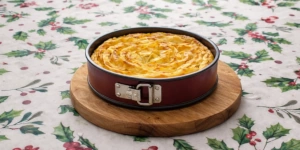
Bulgarian Banitsa (Баница) - Traditional Cheese-Filled Pastry
Banitsa (Bulgarian: Баница, sometimes transliterated as banica or banitza) is one of the most famous and characteristic pastries of Bulgarian cuisine, which has occupied a special place on Balkan tables for centuries. This layered pastry made of thin filo dough, usually filled with a mixture of eggs, yogurt, and white, salted cheese (sirene, similar to feta) and baked in the oven until golden brown, is both an everyday snack, breakfast, and a national culinary symbol of Bulgaria.
Banitsa is commonly eaten in Bulgaria for breakfast, as a snack, or as part of family meals. It is traditionally cut into pieces and served with yogurt, ayran, or boza, making it a versatile dish that is delicious both hot and cold.
The origin of the word "banitsa" comes from an Old Bulgarian term meaning to wrap or fold layers of dough, which perfectly captures the essence of its preparation - thin sheets of dough are layered, stuffed, and shaped before baking.
The history of banitsa is deeply rooted in Bulgarian culture and everyday life. Although it is difficult to pinpoint the exact moment of its creation, this pastry has appeared in documents and records on Bulgarian cuisine for centuries and is described as a dish found on the tables of both rural and urban populations. In Bulgarian tradition, banitsa grew out of simple techniques for combining local products - flour, eggs, cheese, and yogurt - into a filling, recognizable, and easy-to-prepare dish.
Banitsa also has strong symbolic meaning, especially during holidays. In many homes, Bulgarians prepare a special version of banitsa for New Year's or Christmas, placing small symbols of good luck in its layers, such as pieces of lilac twigs, coins, or notes with wishes, which are supposed to bring health, happiness, love, or success to those who find them in their pieces. After baking, banitsa is cut into as many pieces as there are family members, with additional pieces for the house and spiritual guardian, making it part of family ceremonies and New Year traditions.
In addition to the classic version with sirene cheese, there are also many regional variations of banitsa. In some parts of Bulgaria, the filling may include spinach (spanachnik), pumpkin (tikvenik), cabbage, rice, and even other vegetables or herbs. There are also sweet versions - e.g., with apples or other fruits - which appear on tables during various occasions and holidays, demonstrating the flexibility and creativity of Bulgarian hosts when working with this classic pastry.
Expert tips:
The Towel Steam Trick
Sprinkling the hot banitsa with a few drops of water and covering it with a towel for 10 minutes sounds counter-intuitive, but it is the ultimate secret to getting that authentic street-food texture: soft inside, crisp outside.
Handling Filo Dough Without Tears
Filo dries out in minutes. Always keep your unused sheets covered with a damp, clean cloth while you assemble the individual coils to prevent them from snapping.
Opt for Low Moisture Brines
If using feta as a substitute for sirene, drain it thoroughly on paper towels for 15 minutes before crumbling. Excess liquid in the cheese will cause the delicate pastry to turn mushy.
Storage:
How to store
Allow the pastry to cool completely to room temperature before placing it into a clean airtight storage glass container to prevent the crust from turning soggy.
Shelf life
Store leftovers safely in the refrigerator for up to 3 days. Reheat pieces at 350°F (175°C) for 8-10 minutes to bring back the crisp crispiness; avoid using a microwave.
Freezing instructions
Banitsa freezes exceptionally well when raw. Assemble the entire spiral wheel in an oven-safe foil pan, wrap tightly with double layers of plastic film, and freeze for up to 2 months. Bake directly from frozen at 375°F (190°C) for 45 minutes.
Recipe information:
Ingredients
Substitutions for ingredients:
- Sirene Cheese - High-quality French or Greek feta cheese is an excellent substitute. For a milder flavor, blend 70% feta with 30% firm whole-milk ricotta.
- Bulgarian Yogurt - Use whole milk Greek yogurt thinned out with a tablespoon of water or buttermilk to mimic the traditional tart profile.
- Butter - Lard or sunflower oil can be used for brushing the layers, offering an exceptionally flaky texture favored in traditional rural villages.
Preparation
1. Assemble the Base Liquid Batter
2. Prepare the Cheese and Fat Components
3. Preheat and Prep the Baking Dish
4. Layer and Fold the Filo Sheets
5. Apply the Top Glaze and Bake
6. The Steam Rest and Serving
Frequently Asked Questions (FAQ):
How do you keep Bulgarian banitsa layers crispy and not soggy?
Brush each layer of phyllo pastry lightly with butter or oil and avoid adding too much liquid filling. Baking at the right temperature ensures a golden, crisp texture without sogginess.
What type of cheese works best for authentic banitsa?
Traditional banitsa uses Bulgarian sirene cheese, but feta is the most common substitute. A mix of feta and ricotta can also create a similar creamy and salty flavor balance.
Why is mineral water sometimes added to the banitsa filling?
A small amount of sparkling water is sometimes used to make the filling lighter and help create a fluffier texture after baking, especially in modern variations of the recipe.
Can banitsa be prepared in advance and baked later?
Yes, banitsa can be assembled ahead of time and refrigerated for a few hours before baking. For best texture, avoid storing it too long before baking to prevent the phyllo from becoming too soft.
How should leftover banitsa be stored and reheated?
Store leftovers in the refrigerator in an airtight container for up to 2-3 days. Reheat in the oven rather than the microwave to restore its crispy layers.