
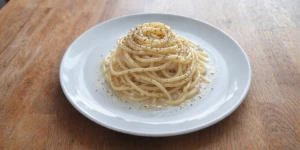
Cacio e Pepe - Classic Roman Pasta
Have you heard of an Italian pasta that uses almost nothing but can still be surprisingly difficult to get right? Cacio e pepe is one of the most recognizable Roman pasta dishes. The name literally means "cheese and pepper," which tells you most of what you need to know. Pasta, Pecorino Romano and freshly ground black pepper make up the dish, with a little pasta cooking water used to bring everything together.
Spaghetti are a classic choice in Rome, while tonnarelli have also become strongly associated with the dish. You will find both, along with versions made with rigatoni and other pasta shapes. What matters more than the exact shape is the sauce: it should coat the pasta without butter, cream or oil being needed to make it creamy.
The history is less simple than the recipe
You will often read that cacio e pepe was invented by shepherds who carried dried pasta, Pecorino Romano and black pepper during long journeys with their flocks. It is a nice story, but it should not be presented as a proven origin of the dish.
Pasta served with grated cheese has a much longer history in Italy. Cheese was one of the standard accompaniments to pasta for centuries. Pepper has a different story. It was once an expensive imported spice and was used to make otherwise simple foods more prestigious. As pepper became cheaper and more widely available, combinations of cheese and pepper also moved into everyday cooking.
The exact moment when the modern Roman dish became known as cacio e pepe is difficult to pin down. What is clear is that pasta with Pecorino Romano and black pepper became firmly established in Roman cooking and is now one of the dishes most closely associated with the city.
Only a few ingredients
The classic version does not need cream, butter or olive oil. Pecorino Romano provides both the strong sheep's milk flavor and the fat in the sauce. Black pepper provides the heat and aroma, while the pasta cooking water gives you the moisture needed to turn the finely grated cheese into a smooth coating for the pasta.
Pecorino Romano matters here. Parmigiano-Reggiano is sometimes added in modern versions to soften the flavor, but that changes the character of the classic Roman dish. Pecorino Romano is saltier, sharper and more assertive, which is exactly what cacio e pepe needs.
The difficult part is the temperature
The ingredient list is short, but cacio e pepe can go wrong very quickly. If Pecorino Romano gets too hot, its proteins tighten and the cheese can turn into stubborn clumps instead of a smooth sauce.
This is why it is safer to work with the cheese away from direct heat. Finely grate the Pecorino, mix it gradually with pasta water that has cooled slightly, and then combine it with the hot pasta. The pasta still carries plenty of heat, so you do not need a roaring burner underneath it while adding the cheese.
Why pasta water matters
The water left after cooking the pasta contains starch released from the pasta. That starch helps the cheese and water stay together as you toss them, giving the sauce a smoother texture and helping it cling to the pasta.
Use slightly less cooking water than you might for an ordinary pot of pasta if you want a more concentrated starchy liquid, and do not throw it away when you drain the pasta. Keep at least a cup nearby. You probably will not use all of it, but it is much easier to loosen a sauce than to rescue one after you have poured the cooking water down the sink.
The black pepper
Use black pepper that you grind yourself. It has much more aroma than pepper that has been sitting pre-ground in a jar. You can toast the pepper briefly in a dry pan before adding a little pasta water. This deepens its aroma, but keep the heat under control because burned pepper is no improvement.
Getting the sauce right
The finished cacio e pepe should look creamy, but there is no cream in it. The cheese should cling to every strand rather than sitting as a puddle at the bottom of the plate or forming rubbery lumps.
Work quickly, keep the cheese away from excessive heat and add the cooking water a little at a time. If the sauce becomes too thick, add another spoonful of water. If it is too loose, keep tossing the pasta for a moment. Serve it immediately because the sauce becomes thicker as it cools.
Recipe information:
Ingredients

Preparation
1. Prepare the ingredients
2. Cook the pasta
3. Toast the pepper
4. Add the pasta water
5. Finish cooking the pasta
6. Prepare the Pecorino
7. Make the sauce
8. Serve immediately
Frequently Asked Questions (FAQ):
How do you prevent Pecorino Romano from clumping in Cacio e Pepe?
Finely grate the cheese and keep it away from excessive heat. Mix it with pasta water that has cooled slightly, then combine it with the pasta off direct heat. Very hot water or a very hot pan can make the cheese proteins tighten into lumps.
Does authentic Cacio e Pepe contain cream or butter?
No. A classic Roman cacio e pepe uses pasta, Pecorino Romano, black pepper and pasta cooking water. Cream and butter are not needed for the traditional sauce.
What makes the sauce creamy without cream?
Finely grated Pecorino Romano is mixed with water from cooking the pasta and tossed vigorously with the hot pasta. Starch in the cooking water helps the sauce stay smooth and cling to the pasta.
Why does Cacio e Pepe sometimes turn grainy or separate?
The most common reason is too much heat. Pecorino Romano can form tight clumps when its proteins become too hot. Adding the cheese away from direct heat and using slightly cooled pasta water makes the process much more reliable.
Should I use pre-grated or freshly grated Pecorino Romano?
Freshly grated Pecorino Romano is the better choice because you can grate it very finely and it usually mixes more predictably into the sauce. Some packaged grated cheeses also contain additives that can affect their texture.
How much pasta water should I reserve?
For 200 g of pasta, reserve at least 250 ml before draining. You may only need part of it, but having extra makes it easy to loosen the sauce as you toss the pasta.
Is Cacio e Pepe really an old shepherd dish?
The shepherd story is widely repeated, but it should not be treated as a proven origin. Pasta with grated cheese has a very old history in Italy, while black pepper was once an expensive imported spice. The exact origin of the modern Roman cacio e pepe is not documented by one clear historical recipe or event.
Which pasta is traditional for Cacio e Pepe?
Spaghetti are a classic Roman choice, and tonnarelli are also strongly associated with cacio e pepe today. Rigatoni and some other shapes are found in Roman restaurants as well.
Can I use Parmigiano-Reggiano instead of Pecorino Romano?
You can make a cheese-and-pepper pasta with Parmigiano-Reggiano, but it will not have the same salty, sharp flavor as classic Roman cacio e pepe. Pecorino Romano is the characteristic cheese for this dish.