
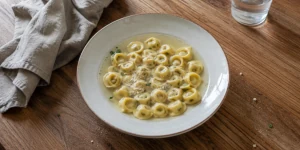
Cappelletti in Brodo - Traditional Italian Cappelletti in Broth
A traditional bowl of cappelletti in brodo
Cappelletti in brodo is one of the dishes most closely associated with the festive table of Emilia-Romagna, especially Romagna. The small stuffed pasta gets its name from its characteristic shape, which resembles a little hat. It is traditionally served in a rich, hot broth and is particularly associated with Christmas and other family celebrations.
There is no single filling used everywhere. In Romagna, cheese-based fillings made with ricotta or soft local cheeses and Parmigiano are traditional, while other parts of Emilia-Romagna also make cappelletti with mixed meat fillings. The shape and the habit of serving them in broth remain the common thread.
For a homemade version, the important part is keeping the pasta thin, using only a small amount of filling and sealing every cappelletto firmly. The finished pasta should be small enough to eat comfortably with a spoon and strong enough to hold together while it cooks.
Making cappelletti for a special meal
The broth is not just cooking liquid here. A good chicken or capon broth gives the pasta most of its final flavor. For a more traditional result, make the broth separately and keep it gently simmering while the cappelletti are prepared.
Fresh cappelletti only need a few minutes in the broth. Once cooked, they are served immediately with plenty of the hot broth and grated Parmigiano Reggiano.
Expert tips:
Keep the filling fairly dry
A wet filling makes the pasta difficult to seal and can cause the cappelletti to open in the broth. If the mixture feels loose, add a little more grated Parmesan or fine breadcrumbs.
Do not overfill the pasta
Use only a small amount of filling in each square. The pasta needs enough room around the filling to close tightly and form the little hat without stretching or tearing.
Keep the pasta covered
Cover the pasta sheets and finished cappelletti with a clean cloth while you work. Exposed fresh pasta dries quickly and becomes harder to seal.
Use a proper broth
The broth is a major part of the dish. A well-made chicken or capon broth gives a much better result than a weak stock because the cappelletti are served directly in it.
Storage:
How to store
Keep uncooked fresh cappelletti covered in the refrigerator and cook them within a day. Store cooked cappelletti and broth separately if you expect leftovers.
Shelf life
Cooked cappelletti in broth are best eaten the same day, but leftovers can be refrigerated for up to 2 days in a covered container.
Freezing instructions
Freeze uncooked cappelletti in a single layer on a floured tray until firm, then transfer them to a freezer container or bag. Cook them directly from frozen in gently simmering broth, allowing a little extra cooking time.
Recipe information:
For the pasta
For the filling
For the broth
To serve
Substitutions for ingredients:
- Capon broth - Good homemade chicken broth is a practical substitute and is commonly used for cappelletti in brodo.
- Mortadella - Leave it out and increase the minced meat slightly, or use another mild cooked pork sausage with a fine texture.
- Italian 00 flour - Use finely milled plain flour suitable for fresh pasta. The dough may need a slightly different amount of flour depending on the size of the eggs.
Preparation
1. Make the filling
2. Make the pasta dough
3. Roll the pasta
4. Shape the cappelletti
5. Heat the broth
6. Cook the cappelletti
7. Serve
Frequently Asked Questions (FAQ):
What region is cappelletti in brodo from?
Cappelletti are strongly associated with Emilia-Romagna, particularly Romagna, where they are traditionally served in hot broth during Christmas and other family celebrations.
Are cappelletti the same as tortellini?
No. They are related stuffed pastas but have different traditional shapes and regional fillings. Cappelletti are especially associated with Romagna and are commonly folded into a little hat shape.
Can I use cheese filling instead of meat?
Yes. Cheese-filled cappelletti are particularly traditional in Romagna. Ricotta or soft fresh cheese combined with Parmigiano, nutmeg and sometimes lemon zest makes a classic alternative to the meat filling.
How long should fresh cappelletti cook?
Small fresh cappelletti generally need only a few minutes in gently boiling broth. Around 3 to 4 minutes is typical, although the exact time depends on the thickness of the pasta and size of the cappelletti.
Can I freeze homemade cappelletti?
Yes. Freeze them uncooked in a single layer first so they do not stick together. Once firm, transfer them to a freezer container and cook them directly from frozen.
What should be served with cappelletti in brodo?
The traditional serving is simple: cappelletti, plenty of hot broth and grated Parmigiano Reggiano. The broth and pasta are the main event, so heavy side dishes are unnecessary.