
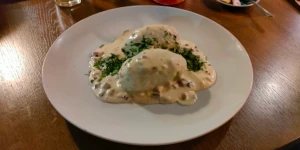
Cepelinai (Potato Dumplings with Meat)
When you step into a Lithuanian kitchen, something special happens-what you might call culinary magic. The air is filled with the aroma of caramelized onions and smoked bacon. My first encounter with cepelinai (often called Didžkukuliai) took place in a small, rustic tavern in Vilnius. A friend of mine ordered a plate of these giant, glossy potato dumplings. When I bit into that soft, springy potato crust, seasoned with pork sauce, I immediately felt right at home. Today, I’m sharing the secrets of this delicious dish with you so you can recreate it perfectly at home.
What is Cepelinai & Its Origins
Cepelinai is the undisputed national dish of Lithuania. These hearty, football-shaped potato dumplings are traditionally made from a precise mixture of raw grated potatoes and cooked mashed potatoes, stuffed with a spiced ground meat filling (or sometimes curd cheese). The name "Cepelinai" was adopted in the early 20th century because their distinct oval shape closely resembled the iconic German Zeppelin airships designed by Count Ferdinand von Zeppelin. Originally a rustic peasant food created to sustain hardworking farmers through brutal Baltic winters, Cepelinai evolved into a symbol of national identity and celebration, bringing families together for Sunday feasts across Lithuania.
What Does It Taste Like?
Eating Cepelinai is a multi-layered sensory experience. The outer shell is uniquely soft, dense, and slightly chewy-delivering the pure, comforting, earthy flavor of potatoes. Inside, the pork filling is incredibly juicy, infused with garlic, marjoram, and black pepper. The crowning glory is the rich, savory sauce, known as spirgai, made from crispy, smoky fried bacon and caramelized onions. When you combine a bite of the dough, the savory meat, the salty crunch of bacon, and the cool, tangy contrast of Lithuanian sour cream (grietinė), it creates a deeply satisfying, savory harmony of textures and temperatures.
Popular Variations
While the seasoned pork filling is the most traditional and widespread version, Lithuanian home cooks love to adapt this classic recipe. Here are the most popular variations you might encounter:
- Curd Cepelinai (Cepelinai su Varške): Stuffed with a mixture of dry curd cheese (tvorog or farmers cheese) seasoned with dried tarragon or mint, served with a sweet or savory sour cream sauce.
- Wild Mushroom Cepelinai: Filled with sautéed forest mushrooms (like chanterelles or porcini) and caramelized onions-a spectacular autumn favorite.
- Mixed Meat Cepelinai: Using a combination of ground pork, beef, and occasionally veal for a lighter, more complex meat filling.
What To Serve With Cepelinai
Because Cepelinai are incredibly rich and filling, they are served as a standalone main course. However, to complete the authentic Baltic dining experience, you should pair them with:
- Spirgai Sauce: A mandatory topping of finely diced bacon or pork belly fried with plenty of yellow onions.
- Sour Cream (Grietinė): High-fat (at least 20-30%) sour cream or crème fraîche to balance the heavy, smoky flavors.
- Gira (Kvass): A traditional fermented rye bread beverage that cuts through the richness beautifully.
- Cold Baltic Lager: A crisp, refreshing Lithuanian beer is the perfect adult beverage companion.
Expert tips:
The Golden Potato Ratio
Always use a 3:1 ratio of raw to cooked potatoes. The cooked potatoes provide starch gelatinization which acts as a binder, while the raw potatoes provide the classic dense, chewy Baltic texture.
Starch is Your Best Friend
Do not throw away the liquid from the squeezed raw potatoes too quickly. The white sediment at the bottom of the bowl is natural potato starch. Incorporating it back into the dough is the single best way to ensure your Cepelinai do not disintegrate in the pot.
Keep the Simmer Gentle
Never let the water boil aggressively once the Cepelinai are in the pot. High heat and violent bubbles will tear the starch bonds apart, causing your dumplings to fall apart into potato soup.
Preventing Oxidation
Raw grated potatoes turn brown or gray incredibly fast when exposed to air. Work quickly, and always stir in fresh lemon juice, ascorbic acid (vitamin C powder), or even a grated raw onion immediately to preserve that beautiful light potato color.
Storage:
How to store
Store leftover cooked Cepelinai in an airtight container in the refrigerator. Keep them separate from any leftover bacon sauce to maintain their structural integrity.
Shelf life
Cooked dumplings will keep well in the refrigerator for up to 3 days. To reheat, slice them in half lengthwise and fry them cut-side down in a skillet with butter until hot and golden-crispy-many locals argue they taste even better this way!
Freezing instructions
It is highly recommended NOT to freeze uncooked Cepelinai, as the raw potato dough will lose its moisture structure and turn black upon thawing. However, you can freeze cooked dumplings. Wrap them individually in plastic wrap, freeze for up to 1 month, and thaw in the fridge overnight before pan-frying to reheat.
Recipe information:
The Potato Dough
The Meat Filling
The Spirgai Sauce & Serving
Substitutions for ingredients:
- Russet Potatoes - King Edward or Maris Piper potatoes (UK) work brilliantly as they have a similar high starch content.
- Ground Pork - You can use a 50/50 mix of ground beef and pork, or a dry curd/farmers cheese filling mixed with egg yolk and a pinch of mint for a vegetarian option.
- Marjoram - If you cannot find dried marjoram, you can use dried oregano or thyme, though marjoram provides that distinct, sweet-woodsy Baltic flavor profile.
Preparation
1. Boil the Cooked Potato Portion
2. Grate the Raw Potatoes
3. Extract and Reserve the Starch
4. Mix the Dough
5. Prepare the Meat Filling
6. Shape the Dumplings
7. Prepare the Slurry Boiling Water
8. Boil the Cepelinai
9. Make the Spirgai Sauce
10. Serve Immediately
Frequently Asked Questions (FAQ):
Why do my Cepelinai float before they are fully cooked?
Like all dumplings, Cepelinai float once the air pockets inside expand and the starch cooks. However, because the raw meat filling takes longer to cook than the potato shell, you must continue to simmer them gently for 20-25 minutes after they rise to the surface.
Can I use pre-bought potato starch?
Yes! While collecting the natural starch from the squeezed potato juice is traditional, adding 2 to 3 tablespoons of high-quality store-bought potato starch is highly recommended to guarantee the dough binds properly.
Do I have to use a manual grater for the raw potatoes?
No. While purists use a manual metal grater, using a food processor with a fine grating disc or even a high-powered blender (pulsed carefully so it doesn't turn into juice) is a massive time-saver and works perfectly.
What is the best way to reheat leftover Cepelinai?
The absolute best way is to slice the cold dumplings in half lengthwise and pan-fry them in a generous amount of butter or leftover bacon fat until the exterior is crispy and golden brown, and the meat inside is hot.