
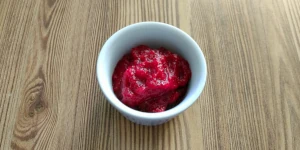
Ćwikła - beetroot addition to dishes
Today we will explore the secrets of one of the most characteristic additions to dishes - beetroot with horseradish. It is not only something that accompanies Poles during holidays and family celebrations. It is also a taste that corresponds to the tradition passed down from generations. Apart from holiday seasons, beetroot is also widely used as an addition to everyday dishes.
Beetroot is traditionally served as an excellent addition to meat, creating a harmonious whole on the Polish table.
History of Ćwikła
The history of ćwikła reaches deep into Polish cuisine. The earliest mention of this dish can be found in the work 'Life of an Honest Man' from 1567 by Mikołaj Rej. At that time, there was already a tradition of preparing beetroot, which proves how deeply rooted these flavors are in Polish culture. But, it is a more Slavic addition, although somewhat forgotten in many circles.
A similar salad, known as Salatrüben or Rote-Bete-Meerrettich, is also found in German cuisine as an appetizer for main courses. This proves the universality of this flavor and its role as a perfect addition to meat. Ćwikla, also known by its Slovak name 'cvikla'.
Recipe information:
Ingredients
Steps
1. Step
2. Step
3. Step
4. Step
Frequently Asked Questions (FAQ):
How can you balance the sharpness of horseradish in ćwikła?
You can reduce the intensity by adding a bit more beetroot, sugar, or even grated apple. These ingredients soften the pungent heat while preserving the characteristic flavor balance.
Is it better to boil or bake beetroots for ćwikła?
Both methods work well. Boiling is quicker and more traditional, while baking enhances the natural sweetness and results in a deeper, more concentrated flavor.
How long should ćwikła rest before serving?
It is best to refrigerate ćwikła for a few hours or overnight before serving. This resting time allows the flavors to fully develop and blend together.
How should ćwikła be stored to keep it fresh longer?
Store it in an airtight container in the refrigerator for up to 1-2 weeks. For longer storage, it can be preserved in sterilized jars and pasteurized.
What dishes pair best with ćwikła?
Ćwikła pairs well with roasted or grilled meats, cold cuts, sausages, sandwiches, and boiled eggs. Its sweet and spicy flavor adds contrast and enhances rich, savory dishes.