
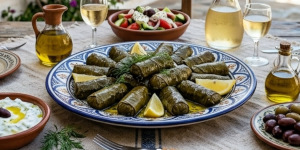
Dolmades - Greek Stuffed Grape Leaves
What are Greek Dolmades?
Dolmades are stuffed leaves found throughout Greek cooking. The best-known version uses grape leaves wrapped around a filling of rice, onion, herbs, olive oil and lemon, although meat-filled versions are also traditional.
This recipe is specifically for the meatless Greek version commonly called dolmadakia gialantzi. The small grape-leaf rolls are filled with rice, onion, dill and mint, cooked gently with olive oil and lemon, and usually served cool or at room temperature as a meze or appetizer.
Dolmades, Dolmadakia and Gialantzi
The Greek word dolmas (ντολμάς) refers to a stuffed preparation, while dolmades is the plural form commonly used in English for Greek stuffed leaves. Dolmadakia is a diminutive and literally refers to small dolmades.
The Dictionary of Standard Modern Greek traces dolmas to Turkish dolma. This reflects the long history of culinary exchange between Greek, Ottoman, Balkan and eastern Mediterranean cuisines rather than a dish belonging neatly to one modern national tradition.
The word gialantzi (γιαλαντζί) also comes from Turkish, from yalancı dolma, literally meaning a "false" or meatless dolma. In Greek usage, dolmadakia gialantzi specifically refers to grape leaves filled mainly with rice, herbs and olive oil rather than meat.
A shared eastern Mediterranean tradition
Stuffing vegetables and wrapping fillings in leaves has a long history across the Middle East, Anatolia, the Balkans and the eastern Mediterranean. It is difficult to identify one single place or people as the inventor of the practice.
Claims that Greek dolmades themselves originated specifically in ancient Persia are too definite for the available evidence. Persian, Arab, Mediterranean and later Ottoman cuisines all contributed to a broad family of stuffed and wrapped dishes, but the modern Greek grape-leaf dolma developed within centuries of interaction between these culinary traditions.
Historical evidence becomes much clearer during the Ottoman period. Research into the ethnobotany and history of sarma records that grape-leaf rolls were already commonly eaten in Istanbul in the sixteenth century. German traveller Hans Dernschwam, who visited between 1552 and 1555, described fresh grape leaves being sold for preparing stuffed rolls and noted meat-filled versions cooked with sour fruit.
By the seventeenth century, stuffed and wrapped vegetables had become an established part of Ottoman food culture. This wider tradition spread and evolved throughout territories that included much of the Balkans and Greece.
Dolmades in Greek cuisine
Dolmades are now firmly established in Greek cuisine and appear in many regional forms. Grape leaves are especially common, but Greek cooks also prepare stuffed cabbage leaves and other vegetables.
The fillings vary considerably. Some dolmades contain minced meat and rice and may be served warm with avgolemono, an egg-and-lemon sauce. Meatless grape-leaf dolmadakia are usually cooked generously with olive oil and lemon and are particularly suitable for serving as part of a meze table.
Official Greek tourism material also records dolmades as part of local island cuisine, including on Kalymnos, showing that the dish is deeply embedded in regional Greek food traditions rather than being limited to one area.
The filling for Dolmadakia Gialantzi
The characteristic filling is based on rice and a generous quantity of onion and fresh herbs. Dill and mint are especially typical, while parsley or spring onions can also appear in household recipes.
The rice is not fully cooked before the dolmades are rolled. It is briefly combined with the softened onion and then finishes cooking inside the grape leaves, absorbing olive oil, lemon and the juices released during simmering.
Why the Dolmades should not be rolled too tightly
Rice expands while cooking. If the grape leaves are wrapped too tightly, the filling can split the leaves or become compressed and dense.
Fold the lower part of the leaf over the filling, fold the sides inward and then roll toward the tip, forming a compact cylinder while leaving just a little room for the rice to expand.
Preparing grape leaves
Fresh young grape leaves should be briefly blanched until flexible. Leaves preserved in brine should be rinsed thoroughly and may also be blanched briefly if they are particularly salty or firm.
Choose intact leaves for rolling and reserve torn, large or tougher leaves for lining the bottom of the cooking pot. This layer helps protect the dolmades from direct heat.
Cooking the Dolmades
Arrange the rolls closely together with the seam facing downward. They can be placed in concentric circles and stacked in several layers if necessary.
Greek recipes traditionally place a heatproof plate upside down over the dolmades during cooking. The weight keeps the rolls in position and prevents them from opening while the rice expands.
Add olive oil, lemon juice and enough hot water to provide moisture for the rice. Bring the liquid briefly to a simmer, then reduce the heat and cook gently until the grape leaves are tender and the rice is fully cooked.
Olive oil and lemon
Olive oil is not merely a frying medium in this version. It is a major component of the dish and contributes to the characteristic rich texture of meatless dolmadakia.
Lemon provides the fresh acidity traditionally associated with Greek grape-leaf dolmades. Some recipes add part of the lemon before cooking and additional juice after cooking according to taste.
Regional and household variations
There is no single Greek dolmades formula. Some recipes contain large quantities of onion, while others emphasize mint, dill or parsley. Pine nuts and currants appear in versions influenced by Constantinopolitan cooking.
Gastronomos documents a Constantinople-style dolmadakia gialantzi made with rice, large quantities of onion, spring onions, dill, mint, lemon and olive oil. Other Greek versions contain Corinthian raisins and pine nuts.
Meat-filled grape leaves form another important branch of the tradition. Greek recipes combine rice with minced meat and herbs and often serve these dolmades hot, sometimes with yogurt or avgolemono.
Other leaves used for stuffed dishes
Grape leaves are not the only leaves used in the wider stuffed-leaf tradition. Ethnobotanical research across the Balkans and Anatolia records cabbage, beet, sorrel, spinach and many other edible leaves used for wrapped fillings.
However, these should not simply be treated as interchangeable substitutes in this specific recipe. Cabbage-leaf dolmades, for example, form their own traditional dishes with different preparation and cooking requirements. Grape leaves remain the correct choice for classic Greek dolmadakia gialantzi.
How to serve Greek Dolmades
Meatless dolmadakia are particularly good after they have cooled and the rice has absorbed the olive oil and lemon. Serve them at room temperature or lightly chilled with additional lemon wedges.
They can be offered as part of a Greek meze alongside olives, feta, bread and other small dishes. Yogurt or tzatziki may be served separately, although the dolmades themselves need no dairy and remain naturally vegan.
Expert tips:
Do not cook the rice fully before rolling
The rice should begin cooking with the onions but finish inside the grape leaves, where it absorbs the lemon, olive oil and cooking liquid.
Do not roll too tightly
Rice expands considerably during cooking. Leave a small amount of space inside each roll or the grape leaf may split.
Use a plate during cooking
Placing an inverted heatproof plate over the dolmades is a well-established technique that keeps them tightly arranged and reduces the risk of them unrolling.
Line the pot with grape leaves
Use torn or tougher leaves on the bottom of the saucepan. They protect the dolmades from direct heat and make use of leaves that are difficult to roll.
Do not skimp excessively on olive oil
Olive oil is an important part of meatless dolmadakia gialantzi, not merely a cooking lubricant. It contributes significantly to their texture and flavor.
Let them cool before serving
The rice firms slightly and the flavors become more integrated as the dolmades cool. Meatless versions are particularly good at room temperature.
Storage:
Refrigeration
Cool the dolmades promptly and keep them in a covered container in the refrigerator.
Shelf life
For best quality, eat refrigerated dolmades within 3 to 4 days.
Serving leftovers
Meatless dolmadakia can be served cold, at room temperature or gently warmed. Let chilled dolmades stand briefly at room temperature before serving so the olive oil is not excessively firm.
Freezing
Cooked dolmades can be frozen, but the grape leaves and rice may become softer after thawing. Freeze them in a tightly covered container and thaw in the refrigerator.
Recipe information:
Dolmadakia Gialantzi
Substitutions for ingredients:
- Fresh Grape Leaves - Use grape leaves preserved in brine. Rinse them thoroughly and blanch briefly if they are very salty or firm.
- Medium-Grain Rice - Use another rice that remains tender but distinct after simmering. Greek Carolina rice is particularly suitable, while Arborio can also work.
- Fresh Mint - Use a smaller quantity of dried mint if fresh mint is unavailable, although fresh mint gives a brighter and more characteristic flavor.
- Fresh Dill - Parsley can replace part of the dill, but the flavor will differ from the classic dill-and-mint profile.
- Grape Leaves - Cabbage leaves can be used for a different traditional stuffed-leaf dish, but the result should not be presented as the same classic grape-leaf dolmadakia recipe.
Prepare the Grape Leaves
1. Prepare fresh grape leaves
2. Prepare preserved grape leaves
3. Sort the leaves
Prepare the Filling
1. Cook the onions
2. Add the rice
3. Add the herbs
Roll the Dolmades
1. Prepare the pot
2. Fill each leaf
3. Roll
4. Arrange in the pot
Cook the Dolmades
1. Add olive oil and lemon
2. Add water
3. Weight the dolmades
4. Simmer gently
5. Rest
6. Serve
Frequently Asked Questions (FAQ):
What are Dolmades?
Dolmades are stuffed preparations found throughout Greek cuisine. Grape-leaf dolmades are among the best known and can contain either rice and herbs or a mixture that also includes minced meat.
What are Dolmadakia Gialantzi?
Dolmadakia gialantzi are small grape leaves stuffed without meat, typically with rice, onion, herbs, olive oil and lemon. This recipe is for that meatless version.
What does Gialantzi mean?
The Greek word gialantzi comes from Turkish yalancı, meaning false. Historically, yalancı dolma referred to meatless dolma. In modern Greek cooking the name is strongly associated with rice-filled grape leaves.
Is the word Dolma Greek?
The Greek word dolmas is borrowed from Turkish dolma. The dish itself belongs to a much broader eastern Mediterranean, Ottoman and Balkan tradition that developed through centuries of cultural exchange.
Did Dolmades originate in ancient Persia?
There is no strong evidence for identifying modern Greek dolmades as a specifically ancient Persian invention. Persian cooking influenced the wider region, but stuffed-leaf dishes developed across several Middle Eastern, Mediterranean and Ottoman culinary traditions.
How old is the tradition of stuffed grape leaves?
Wrapped and stuffed foods are very old, but clearly documented grape-leaf sarma and dolma appear in Ottoman sources by the sixteenth century. A traveller visiting Istanbul between 1552 and 1555 described grape leaves being sold for preparing stuffed rolls.
Are all Greek Dolmades vegetarian?
No. Dolmadakia gialantzi are meatless, but Greek cuisine also has dolmades filled with minced meat and rice.
Why should Dolmades not be rolled tightly?
The uncooked rice expands during simmering. A little room inside the roll prevents the leaf from splitting and keeps the filling from becoming overly compact.
Why is a plate placed over Dolmades while cooking?
The plate holds the rolls in place as the liquid simmers and the rice expands, helping prevent the dolmades from floating or unrolling.
Can jarred grape leaves be used?
Yes. They are convenient and widely used. Rinse them thoroughly to remove excess brine and blanch them briefly if they remain very salty or firm.
Can cabbage leaves replace grape leaves?
Cabbage leaves are traditional for other kinds of Greek dolmades, but cabbage-leaf dolmades are a distinct preparation and require different handling from small grape-leaf dolmadakia.
Can Dolmades contain meat?
Yes. Meat-filled versions often combine minced beef or other meat with rice and herbs and are commonly served warm. Some Greek versions are accompanied by avgolemono.
How are meatless Dolmades served?
They are commonly served at room temperature or cool with lemon, often as part of a meze. Yogurt can be offered separately, but it is not required.
Are these Dolmades vegan?
Yes. This dolmadakia gialantzi recipe contains grape leaves, rice, vegetables, herbs, olive oil and lemon with no meat, dairy or eggs.