
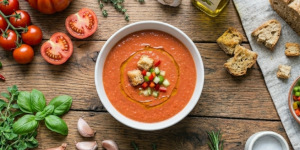
Gazpacho - Spanish Cold Tomato Soup
What is Gazpacho?
Gazpacho is a traditional cold soup from Andalusia in southern Spain. The version now known around the world is based on very ripe tomatoes blended with green pepper, cucumber, garlic, bread, extra virgin olive oil, vinegar and salt.
It is served cold and is especially associated with the hot Andalusian summer. Depending on the household, gazpacho may be thin enough to drink from a glass or thick enough to serve from a bowl with small pieces of vegetables or bread as garnish.
The Real Academia de Gastronomía gives a representative Andalusian formula using 1 kg of ripe red tomatoes, half a cucumber, half an onion, one green pepper, two cloves of garlic, stale bread, extra virgin olive oil, sherry vinegar and salt. Onion and the exact choice of green or red pepper vary between cooks.
The older history of Gazpacho
Gazpacho has a long history, but it is important to distinguish older dishes bearing this name from the modern red tomato soup. It is often said that gazpacho goes back directly to Roman times because Roman and Mediterranean cooking included preparations based on bread, oil, vinegar, garlic and water. Those dishes may form part of the culinary background, but there is not enough evidence to say that modern Andalusian gazpacho itself was already a Roman recipe.
Older forms of gazpacho existed before tomatoes became part of Spanish cooking. Culinary references describe early gazpachos based principally on stale bread, garlic, olive oil, vinegar, salt and water, ingredients that were pounded together in a mortar. Similar preparations survived in Andalusia in forms such as white gazpachos and ajo blanco.
For that reason, it is more accurate to describe Roman, Arab and medieval bread-and-garlic preparations as possible predecessors and influences rather than to claim that today's tomato gazpacho dates unchanged from antiquity.
When did tomatoes become part of Gazpacho?
Tomatoes originated in the Americas and reached Europe through the Columbian Exchange during the sixteenth century. Peppers also came from the Americas. This means that the familiar red gazpacho containing tomatoes and peppers necessarily developed later than the older bread-based preparations.
Historical accounts indicate that tomatoes gradually became incorporated into gazpacho after they had become established in Spanish cooking. Material prepared in collaboration with the Real Academia de Gastronomía places the transformation toward tomato gazpacho around the eighteenth century, while nineteenth-century Spanish cookbooks provide increasingly clear descriptions of gazpacho containing tomatoes and peppers.
The modern Andalusian version should therefore be understood as the result of a long evolution: an older family of bread, garlic, oil, vinegar and water preparations eventually absorbed New World vegetables and developed into the cold red soup now associated with Andalusia.
Gazpacho and Andalusia
Gazpacho became especially important in the Andalusian countryside. It was practical food for agricultural workers because bread, olive oil, garlic, vinegar and water were inexpensive and readily available, while seasonal vegetables could be added when available.
Modern Andalusian tourism authorities describe gazpacho as one of the region's best-known dishes and emphasize that local and family variations remain numerous. The exact amount of cucumber, onion, bread, oil and vinegar is still debated from household to household.
Ripe tomatoes are essential
The quality of the tomatoes matters more than almost any other ingredient because gazpacho is uncooked. Use fully ripe, flavorful red tomatoes rather than firm, pale tomatoes intended mainly for transport and storage.
There is normally no need to peel the tomatoes before blending. A powerful blender can break down the skins effectively, and the finished soup can be strained if an especially fine texture is desired.
Green pepper, cucumber and onion
Green pepper is particularly characteristic of traditional Andalusian gazpacho. The Real Academia de Gastronomía uses one green pepper for 1 kg of tomatoes, while Spain's official tourism recipe also specifies green peppers.
Cucumber adds freshness but should not dominate the tomato. Half a cucumber is sufficient for this quantity. Onion is more variable: some Andalusian versions include it directly in the soup, while others serve finely chopped onion separately as garnish.
The role of bread
Stale white bread has deep historical roots in gazpacho and gives the soup body without dairy. It is soaked briefly in cold water before blending with the vegetables.
Not every modern gazpacho contains bread, and thinner restaurant or household versions sometimes omit it altogether. However, including a modest amount of stale bread connects the recipe with the older Andalusian tradition and produces a fuller, smoother texture.
Extra virgin olive oil
Extra virgin olive oil is fundamental to Andalusian gazpacho. It should not simply float on top of the finished soup. Blending the oil into the vegetable mixture emulsifies it and gives the gazpacho its characteristic smooth texture and richer mouthfeel.
Andalusian tourism authorities describe extra virgin olive oil as indispensable in gazpacho, reflecting the central role of olive oil in the region's cuisine.
Why use Sherry vinegar?
Wine vinegar provides the acidity that balances ripe tomatoes and olive oil. Sherry vinegar, vinagre de Jerez, is particularly appropriate for an Andalusian gazpacho and is used in official Spanish recipes.
Lemon or lime juice can work in modern adaptations but is not needed in the classic recipe. Using both citrus juice and vinegar can also make the soup unnecessarily acidic.
How to prepare Gazpacho
Traditional gazpacho was pounded and mixed by hand in a mortar or similar vessel. A blender now makes the process much faster and produces a smoother soup.
Blend the vegetables, soaked bread, vinegar and salt until completely smooth. Add the olive oil while continuing to blend so that it emulsifies into the soup. If desired, pass the mixture through a fine sieve.
Adjust the consistency with a little cold water only if necessary. The amount depends on how juicy the tomatoes are and whether you prefer a drinkable or spoonable gazpacho.
Chilling before serving
Gazpacho should be thoroughly chilled before serving. About one hour is enough for the soup to become cold, although two or more hours can be convenient when preparing it in advance.
Chilling also allows the flavors of the tomato, garlic, vinegar and olive oil to settle together. Stir or whisk the soup before serving because slight separation during refrigeration is normal.
Should you add ice?
It is better to chill gazpacho properly in the refrigerator rather than rely on ice cubes. Melting ice dilutes the tomato, olive oil and vinegar balance. A small amount of cold water can be blended in when adjusting the consistency, where its effect is easier to control.
Traditional garnishes
Gazpacho can be served on its own or accompanied by finely diced tomato, cucumber, green pepper, onion and small pieces of bread. Some traditional presentations also include chopped hard-boiled egg.
This recipe keeps the garnish vegetable-based so that the finished dish remains vegan. Serve the garnish separately if possible, allowing each person to add as much as they prefer.
Gazpacho, Salmorejo and other Spanish Gazpachos
Andalusian gazpacho should not be confused with every Spanish dish carrying the word gazpacho. The name historically covered a much broader family of preparations.
Cordoban salmorejo is thicker and contains considerably more bread and olive oil, while ajo blanco is a white Andalusian cold soup based on almonds, bread, garlic, oil and vinegar. Gazpachos manchegos, despite the similar name, are a completely different hot dish made with meat and pieces of flatbread.
This diversity is another reason to avoid describing gazpacho as one recipe that has remained unchanged since antiquity. It is better understood as an old and varied culinary family from which modern Andalusian tomato gazpacho emerged.
Expert tips:
Use fully ripe tomatoes
Gazpacho is uncooked, so the flavor of the tomatoes cannot be corrected by long cooking. Soft, ripe and aromatic tomatoes give a much better result than firm, underripe fruit.
Use green pepper for a classic Andalusian profile
Both green and red pepper variations exist, but official Spanish and gastronomic-academy recipes use green pepper. It gives a fresher and less sweet flavor.
Do not use too much cucumber
Cucumber should refresh the soup without overwhelming the tomato. About half a cucumber for 1 kg of tomatoes is a well-established proportion.
Add the olive oil while blending
Gradually blending in the extra virgin olive oil helps emulsify it with the vegetable mixture and produces a smoother texture than simply pouring oil on top.
Sherry vinegar is the most appropriate acid
Vinagre de Jerez has strong Andalusian associations and appears in official Spanish gazpacho recipes. Lemon and lime juice are unnecessary in the classic version.
Do not dilute with ice
Chill the soup in the refrigerator instead of adding large amounts of ice. Melting ice weakens the tomato, olive oil and vinegar flavors.
Bread is traditional but variable
Older gazpacho traditions are strongly connected with stale bread, although some modern versions omit it. The amount should be modest so the soup does not become as thick as salmorejo.
Storage:
How to store
Keep gazpacho in a clean, covered container in the refrigerator. Stir or shake it before serving because some separation is normal.
Shelf life
For the best flavor and freshness, eat homemade gazpacho within 2 to 3 days.
Freezing
Gazpacho can be frozen, but the texture of the emulsified olive oil and raw vegetables may change after thawing. Freshly prepared gazpacho has a better texture.
Serving temperature
Serve thoroughly chilled, but there is no need to freeze it or fill the bowl with ice cubes.
Recipe information:
Gazpacho
Optional Garnish
Substitutions for ingredients:
- Sherry Vinegar - Use another good-quality wine vinegar. Apple cider vinegar will work but gives a less typically Andalusian flavor.
- Green Pepper - Red pepper can be used in a documented household variation, but it produces a noticeably sweeter soup.
- Stale White Bread - Bread can be omitted for a lighter modern version, although it has strong historical roots in gazpacho and helps create a fuller texture.
- Onion - Omit it if preferred. The Real Academia de Gastronomía notes that onion is one of the ingredients that varies between gazpacho recipes.
Preparation
1. Soak the bread
2. Prepare the vegetables
3. Blend the vegetables
4. Emulsify with olive oil
5. Adjust the consistency
6. Strain if desired
7. Chill
8. Prepare the garnish
9. Serve
Frequently Asked Questions (FAQ):
Where does Gazpacho come from?
The modern tomato-based gazpacho is strongly associated with Andalusia in southern Spain. It developed from older Iberian and Andalusian preparations based on bread, garlic, olive oil, vinegar, salt and water.
Does Gazpacho date back to ancient Rome?
Not in its modern form. Roman cuisine included bread, oil, vinegar and garlic preparations that may belong to the wider culinary background of gazpacho, but modern tomato gazpacho cannot be a Roman recipe because tomatoes arrived in Europe only after contact with the Americas.
Did Gazpacho originally contain tomatoes?
No. Older gazpachos were made from ingredients such as stale bread, garlic, olive oil, vinegar, salt and water. Tomatoes and peppers were incorporated later after these American crops became established in Spanish cuisine.
When were tomatoes added to Gazpacho?
The exact moment is difficult to establish. Tomatoes reached Europe in the sixteenth century, and sources associated with the Real Academia de Gastronomía place their incorporation into gazpacho around the eighteenth century. Clear tomato-based gazpacho recipes became increasingly visible in nineteenth-century Spanish cookery.
Does traditional Gazpacho contain bread?
Bread has very strong historical roots in gazpacho and is included in authoritative Spanish recipes, although some modern versions omit it.
Does traditional Gazpacho contain onion?
It can. Onion is included in the Real Academia de Gastronomía version, but the Academy itself notes that some cooks leave it out. It is not a completely fixed ingredient.
Should Gazpacho contain green or red pepper?
Green pepper is particularly characteristic and appears in official Spanish recipes. Red pepper is also used in some household variations and gives a sweeter flavor.
Should Gazpacho contain lemon or lime juice?
Classic Andalusian gazpacho normally gets its acidity from wine vinegar, particularly sherry vinegar. Lemon and lime are modern alternatives rather than necessary traditional ingredients.
Why is stale bread added to Gazpacho?
Bread gives body and helps create a smooth texture. It is also a direct link to older gazpacho traditions in which bread was one of the central ingredients.
How long should Gazpacho be chilled before serving?
At least about 1 hour is useful, and 2 or more hours is convenient when preparing it ahead. The important point is that the soup should be thoroughly cold when served.
Should ice cubes be added to Gazpacho?
They are not necessary. Proper refrigeration cools the soup without diluting its flavor. If the gazpacho is too thick, add a controlled amount of cold water instead.
What is the difference between Gazpacho and Salmorejo?
Gazpacho is generally thinner and contains vegetables such as cucumber and green pepper as well as tomato. Salmorejo is much thicker, uses considerably more bread and olive oil, and is centered mainly on tomato, bread, garlic and oil.
Is Gazpacho always a cold tomato soup?
No. Historically, the word gazpacho has referred to several different preparations. Gazpachos manchegos, for example, are a hot meat-and-flatbread dish and are completely different from Andalusian tomato gazpacho.
Is this Gazpacho vegan?
Yes. This version contains only vegetables, bread, olive oil, vinegar, salt and water. Some traditional garnishes include hard-boiled egg, but egg is not used in this recipe.