
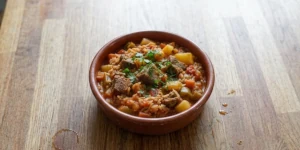
Bulgarian Gyuvech - Traditional Beef and Vegetable Stew
Gyuvech (гювеч) is one of the most recognizable forms of traditional Bulgarian home cooking. The name refers not only to the dish but also to the deep earthenware pot in which it is traditionally prepared. There is no single recipe for gyuvech. Bulgarian families have long made different versions according to the meat, vegetables and other ingredients available to them.
This version uses beef, rice, onions, peppers, tomatoes and potatoes. The ingredients are combined in a deep clay pot and slowly baked until the meat becomes tender and the vegetables soften into the cooking juices. The rice cooks in the same pot, absorbing the flavor of the meat, tomatoes and peppers.
What is Bulgarian Gyuvech?
In Bulgarian cooking, gyuvech is better understood as a style of slow-cooked dish than as one fixed recipe. There are gyuvechi made with pork, beef, lamb or chicken, as well as meatless versions based almost entirely on seasonal vegetables. Rice is common in many versions, while others contain more vegetables and little or no rice.
The vegetables can change with the season and the region. Tomatoes and sweet peppers are particularly characteristic, while potatoes, carrots, onions, green beans, peas and eggplant can also find their way into a family gyuvech. This flexibility is one of the reasons the dish has remained part of everyday Bulgarian cooking rather than becoming a strictly defined ceremonial recipe.
The Clay Pot and the Bulgarian Tradition
The traditional cooking vessel is the gyuvech, a deep earthenware pot with a lid. The name of the dish is closely connected with this vessel and with the slow cooking method associated with it. Clay pots have long been used throughout the Balkans for cooking meat and vegetables slowly until they become tender.
In Bulgarian homes, gyuvech is strongly associated with generous family cooking. A large pot can be prepared when several people are expected at the table, and the exact contents can be changed according to what is available. This explains why recipes for gyuvech found in Bulgaria can look quite different while still being recognizably the same kind of dish.
A Dish with Ottoman and Balkan Roots
The culinary history of gyuvech belongs to the wider food culture of the Balkans and the former Ottoman world. The word is related to the Turkish güveç, the name for an earthenware cooking pot and, by extension, dishes prepared in it. The use of clay vessels for slow cooking spread widely across southeastern Europe, while each country and region developed its own ingredients and methods.
In Bulgaria, the technique became part of local home cooking. Bulgarian cooks adapted the dish to ingredients grown in their gardens and available from local farms: tomatoes, peppers, onions, potatoes, beans, eggplant and herbs, together with pork, beef or other meat. As a result, there is no single historical recipe that can be called the one original Bulgarian gyuvech.
Why the Ingredients Vary
Gyuvech is particularly suited to seasonal cooking. A summer version may contain a generous amount of fresh tomatoes and peppers, while a colder-weather version can be heavier on potatoes, carrots and meat. Some versions contain rice, while others rely almost entirely on vegetables and meat.
This is why adding every possible ingredient to one pot is not necessarily more traditional. A good Bulgarian gyuvech is usually balanced rather than complicated: meat, a few vegetables, rice when used, a little oil and simple seasoning. The flavor develops during the long baking rather than from a large number of spices.
Seasoning a Traditional Gyuvech
Bulgarian gyuvech does not need an elaborate spice mixture. Salt, black pepper and sweet red paprika are common seasonings, while чубрица (chubritza, Bulgarian savory) is especially characteristic of Bulgarian cooking. Fresh parsley is often added toward the end or just before serving.
The tomatoes provide much of the moisture and natural acidity, while the peppers, onions and meat give the dish its savory character. The result should be rich and comforting rather than heavily spiced.
Slow Baking in a Clay Pot
The traditional approach is deliberately slow. The ingredients are placed in a clay pot, covered and baked until the meat is tender and the vegetables are fully cooked. The rice is added uncooked and absorbs the liquid released by the tomatoes and other ingredients.
If using an unglazed traditional clay pot, start it in a cold oven and allow the pot and oven to heat gradually. Sudden temperature changes can cause earthenware to crack. A heavy ovenproof casserole or Dutch oven can be used when a traditional gyuvech pot is not available.
Gyuvech on the Bulgarian Table
Gyuvech is the kind of food that belongs to a generous family table rather than a formal restaurant menu. The pot is brought to the table hot, often with the rice and vegetables underneath and pieces of tender meat distributed throughout.
It can be served as a complete meal with fresh bread and a simple Bulgarian salad. Unlike more precisely defined regional dishes, gyuvech is meant to accommodate the cook and the season. The important part is the slow cooking in the earthenware pot and the combination of meat, vegetables and their cooking juices.
That flexibility is perhaps the most authentic thing about gyuvech. A Bulgarian family recipe does not need to contain exactly the same vegetables as another family recipe. What makes it recognizable is the method: good everyday ingredients, simple Bulgarian seasoning and slow baking until everything comes together in one pot.
About This Beef Version
Beef is one of the meats used for Bulgarian gyuvech, although pork is also extremely common. Beef benefits from the slow cooking method, particularly when a flavorful cut such as chuck or shoulder is used. The meat is combined with onions, peppers, tomatoes and potatoes, while rice is added to absorb the rich cooking liquid.
This recipe should therefore be understood as a traditional-style Bulgarian beef gyuvech rather than as the single definitive recipe for the dish. Other Bulgarian households may use pork, lamb or chicken, change the vegetables, or leave out the rice altogether.
Expert tips:
Use a traditional clay pot when possible
A Bulgarian gyuvech is traditionally associated with an earthenware cooking pot. If using an unglazed clay pot, always begin in a cold oven and heat it gradually to reduce the risk of cracking.
Do not treat gyuvech as one fixed recipe
Bulgarian gyuvech has many traditional versions. Pork, beef, lamb and chicken can all be used, and the vegetables change with the season. The method and the slow cooking are more important than following one rigid ingredient list.
Use Bulgarian savory if you can find it
Chubritza, or Bulgarian savory, is one of the most characteristic seasonings for this kind of Bulgarian cooking. It gives the dish a distinctly Bulgarian flavor without requiring a complicated spice mixture.
Keep the rice in the cooking liquid
The rice should be added uncooked and allowed to cook in the pot. It absorbs the juices from the tomatoes, meat and vegetables and becomes part of the sauce rather than being prepared separately.
Storage:
How to store
Cool the gyuvech and refrigerate it in a covered container within a reasonable time after cooking. If possible, store it in portions so it can be reheated evenly.
Shelf life
Keep refrigerated and use within 3 to 4 days.
Freezing instructions
Gyuvech can be frozen in portions, although the texture of the rice and potatoes may become softer after thawing. Thaw overnight in the refrigerator and reheat gently with a small splash of water.
Recipe information:
Ingredients
Substitutions for ingredients:
- Beef - Pork shoulder is an especially common alternative in Bulgarian gyuvech. Lamb or chicken can also be used in other traditional versions.
- Bulgarian savory (chubritza) - If Bulgarian savory is unavailable, use a small amount of dried thyme. The result will not have exactly the same Bulgarian character, so savory is preferable when authenticity is the goal.
- Clay gyuvech pot - A heavy Dutch oven or deep ovenproof casserole with a tight lid can be used. The cooking method remains similar, although a clay pot gives the dish its traditional character.
- Fresh tomatoes - Good-quality canned peeled tomatoes can be used outside the fresh tomato season.
Preparation
1. Prepare the beef
2. Prepare the vegetables
3. Build the gyuvech
4. Add the liquid
5. Bake slowly
6. Finish the dish
Frequently Asked Questions (FAQ):
Is gyuvech a specifically Bulgarian dish?
Gyuvech belongs to a wider Balkan culinary tradition and the name is connected with the Turkish word for an earthenware cooking pot. Bulgaria has developed its own strong tradition of gyuvech, with many local and family versions.
Does traditional Bulgarian gyuvech always contain beef?
No. There is no single fixed recipe. Pork, beef, lamb and chicken are all used, while meatless gyuvechi are also traditional. This recipe is specifically a beef version.
Does gyuvech always contain rice?
No. Rice is common in many Bulgarian versions, but some gyuvechi contain mostly meat and vegetables. The ingredients vary according to the particular recipe and season.
Why is gyuvech traditionally cooked in clay?
The earthenware vessel is part of the tradition and is suited to slow cooking. The dish can also be prepared in modern ovenproof cookware, but a clay gyuvech gives the preparation its traditional form.
Can I make gyuvech with pork instead of beef?
Yes. Pork shoulder or neck is a very common choice for Bulgarian gyuvech and is often used in modern Bulgarian home recipes.
What vegetables belong in Bulgarian gyuvech?
There is no definitive list. Tomatoes, peppers and onions are particularly characteristic, while potatoes, carrots, green beans, peas and eggplant are common additions depending on the version and season.