
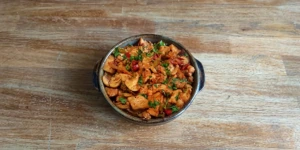
Кавърма - Kavarma Pork and Leek Stew
Kavarma is one of the most iconic dishes in Bulgarian home cooking, frequently served in traditional taverns (mehanas) and at family gatherings across the country. At its core, kavarma is a deeply comforting meat and vegetable stew that is slowly simmered to achieve its signature rich flavor and tender consistency. While pork-specifically cuts rich in connective tissue like shoulder or collar-is the most traditional choice, chicken (Pileshka Kavarma) or veal are also widely used. Combined with leeks, onions, peppers, and mushrooms, this dish relies on slow cooking and simple, high-quality ingredients to create a rich, velvety glaze without requiring flour or external thickeners.
The History and Ottoman Roots of Kavarma
The origins of kavarma are deeply intertwined with Balkan culinary history and Ottoman influences. The name itself stems from the Turkish word kavurma, which refers to the technique of frying or roasting meat before slow-simmering. Over centuries, Bulgarians adapted this technique using regional ingredients, transforming it from a basic preservation method into a staple everyday dinner rather than a rare festive meal.
Different regions developed their own distinct variations over time. Some recipes introduce a splash of dry red wine to cut through the richness of the meat, while others incorporate extra root vegetables or top the individual clay pots with a fresh egg just before serving.
The Heritage of the Gyuvetch: Cooking in Bulgarian Clay Pots
Historically and culturally, the soul of kavarma lies in its cookware: the gyuvech (or smaller individual gyuveche)-a traditional Bulgarian unglazed clay pot with a tight-fitting lid. In rural Balkan villages, cooks would assemble the stew in the morning, place the clay pot into the dying embers of a wood fire, and allow it to slow-bake for hours.
This traditional technique serves a vital scientific purpose: the porous clay distributes gentle, radiant heat evenly while retaining moisture, allowing the collagen in tough cuts of pork to gradually melt into gelatin. Simultaneously, the enclosed steam coaxes natural sugars out of the onions and peppers, fusing them with the meat's fats into a cohesive sauce. If you do not own a traditional Bulgarian clay pot, a heavy-bottomed cast-iron Dutch oven serves as an excellent modern alternative.
Essential Herbs and Flavors: Chubrica and Paprika
What truly sets Bulgarian kavarma apart from other Balkan stews is its distinct aromatic profile, dominated by two key spices:
- Chubrica (Bulgarian Summer Savory): The sensory centerpiece of the dish, offering an earthy, intensely aromatic flavor profile positioned between thyme, mint, and wild marjoram.
- Balkan Paprika: Sweet, smoky ground red pepper that provides both warmth and a rich golden-red color to the cooking juices.
The herbal bitterness of the savory balances the natural sweetness of caramelized onions and red bell peppers. Searing the meat beforehand initiates the Maillard reaction, establishing deep savory compounds, while mushrooms add an extra layer of umami depth.
Similar Stews Across the Balkans
Due to shared climatic conditions and history, similar slow-cooked meat dishes exist throughout the Balkan Peninsula. Turkey retains its own variations of kavurma, while Greece, Serbia, and North Macedonia feature regional stews cooked in earthenware with localized spice mixes.
Despite these shared techniques-searing meat and slow-simmering it with vegetables in clay-Bulgarian kavarma retains a unique identity. Its signature reliance on chubrica, sweet peppers, and leeks gives the dish an authentic character that remains a hallmark of Bulgarian everyday gastronomy.
Modern Adaptations and Regional Variations
While pork remains the standard in northern and central Bulgaria, chicken is widely favored in southern regions, yielding a lighter dish known as Pileshka Kavarma. Another popular regional touch involves cracking a whole egg over the stew during the final ten minutes of baking, creating a soft-set egg with a runny yolk that enriches the sauce upon serving.
Expert tips:
Use Plenty of Leeks
Leeks are an important ingredient in many Bulgarian versions of kavarma. They become soft and sweet during slow cooking and form much of the character of the dish.
Do Not Overload the Dish with Liquid
Kavarma is not meant to be a thin soup. Add only enough wine and moisture from the vegetables to cook the meat. The finished dish should be rich and moist rather than watery.
Use Bulgarian Summer Savory
Chubrica, or Bulgarian summer savory, is one of the characteristic seasonings used in Bulgarian meat dishes. If possible, use it rather than replacing it with a mixture of other herbs.
Earthenware Gives a Traditional Result
Kavarma is traditionally associated with earthenware cooking vessels. A clay gyuvech can be used for slow cooking in the oven, although a heavy covered pot also works well at home.
Regional Variations
There is no single fixed recipe for Bulgarian kavarma. Some regional versions use mushrooms, others emphasize peppers, tomatoes, onions, or leeks, and some include additional ingredients such as eggs or pickled peppers.
Storage:
How to store
Allow the kavarma to cool and transfer it to a covered container. Keep refrigerated.
Shelf life
Refrigerate for up to 3 to 4 days. Reheat gently on the stovetop or in the oven until thoroughly hot.
Freezing instructions
Kavarma can be frozen in an airtight container for up to 3 months. Thaw overnight in the refrigerator and reheat gently before serving.
Recipe information:
Main Ingredients
Substitutions for ingredients:
- Pork Shoulder - Pork neck or another well-marbled cut of pork can be used. Avoid very lean pork because it can become dry during slow cooking.
- Lard - Sunflower oil is a traditional and practical alternative.
- Fresh Tomatoes - A small amount of tomato paste can be used when fresh tomatoes are unavailable.
- Chubrica (Summer Savory) - There is no exact substitute for Bulgarian summer savory. If it is unavailable, the dish can simply be prepared without it rather than replacing it with a large mixture of unrelated herbs.
Prepare the Meat and Vegetables
1. Brown the Pork
2. Cook the Vegetables
3. Add the Paprika and Tomatoes
Slow Cooking
1. Combine the Meat and Vegetables
2. Cook Slowly
3. Finish the Kavarma
Frequently Asked Questions (FAQ):
What is Bulgarian Kavarma?
Bulgarian kavarma is a traditional slow-cooked meat dish made in many regional variations. Pork is commonly combined with leeks or onions, peppers, tomatoes, wine and Bulgarian summer savory, with some versions also containing mushrooms or other local ingredients.
Does traditional Bulgarian Kavarma contain mushrooms?
Some traditional regional versions of kavarma contain mushrooms, while others do not. Mushrooms are therefore appropriate in a regional mushroom kavarma, but they are not required in every Bulgarian kavarma recipe.
What is the difference between Kavarma and Gyuvech?
Kavarma and gyuvech are both traditional Bulgarian dishes often prepared slowly in earthenware vessels, but they are not the same dish. Kavarma generally focuses on meat with onions or leeks and seasonings, while gyuvech commonly contains a broader mixture of vegetables and may include potatoes, eggplant, peppers and other ingredients.
Can Kavarma be cooked in a clay pot?
Yes. Earthenware cooking is strongly associated with Bulgarian kavarma. A traditional gyuvech or similar clay vessel can be used for slow cooking in the oven.
What is Chubrica?
Chubrica is Bulgarian summer savory, a strongly aromatic herb commonly used in Bulgarian cooking, especially with meat, beans and vegetable dishes. It is one of the characteristic seasonings associated with kavarma.
What is traditionally served with Kavarma?
Kavarma can be served with bread, rice, potatoes or other simple sides. Rustic bread is particularly useful for eating the rich cooking juices.
Is Bulgarian Kavarma gluten-free?
Kavarma itself is naturally gluten-free when prepared from meat, vegetables, wine, herbs and spices without flour or other gluten-containing ingredients. Always check individual packaged ingredients if using prepared products.