
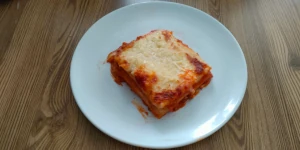
Lasagne alla Bolognese - Classic Italian Lasagna
Where this dish actually comes from
People in Bologna eat this on Sundays or when the whole family gathers around the table. It is not something you throw together in twenty minutes after work. My neighbor taught me how to make this years ago, and she learned it from her grandmother. If you visit the Emilia-Romagna region, you will see it served in almost every home and small trattoria, usually straight out of a heavy ceramic baking dish that has seen better days.
It changed quite a bit over the years. Long ago, people just boiled dough sheets and threw whatever meat or cheese they had between them. Today, it is all about patience. You need to let the meat simmer until it smells right, and you cannot rush the white sauce either, or you get a lumpy mess that ruins the whole pan.
Getting the meat sauce right
The biggest mistake people make is trying to cook the meat quickly. If you just brown the beef and pour in some canned tomatoes, it will taste like school lunch. You need to let the meat cook down with the milk first until the liquid disappears, then add the wine and tomatoes, and leave it on the lowest heat possible. I usually let it sit on the back burner for two hours while I go do something else. It should look thick and rich, not watery.
What to do with the leftovers
If you have any left over, leave it in the baking dish and cover it with foil. It actually tastes better the next day because the layers tighten up. Just cut a square, put it on a plate, and heat it up in the oven or a microwave until the cheese on top gets soft again.
Expert tips:
Watch the milk step
When making the meat sauce, pouring the milk directly onto the browned meat before the tomatoes goes against what most people do, but it makes the meat much softer in the final dish. Just make sure the liquid cooks all the way down before moving to the next step.
Keep the white sauce moving
If you walk away from the stove while thickening the milk and flour, it will catch on the bottom of the pan and leave burnt black specks throughout your white sauce. Use a whisk and scrape the corners of the pan constantly.
Storage:
How to store
Keep the baked lasagne in its dish, wrap the top tightly with plastic wrap or aluminum foil, and place it in the refrigerator.
Shelf life
It stays good in the fridge for up to three or four days. It actually cuts into cleaner squares after sitting overnight.
Freezing instructions
You can freeze the whole unbaked dish or individual cooked slices. Wrap them in plastic wrap and then foil. It keeps well for two months. Thaw it completely in the fridge before you put it in the oven.
Recipe information:
Ingredients
Substitutions for ingredients:
- Minced pork - You can use ground veal instead, or just use all beef if you cannot find ground pork at the butcher shop. The flavor will be slightly less rich, but it still works.
- Dry white wine - If you do not want to cook with alcohol, just use a splash of beef broth mixed with a teaspoon of white wine vinegar to get that slight sour note.
Preparation
1. Make the meat sauce base
2. Brown the meat and simmer
3. Mix the white sauce
4. Layer and bake the dish
Frequently Asked Questions (FAQ):
Do I need to boil the pasta sheets first?
If you bought the standard dried box sheets from the supermarket, you do not need to boil them beforehand as long as your meat and white sauces are wet enough. They will absorb the moisture and cook directly in the oven. Just make sure every bit of pasta is covered in sauce.
Can I use ricotta instead of white sauce?
People in southern Italy sometimes use ricotta, but for this specific Bologna style, it is always a cooked milk and flour sauce. Ricotta changes the texture entirely and makes it grainier, whereas the flour sauce blends in with the meat grease beautifully.
How many layers should I build?
Aim for at least four layers of pasta. If your baking dish is deep enough, you can go up to five or six. More layers mean the dish holds its shape better when you cut into it, and you get a better mix of meat and cheese in every bite.