
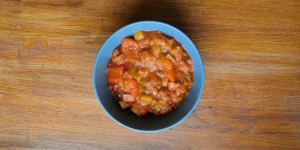
Lecsó Recipe - Hungarian Pepper Stew
A quick look at lecsó
I started making this dish years ago when my neighbor handed me a huge bag of sweet peppers from his garden. In Hungary and across Central Europe, families cook lecsó whenever peppers and tomatoes hit their peak in late summer. Czechs call it lečo, Poles call it leczo, and Ukrainians write it as лечо, but it comes down to soft peppers cooked down in fat or oil until everything thickens together into a warm pot.
You do not need fancy kitchen gear here - just patience while onions soften and extra water steams away from the vegetables.
A little history behind lecsó
Although lecsó feels like an old countryside recipe, the name itself appeared in print surprisingly late. The earliest known written record dates to 1914, when the Hungarian journal Magyar Nyelv included the simple dialect definition:
lëcső, lëcsó = zöldpaprika paradicsommal.
(Lëcső (lecsó): green peppers with tomatoes.)
That short description already captures the heart of the dish. It was simply peppers and tomatoes cooked together, long before countless family variations with sausage, bacon, eggs, rice, or zucchini became common.
One of the earliest widely recognized cookbook recipes followed about twenty years later. Károly Gundel's Kis magyar szakácskönyv (1934) included a recipe for lecsó, helping establish it as a classic of Hungarian home cooking. Gundel's version cooked peppers, tomatoes, onions, paprika, and bacon together, while also suggesting additions such as sausage or beaten eggs for a more filling meal-variations that remain popular throughout Hungary today.
Choosing your ingredients
Try to get thick-walled yellow or green peppers if available. Red bell peppers work fine too, though they make the sauce noticeably sweeter. Tomatoes should be soft and ripe so they break apart quickly in the hot pan. If your tomatoes look pale and feel hard, stir in a small spoonful of tomato paste to boost flavor.
Some people add sliced Hungarian smoked sausage (kolbász), bacon bits, or diced zucchini. I usually throw in sausage when making a heavy main meal, but keeping it vegetarian with basic vegetables and red pepper powder is standard for warm days.
How I usually cook it
Start by frying sliced onions over low heat. You want them clear and soft rather than brown. Pull the pot off the burner for a short moment when stirring in the ground paprika powder so it does not scorch in hot oil. Toss in pepper strips next, let them shrink down, and finish with chopped tomatoes so the whole mixture simmers into a rich red broth.
Expert tips:
Preventing burnt paprika
Paprika turns dark and bitter fast in hot oil. Taking the pot off the flame while stirring ground spice into softened onions protects the sweet pepper flavor.
Reducing excess water
Keeping pot uncovered during the final simmer allows moisture from fresh tomatoes to evaporate naturally, thickening sauce without flour.
Storage:
How to store
Let lecsó cool down to room temp, then move to a glass jar or sealed container and put in fridge.
Shelf life
Good for 3 to 4 days in fridge. Sauce often tastes richer the second day after vegetable flavors rest together.
Freezing instructions
Pour into freezer bags and lay flat. Keeps in freezer for 3 months. Reheat slowly in a pan to let thawed liquid steam away.
Recipe information:
Ingredients
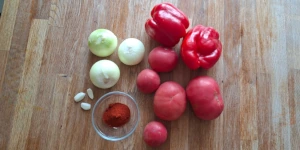
Substitutions for ingredients:
- Smoked Hungarian Sausage - Kielbasa or basic smoked pork sausage works well, though Spanish chorizo adds slightly more garlic flavor.
- Sweet Paprika Powder - Regular sweet paprika powder works fine if Hungarian paprika is hard to find in local stores.
- Lard - Sunflower oil or canola oil keeps stew light and vegetarian.
Preparation
1. Prepping the vegetables
2. Softening onions
3. Stirring in paprika
4. Cooking pepper strips
5. Simmering with tomatoes
Frequently Asked Questions (FAQ):
Can I stir eggs into lecsó?
Yes, whisking two eggs and pouring them into the pot right before taking it off heat is a common practice across Poland and Slovakia for a thicker lunch.
Should lecsó be served warm or cold?
It tastes great hot from pot with bread, but many people eat it cold straight from fridge on hot summer afternoons.
What side dishes go well with it?
Thick slices of fresh white bread or sourdough work best for wiping up red paprika sauce left on plate.