
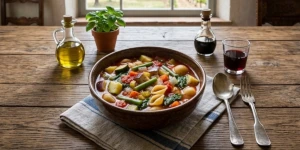
Minestrone with Zucchini and Eggplant
Minestrone is one of the most beloved soups in Italian cooking - hearty, fragrant, and adored well beyond Italy's borders. The name comes from the Italian word "minestra," which just means "soup," though the looser translation, "big soup," really captures what this dish is all about: a generous mix of vegetables, beans, and pasta simmered together. What makes minestrone so special is that there's no single "correct" recipe. Every Italian family makes it a little differently, building the pot around whatever's fresh and in season.
Where Did Minestrone Soup Come From?
Minestrone's roots go all the way back to ancient Rome, where it started out as a simple, humble dish made from whatever vegetables happened to be growing in the garden. Over the centuries, the recipe shifted and adapted, shaped by regional tastes and what ingredients were on hand. In northern Italy, minestrone is more often simmered in broth, while in the south, tomatoes tend to take center stage. Despite those regional differences, the heart of the dish hasn't changed - it's still a soup built to stretch seasonal vegetables into a filling, nourishing meal for the whole family.
How to Make Minestrone Soup, Step by Step
The real secret to a great minestrone is timing - adding each ingredient at the right moment so everything cooks evenly, with nothing turning mushy or staying undercooked.
1. Start With the Soffritto
Every good minestrone starts with a soffritto - the aromatic base of onion, carrot, and celery, cooked low and slow in extra virgin olive oil. This is where the soup's flavor really comes from. If you want a richer, more robust taste, let the vegetables cook until golden; for something lighter and more delicate, just soften them without letting them brown. Fennel makes a nice swap for celery if you're after a subtler, slightly sweeter edge. Garlic goes in last, right at the end of the soffritto, so it doesn't burn or take over the dish.
2. Build in the Seasonal Vegetables
Once the soffritto is ready, the vegetables go in one by one, timed by how long each one takes to cook through. A classic minestrone leans on tomatoes, potatoes, green beans, and carrots, but in late summer, zucchini and eggplant are a natural addition to the pot. Eggplant goes in first since it needs more time to break down and soften into the broth, giving the soup a rich, almost creamy texture, while zucchini goes in a bit later so it stays light and holds its shape. Hearty greens like kale or chard should join early, alongside the first round of vegetables, since they need more time to cook down - tender greens like spinach, on the other hand, only need a few minutes and go in near the end. It helps to cut everything into similarly sized pieces so it all cooks at the same rate, and salting as you go - rather than at the very end - lets the flavor really develop.
3. Add the Beans and Pasta Last
Beans (cannellini are the classic choice) and pasta - traditionally a small shape like ditalini, though any small pasta works - are cooked separately and stirred in toward the end. The cooked beans go in during the last 10 minutes so they have time to soak up flavor without turning mushy. Pasta goes in last of all, just before serving, since overcooking leaves it bloated and soft. It's worth saving the bean cooking liquid, too - it adds body and flavor to the soup. And if you're planning on leftovers, cook the pasta separately and add it bowl by bowl, so it doesn't keep soaking up broth in the fridge overnight.
What Gives Minestrone Its Signature Flavor?
What sets minestrone apart from other vegetable soups is how the flavors build in layers - every ingredient goes in at just the right time, so nothing overpowers anything else, and the whole pot comes together into something balanced and complex. A handful of fresh basil stirred in right at the end brightens everything up, and finishing touches like a drizzle of olive oil and a grating of Parmesan are best added to individual bowls rather than the pot, so they keep their fresh flavor.
Why Minestrone Is Worth Making?
Minestrone is a seasonal, endlessly adaptable soup - one that bends easily around whatever's in your fridge or garden that week. In summer, zucchini and eggplant make a natural fit; in winter, kale or chard take over. Between the vegetables, the beans, and the herbs, it's a dish that's as nourishing as it is filling. Whether you go with a northern, broth-based version or a southern, tomato-forward one, minestrone remains one of the most versatile and well-loved soups in Italian cooking.
Expert tips:
Toss in a Parmesan rind.
If you've got a leftover Parmigiano Reggiano rind lying around, drop it into the pot while the soup simmers - it slowly releases a deep, savory flavor into the broth. Just fish it out before serving.
Cook the pasta on the side.
For the best texture, especially if you're making the soup ahead of time, cook the pasta separately and spoon it into each bowl right before eating.
Give it time to rest.
Like a lot of Italian soups, minestrone actually tastes better the next day, once the flavors have had a chance to meld.
Storage:
How to store
Let the soup cool completely before moving it to airtight containers, then refrigerate right away.
Shelf life
It'll keep for up to 4 days in the fridge.
Freezing
Freeze without the pasta for up to 3 months. Cook fresh pasta when reheating for the best texture.
Recipe information:
Ingredients
Substitutions for ingredients:
- Cannellini beans - Borlotti beans or chickpeas are excellent alternatives.
- Zucchini - Yellow summer squash can be used in the same quantity.
- Pasta - For the pasta, tubetti, stelline, or even broken-up spaghetti are all fair game. (don't break spaghetti in front of Italians :) )
Preparation
1. Build the soffritto.
2. Cook the vegetables.
3. Simmer.
4. Finish it off.
5. Serve.
Frequently Asked Questions (FAQ):
Is there one official minestrone recipe?
No - it's a regional dish, and every Italian family makes it a little differently depending on what vegetables are in season.
When should I add the garlic?
Always toward the end of cooking the soffritto, so it doesn't burn or turn bitter.
Should the pasta cook in the soup itself?
It's best to cook it separately and stir it in right before serving, especially if you're planning to save leftovers.
Can I make this soup ahead of time?
Yes - minestrone is often even better the next day, once the flavors have had time to develop overnight.
Do I need to peel the eggplant?
No. Young eggplants have tender skin that softens as it cooks, adding both color and texture to the soup.
Can I use dried beans instead of canned beans?
Absolutely - just soak them overnight and cook until tender before adding them to the pot