
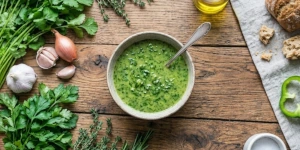
Mojo Verde - Traditional Green Sauce from the Canary Islands
Mojo Verde is one of the classic sauces of the Canary Islands. It is fresh, sharp and intensely garlicky, with its green colour coming from fresh coriander or, in another common version, parsley. The other basic ingredients are garlic, cumin, olive oil, vinegar and salt.
The sauce belongs to the large family of Canarian mojos. There is no single recipe followed by every household or island. Some versions are based mainly on coriander, others use parsley, and some cooks combine both herbs. Green pepper or a small green chilli can also be added.
A classic sauce of the Canary Islands
Mojo Verde is closely associated with papas arrugadas, the famous small potatoes cooked in heavily salted water until their skins wrinkle. A bowl of hot potatoes served with green or red mojo is one of the most familiar combinations in Canarian cooking.
The sauce is also widely served with fish and seafood. Its fresh herbal flavour works particularly well with grilled fish, boiled seafood and simple vegetable dishes. In some households, green mojo is made slightly milder for fish, while hotter versions contain a green chilli or local spicy pepper.
Coriander or parsley?
Fresh coriander is strongly associated with the classic Canarian version of Mojo Verde. Official recipes from Gran Canaria and Tenerife describe a sauce made by crushing coriander with garlic, cumin, salt and green pepper before adding oil and vinegar.
Parsley is also a traditional variation. It produces a milder sauce with a cleaner herbal taste. Both versions belong to the same family, so there is no need to treat one as the only authentic choice.
If you enjoy the stronger taste of coriander, use it on its own. If coriander is too dominant for you, make the parsley version instead. Mixing the two herbs is also common in modern home cooking.
The traditional mortar method
The traditional way to prepare Mojo Verde is with a mortar. Garlic, coarse salt and cumin seeds are crushed first. The herbs and green pepper are then added and worked into a thick paste.
Olive oil and vinegar are mixed in gradually at the end. A small amount of water can be added when the sauce needs to be thinner. The result does not need to be completely smooth. A slightly rough texture is perfectly normal.
A blender is simply a faster modern alternative. It makes the sauce smoother and more even, but the basic flavour remains the same. Avoid blending it for too long because the herbs can lose their fresh appearance.
What Mojo Verde should taste like
A good Mojo Verde should taste fresh, garlicky and slightly sharp from the vinegar. Cumin should be noticeable without taking over the sauce. Olive oil rounds everything out, while the herbs give the mojo its distinctive green character.
It should not taste like a thick herb pesto or a creamy dip. The sauce is usually looser and more acidic, with enough olive oil to make it spoonable and easy to pour over potatoes or fish.
Serving Mojo Verde
Serve Mojo Verde at room temperature or slightly cool. Spoon it generously over hot papas arrugadas, grilled fish or vegetables. It can also be placed on the table as a shared sauce so everyone can add as much as they like.
The sauce can be prepared in advance. The garlic, cumin and vinegar become more integrated after resting, although the herbs are at their brightest when the sauce is still relatively fresh.
The recipe below follows the traditional Canarian pattern: fresh coriander or parsley, garlic, cumin, green pepper, vinegar, olive oil and salt. The exact proportions can be adjusted to suit the strength of the herbs and the acidity of the vinegar.
Expert tips:
Coriander is the classic choice
Fresh coriander is the herb most strongly associated with traditional Mojo Verde. Parsley is also a recognised Canarian variation and produces a milder sauce.
Use cumin seeds when possible
Whole cumin seeds crushed with the garlic give the sauce a fuller flavour. Ground cumin works if necessary, but use it carefully because it can become dominant.
Do not overblend the herbs
Blend only until the ingredients are properly broken down. Long blending can make the sauce too smooth and dull the fresh green appearance.
Add the oil slowly
Gradually adding the olive oil gives you more control over the final consistency. It is easier to thin a thick sauce than to fix one that has become too oily.
Taste it after resting
Fresh garlic can seem very strong immediately after mixing. Let the sauce sit before adding large amounts of extra vinegar, salt or cumin.
Storage:
How to store
Transfer the Mojo Verde to a clean glass jar or airtight container and keep it refrigerated. Always use a clean spoon when serving.
Shelf life
Official Canarian recipes state that mojo can be kept refrigerated for several months. For a homemade version made with fresh herbs, use your judgment and keep it refrigerated at all times. The colour and fresh herbal flavour are best during the first 1-2 weeks.
Freezing instructions
Freezing is possible but not ideal because fresh herbs lose their colour and texture after thawing. If frozen, thaw the sauce in the refrigerator and stir or blend it briefly before serving.
Recipe information:
For the Mojo Verde
Substitutions for ingredients:
- Fresh coriander - Fresh parsley is a traditional variation of Mojo Verde. It gives the sauce a milder and less distinctive herbal flavour.
- Green pepper - Use a mild green chilli or another fresh green pepper. For a hotter version, use a small hot green chilli.
- Cumin seeds - Use about 3/4 teaspoon of ground cumin if whole seeds are unavailable. Add it gradually because ground cumin can dominate the herbs.
- Wine vinegar - White wine vinegar is a good choice. Sherry vinegar can also be used, although its flavour is slightly deeper and stronger.
- Extra virgin olive oil - A milder olive oil can be used if your extra virgin olive oil has a particularly bitter or peppery flavour.
Prepare the Ingredients
1. Wash and prepare the herbs
2. Prepare the green pepper
Make the Mojo Verde
1. Crush the garlic and cumin
2. Add the herbs and pepper
3. Add the vinegar
4. Add the olive oil gradually
5. Adjust the consistency
6. Let the sauce rest
Frequently Asked Questions (FAQ):
Is Mojo Verde traditionally made with coriander or parsley?
Both versions are traditional. Coriander is strongly associated with classic Canarian Mojo Verde, while parsley is a recognised variation that produces a milder sauce.
What is Mojo Verde traditionally served with?
It is famously served with papas arrugadas, the small wrinkled potatoes of the Canary Islands. It is also commonly served with fish, seafood and vegetables.
Can I make Mojo Verde without a blender?
Yes. The traditional method uses a mortar and pestle. Garlic, cumin and salt are crushed first, followed by the herbs and pepper, before the oil and vinegar are mixed in.
Should Mojo Verde be completely smooth?
No. A slightly rough texture is normal, especially when the sauce is made in a mortar. A blender produces a smoother version, but perfectly smooth texture is not required.
Can I make Mojo Verde without green chilli?
Yes. The chilli or green pepper is a variation rather than the only defining ingredient. You can use a mild green pepper or leave the spicy element out entirely.
Why does my Mojo Verde darken in the refrigerator?
Fresh herbs naturally lose some of their bright colour after being chopped and stored. The sauce is still usable if it has been stored properly, but its colour is brightest when freshly made.