Greek Moussaka - Μουσακάς: Traditional Eggplant and Meat Casserole
Traditional Greek Moussaka
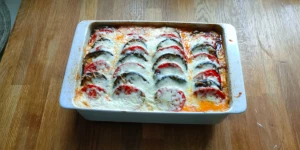
Greek moussaka is a baked casserole made with layers of eggplant, minced meat and a thick béchamel topping. Potatoes are also commonly used as a bottom layer. Once baked, the vegetables and meat form a substantial base beneath the soft, golden béchamel.
Although moussaka is now strongly associated with Greece, dishes bearing similar names and using eggplant, meat and other vegetables are found across the eastern Mediterranean, the Balkans and the Middle East. The familiar Greek casserole with its thick béchamel topping is a comparatively modern form of the dish.
The history of Greek Moussaka
The precise origin of moussaka is difficult to reduce to a single place or recipe. Related dishes developed in cuisines influenced by centuries of exchange between the eastern Mediterranean, the Ottoman world and the Balkans. Even the origin of the word has several competing explanations, so it is safer to treat moussaka as part of a wider family of dishes rather than trace the modern Greek casserole directly to one ancient recipe.
What is much clearer is the development of the modern Greek version. Its characteristic béchamel topping is closely associated with the Greek chef and cookbook writer Nikolaos Tselementes, one of the most influential figures in twentieth-century Greek cooking.
Nikolaos Tselementes and modern Moussaka
Nikolaos Tselementes was born on the island of Sifnos and became known for combining Greek cooking with techniques associated with European, particularly French, cuisine. His work had a major influence on Greek urban cooking during the early twentieth century.
The modern style of moussaka topped with béchamel is strongly associated with this period. The addition of the thick white sauce transformed an older eastern Mediterranean family of eggplant dishes into the layered casserole now recognised internationally as Greek moussaka.
This does not mean that Tselementes created every element of moussaka from nothing. Eggplant and meat dishes already existed in the region. His importance lies in shaping and popularising the particular Greek form with distinct vegetable, meat and béchamel layers.
The vegetable layers
Eggplant is the central vegetable in Greek moussaka. The slices are cooked before the casserole is assembled, traditionally by frying them in oil. They should be tender and lightly browned before going into the baking dish because the final baking stage is mainly intended to bring the assembled layers together and brown the béchamel.
Potatoes are also common in Greek moussaka and provide a firm bottom layer. They can be lightly fried before assembly. Some versions omit them and rely entirely on eggplant, while others may also contain zucchini.
The meat sauce
The meat layer is prepared separately before the moussaka is assembled. Minced beef is a common choice in Greece, although lamb and mixtures of meats are also used in different recipes.
The meat is cooked with onion, tomato and wine until the sauce becomes thick rather than watery. Cinnamon is a characteristic seasoning in many Greek versions and gives the filling a warm aroma. Bay leaf, pepper and sometimes other warm spices can also be used.
The sauce must be reduced properly before assembly. Excess liquid can collect at the bottom of the baking dish and prevent the moussaka from holding its shape when sliced.
The Béchamel topping
The thick béchamel is what most clearly distinguishes modern Greek moussaka from many related dishes elsewhere. Butter and flour are cooked together before milk is gradually incorporated to produce a smooth sauce.
Egg and grated cheese are commonly added after the sauce has thickened. Nutmeg provides a subtle aromatic note. The finished béchamel should be substantially thicker than a pouring sauce because it must remain as a separate layer during baking.
Assembling the Moussaka
The prepared ingredients are arranged in layers in a deep baking dish. A layer of potato can form the base, followed by eggplant, the thick meat sauce and another layer of eggplant. The béchamel is spread generously over the surface and finished with grated cheese.
The assembled moussaka is baked until completely heated through and the béchamel develops a deep golden surface. The top should be set rather than liquid when the dish is removed from the oven.
Why Moussaka needs to rest
Moussaka should not be cut immediately after baking. Straight from the oven, the béchamel and meat filling are still very soft and the layers can collapse when a portion is removed.
Allowing the casserole to rest gives the layers time to firm. Greek recipes can call for a substantial cooling period, particularly when neat portions are wanted. The dish should remain warm, but it does not need to be served piping hot.
Greek Moussaka and other regional versions
The Greek casserole is only one member of the wider moussaka family. Turkish versions are generally prepared differently and do not normally use the thick béchamel layer that characterises the modern Greek dish.
Across the Balkans, moussaka may be based primarily on potatoes rather than eggplant and can be finished with mixtures containing egg, milk, yogurt or sour cream. Middle Eastern dishes bearing related names can differ even more substantially.
These dishes share historical connections and similar names, but they should not be treated as interchangeable recipes. The combination of cooked eggplant, seasoned minced meat and a substantial béchamel topping is particularly characteristic of the modern Greek form.
How Moussaka is served
Moussaka is a substantial dish and usually needs little accompaniment. A simple salad, bread or vegetables can be served alongside it. The casserole is cut into square or rectangular portions so that the individual layers remain visible.
Because preparation involves cooking the vegetables, preparing the meat sauce, making the béchamel, assembling the casserole and finally baking it, moussaka is more time-consuming than many everyday dishes. Much of the work can be completed in advance before the final baking.
Expert tips:
Cook the vegetables first
Do not assemble the moussaka with completely raw eggplant or potatoes. Cooking them first develops flavour and ensures that the vegetables are tender in the finished casserole.
Drain fried eggplant well
Eggplant absorbs oil readily. Let the cooked slices drain before assembling the dish so the finished moussaka does not become excessively oily.
Keep the meat sauce thick
Reduce the meat sauce until very little free liquid remains. A watery filling makes the assembled moussaka difficult to cut.
Keep the béchamel thick
The béchamel should be thick enough to remain as a distinct layer rather than running into the meat filling.
Add the egg yolks off the heat
Allow the béchamel to cool slightly before whisking in the yolks so they combine smoothly rather than cooking immediately.
Use cinnamon carefully
Cinnamon should give the meat sauce a warm background aroma without making it taste sweet or strongly spiced.
Let the moussaka rest
Resting is part of the preparation. The layers firm as the casserole cools, making it much easier to cut into neat portions.
Storage:
How to store
Allow leftover moussaka to cool, cover it well and refrigerate.
Shelf life
Keep refrigerated and use within 3 days.
Reheating
Reheat individual portions in the oven until hot throughout. Cover loosely if the béchamel begins to brown too much.
Freezing instructions
Baked moussaka can be frozen after cooling completely. Wrap individual portions or the whole casserole tightly and freeze for up to 2 months. Thaw in the refrigerator before reheating.
Recipe information:
Vegetables and Meat Sauce
Béchamel Topping
Substitutions for ingredients:
- Minced beef - Minced lamb or a mixture of beef and lamb can be used for a different but established style of meat filling.
- Kefalotyri or Kefalograviera - Parmesan or another firm, salty grating cheese can be used when Greek cheese is unavailable.
- Potatoes - The potato layer can be omitted. Many Greek moussaka recipes are made primarily with eggplant.
- Red or white wine - A small amount of water or stock can be used when cooking without wine.
- Fried eggplant - The eggplant can be brushed with olive oil and roasted until tender. The result is lighter, although frying is a traditional preparation method.
Prepare the vegetables
1. Slice the eggplant
2. Prepare the potatoes
3. Dry the eggplant
4. Cook the potatoes
5. Cook the eggplant
Prepare the meat sauce
1. Cook the onions
2. Brown the meat
3. Add the wine
4. Add the tomatoes and spices
5. Reduce the sauce
Prepare the béchamel
1. Cook the butter and flour
2. Add the milk
3. Add the egg yolks
4. Finish the béchamel
Assemble and bake
1. Make the potato layer
2. Add the eggplant
3. Add the meat sauce
4. Finish the vegetable layers
5. Add the béchamel
6. Bake the moussaka
7. Rest before serving
Frequently Asked Questions (FAQ):
What is Greek moussaka?
Greek moussaka is a baked casserole made with cooked eggplant, minced meat and a thick béchamel topping. Potatoes are also commonly included as a bottom layer.
Who created modern Greek moussaka?
The modern Greek form with its characteristic béchamel topping is strongly associated with Nikolaos Tselementes, an influential Greek chef and cookbook writer of the early twentieth century.
Did Nikolaos Tselementes invent moussaka?
Moussaka and related eggplant dishes existed before Tselementes. His importance lies in shaping and popularising the modern Greek form topped with béchamel rather than creating the entire moussaka tradition from nothing.
Does traditional Greek moussaka contain potatoes?
Potatoes are common in Greek moussaka and can form the bottom layer, although they are not present in every recipe. Eggplant remains the vegetable most closely associated with the Greek version.
Does Greek moussaka use beef or lamb?
Both appear in Greek recipes. Minced beef is widely used, while lamb and mixtures of meats are also found in different versions.
Should eggplant be fried for moussaka?
Frying is a traditional method and gives the eggplant a rich texture and flavour. Roasting or grilling the slices is also common in modern recipes.
Why does Greek moussaka contain béchamel?
The thick béchamel is characteristic of the modern Greek style that developed in the twentieth century and is closely associated with the influence of Nikolaos Tselementes.
What spices are used in Greek moussaka?
Cinnamon is commonly used in the meat sauce. Nutmeg is commonly added to the béchamel, while individual recipes may use additional seasonings.
Is Turkish moussaka the same as Greek moussaka?
No. Turkish musakka is generally prepared as an eggplant and meat dish rather than the layered casserole with a thick béchamel topping characteristic of the modern Greek version.
Why should moussaka rest before serving?
Resting allows the hot meat sauce and béchamel to firm, helping the individual layers remain together when the casserole is cut.
Can moussaka be prepared ahead of time?
Yes. The vegetables and meat sauce can be prepared in advance, and the assembled casserole can be refrigerated before baking. Moussaka also reheats well after it has been baked.