
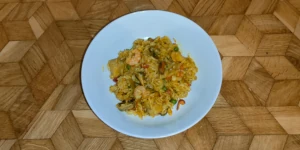
Paella marinera
Paella Marinera: The Jewel of Valencian Gastronomy
Paella marinera is one of the most famous and loved dishes of Spanish cuisine. Coming from the picturesque region of Valencia, paella is a culinary masterpiece in which rice meets the diverse flavors of the sea and aromatic spices. In this journey through the flavors and history of paella marinera, let's discover what makes it so extraordinary.
The History and Latin Roots of Paella
The history of paella has its roots in humble employee traditions. The name of the dish itself is a nod to its preparation, coming from the Latin word 'patella', meaning a flat metal dish or pan. Initially, this simple rice dish was the staple of field workers who ate boiled rice during their breaks from work. What started as a practical, energy-rich meal for laborers has evolved into the pride of not only Valencia but all of Spain.
While the original version (Paella Valenciana) was created in the fields with land-based ingredients, the Paella Marinera was born on the coast. It represents the Mediterranean adaptation of the worker's meal, replacing the snails and rabbits of the orchards with the daily catch from the sea.
A Symphony of Ingredients: Beyond Rice and Saffron
Paella marinera is not only rice and saffron; it is a complex combination of medium-grain rice and fresh seafood. While some regional variations-often called Paella Mixta-might incorporate rabbit meat, poultry, and vegetables alongside prawns, the authentic Paella Marinera focuses entirely on the bounty of the ocean.
- Saffron: This "red gold" is vital. Saffron adds a characteristic golden color to the dish, but it also provides an intense, earthy flavor that defines the paella experience.
- The Rice: Using the correct variety, such as Bomba rice, is crucial as it absorbs the flavorful fish stock without losing its structure.
- The Fire: It is worth emphasizing that an authentic paella should ideally be cooked over burning wood (traditionally orange wood). This gives the dish a unique, subtle smoky aroma that is impossible to replicate on a modern stove.
The Sensory Experience of Outdoor Cooking
Traditionally, paella is cooked outdoors, which gives it a unique, festive character. There is something magical about the process; the wind carrying the aromatic scents of the simmering seafood and saffron makes the experience of eating paella truly unforgettable. It is a dish designed for sharing, usually prepared in large pans to be enjoyed by friends and family under the open sky.
The Soul of the Dish: The Socarrat
A real paella must contain socarrat, the legendary crispy layer of rice that forms at the bottom of the pan. This is not a mistake or "burnt" rice; rather, it is a deliberate culinary element that highlights the chef's skills. The socarrat adds a unique toasted flavor and a crunchy texture that contrasts beautifully with the tender rice on top. For many Spaniards, a paella without socarrat is simply incomplete.
Regional Traditions and Similar Dishes
The Valencian coast is rich with rice traditions. If you enjoy Paella Marinera, you might also find interest in these closely related regional specialties:
- Arroz a Banda: A "fishermen's rice" where the rice is cooked in an intense fish stock and traditionally served separately from the seafood used to flavor it.
- Fideuá: A seafood-rich dish that follows the paella technique but uses short noodles instead of rice.
- Arroz Negro: A dramatic version of seafood rice colored and flavored with squid ink, often served with a side of creamy garlic alioli.
Conclusion
From its humble beginnings as a worker's break-time meal to its current status as a global culinary icon, Paella Marinera remains a symbol of Spanish culture. Its success lies in the balance of simple, high-quality ingredients and the patience required to achieve that perfect golden color and crispy bottom. It is a dish that truly brings the spirit of the Mediterranean to your plate.
Recipe information:
Ingredients
Preparation
1. Searing the Seafood
2. Creating the Sofrito
3. Toasting the Rice
4. Adding Stock and Saffron
5. Adding Shellfish and Socarrat
6. Resting and Serving
Frequently Asked Questions (FAQ):
Why should you avoid stirring the rice while cooking paella marinera?
Once the stock is added, the rice should not be stirred. This allows it to cook evenly and develop the traditional crispy bottom layer (socarrat), which is a key feature of a well-made paella.
What type of rice is best for paella marinera?
Short-grain rice such as bomba or similar varieties is ideal because it absorbs liquid well without becoming mushy. This helps achieve separate, firm grains with rich seafood flavor.
How do you build deep seafood flavor in paella marinera?
The key is using a rich seafood stock made from shells, fish bones, or shrimp heads. Sautéing seafood briefly at the beginning and adding it back later also enhances the overall taste.
How do you know when the paella is perfectly cooked?
The rice should be tender but not mushy, and most of the liquid should be absorbed. You may also hear a slight crackling sound at the bottom, indicating the formation of the desired crust.
Why should paella marinera rest before serving?
Letting the paella rest for about 5-10 minutes allows the remaining moisture to redistribute and the flavors to settle, resulting in a more balanced texture and taste.