
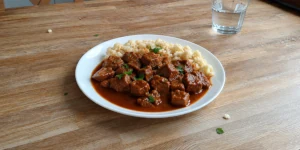
Pörkölt - Traditional Hungarian Meat Stew
Traditional Hungarian Pörkölt
Pörkölt is one of the basic meat dishes of Hungarian cooking. Pieces of meat are slowly cooked with onions, fat and ground paprika until tender, while the onions and meat juices form a thick, concentrated sauce. Pork, beef, mutton and game can all be used, and there are also versions made with poultry, offal and other ingredients.
Outside Hungary, pörkölt is often described as Hungarian goulash. This is convenient in English, but it is not quite accurate. In Hungarian cooking, pörkölt and gulyás are different dishes. Gulyás is a soup with considerably more liquid, while pörkölt is a thick meat stew.
Pörkölt, gulyás and paprikás
The distinction between these dishes is useful when trying to understand Hungarian cooking. Pörkölt is based on meat slowly cooked in a concentrated onion and paprika sauce. Gulyás is a soup, usually containing more liquid and often potatoes and other vegetables.
Paprikás is closely related to pörkölt, but is commonly finished with sour cream, sometimes combined with a small amount of flour. Sour cream is not required for pörkölt. A properly prepared pörkölt develops its consistency from onions, meat juices and slow reduction rather than from flour.
The origins of pörkölt
The history of pörkölt is connected with the pastoral cooking traditions of the Hungarian Great Plain. Herdsmen and rural communities prepared meat dishes in cooking vessels over fire, using techniques suited to simple ingredients and long cooking.
The Hungarian word pörkölt is connected with the idea of roasting or scorching. Older cooking methods involved cooking the meat with relatively little liquid rather than boiling it in a large quantity of water.
The dish did not always look exactly like modern paprika-rich pörkölt. Peppers arrived in Hungary after the Columbian exchange, and paprika gradually became one of the defining ingredients of Hungarian cooking. By the eighteenth and nineteenth centuries, paprika-seasoned meat dishes were becoming closely associated with the cuisine of the Hungarian Plain.
The importance of paprika
Ground paprika is the ingredient that gives modern pörkölt its characteristic red colour and much of its flavour. Sweet Hungarian paprika is normally the main seasoning. Hot paprika can be added separately when a hotter version is wanted.
Paprika must be handled carefully. Ground paprika can become unpleasantly bitter when exposed to very hot fat for too long. A common method is therefore to soften the onions in fat, briefly remove the pot from direct heat, stir in the paprika and then quickly add the meat or a small amount of liquid.
This allows the paprika to mix with the fat without scorching.
Onions create the sauce
Pörkölt does not need flour to produce a thick sauce. A generous quantity of finely chopped onion gradually breaks down during cooking and combines with the meat juices, paprika and fat.
The onions should be cooked slowly until soft rather than aggressively browned. As the meat cooks, only enough water should be added to prevent the bottom of the pot from drying out.
This is one of the major differences between pörkölt and a soup. The meat should braise in a concentrated sauce rather than float in broth.
Choosing the meat
Pörkölt is a method of cooking rather than a recipe tied to one particular meat. Beef, pork and mutton are among the traditional choices, while numerous regional and local versions use other meats and offal.
For pork pörkölt, shoulder is particularly suitable. It contains enough fat and connective tissue to remain tender during slow cooking. Lean pork can become dry before the sauce has had enough time to develop.
The meat should be cut into substantial cubes so that the pieces remain intact during the long simmer.
Tomatoes and fresh peppers
Tomato and fresh Hungarian pepper appear in many pörkölt recipes, but they should not dominate the dish. They contribute moisture and flavour while the onion, paprika and meat remain the foundation.
A small tomato and one fresh pepper are sufficient for a pot of pork pörkölt. Using a large quantity of tomatoes changes the character of the sauce and makes it closer to a tomato-based stew.
Cooking with very little liquid
One of the important characteristics of pörkölt is the restrained use of liquid. The meat releases its own juices as it cooks, and the onions provide additional moisture.
If the pot begins to dry, a small amount of water can be added. It is better to add several small amounts during cooking than to pour in a large quantity at the beginning.
By the end of cooking, the meat should be tender and coated in a thick red-brown sauce rather than surrounded by thin broth.
Cooking pörkölt in a bogrács
Pörkölt is also closely associated with outdoor cooking in a bogrács, the traditional Hungarian cauldron suspended over a fire. The method is particularly suitable for larger quantities of meat and remains part of Hungarian outdoor and festival cooking.
Some regional forms preserve especially old techniques. Karcag mutton pörkölt, for example, is traditionally prepared by initially cooking the meat without added water. The protected Karcag tradition uses mutton together with onion, paprika and salt and represents a particularly distinctive form of Great Plain pörkölt cooking.
How pörkölt is served
Pörkölt is commonly served with nokedli or galuska, small Hungarian flour dumplings that absorb the sauce. Tarhonya, boiled potatoes and bread are also traditional accompaniments.
Pickled vegetables provide a useful sharp contrast to the rich meat and paprika sauce. The finished pörkölt itself should remain relatively simple: tender meat surrounded by a concentrated sauce dominated by onion and paprika.
Expert tips:
Do not burn the paprika
Ground paprika can become bitter when exposed to very hot fat. Take the pot briefly away from direct heat before stirring the paprika into the onions.
Use less liquid than you think
Pörkölt is not a soup. The meat and onions release moisture during cooking, so add water only when necessary and in small amounts.
Use Hungarian paprika
Paprika is one of the dominant flavours in the dish. Good sweet Hungarian paprika gives the sauce its characteristic colour and flavour.
Let the onions cook slowly
The onions eventually become part of the sauce. Cook them gently until very soft instead of quickly browning or burning them.
Choose pork shoulder
Pork shoulder is better suited to long cooking than very lean cuts. It remains tender while the sauce reduces.
Do not thicken with flour
Pörkölt should develop its thick consistency naturally from onions, meat juices and reduction. Flour is unnecessary.
Storage:
How to store
Cool the pörkölt and transfer it to a covered container. Keep it refrigerated and use within 3 days.
Reheating
Reheat slowly in a saucepan over low heat. Add a small splash of water only if the sauce has become too thick during refrigeration.
Freezing
Pörkölt freezes well. Cool it completely and freeze it in an airtight container. Thaw in the refrigerator before reheating slowly on the stove.
Recipe information:
Pork Pörkölt
Substitutions for ingredients:
- Pork shoulder - Beef suitable for slow cooking can be used to make marhapörkölt. The cooking time will usually be longer.
- Lard - A neutral cooking oil can be used, although lard is more characteristic of traditional Hungarian cooking.
- Hungarian wax pepper - A mild green pepper can be used when Hungarian peppers are unavailable.
- Fresh tomato - A small amount of canned tomato can be used, but avoid adding enough to turn the dish into a tomato-based stew.
Prepare the ingredients
1. Cut the meat
2. Prepare the vegetables
Build the pörkölt base
1. Cook the onions
2. Add the paprika
3. Add the pork
Cook the pörkölt
1. Cook the meat
2. Add the vegetables
3. Simmer slowly
4. Reduce the sauce
Serve
1. Check the seasoning
2. Serve hot
Frequently Asked Questions (FAQ):
What is pörkölt?
Pörkölt is a Hungarian meat stew prepared with onions, paprika and relatively little liquid. The meat is slowly cooked until tender in a thick, concentrated sauce.
Is pörkölt the same as Hungarian goulash?
No. Hungarian gulyás is a soup with considerably more liquid, while pörkölt is a thick meat stew. Outside Hungary, dishes resembling pörkölt are often called Hungarian goulash, which can cause confusion.
What is the difference between pörkölt and paprikás?
Both use a paprika and onion base, but paprikás is commonly finished with sour cream, sometimes combined with flour. Traditional pörkölt is not finished with sour cream.
What meat is traditionally used for pörkölt?
Pörkölt can be prepared with many meats. Beef, pork and mutton are common, while Hungarian cooking also includes versions made with poultry, game, offal and other ingredients.
Why is paprika added away from direct heat?
Ground paprika can become bitter if it burns in very hot fat. Briefly removing the pot from the heat reduces this risk.
Does traditional pörkölt contain tomatoes?
Many versions contain a small amount of tomato and fresh pepper, but they are not meant to dominate the dish. Onion, meat and ground paprika remain the main components.
Does pörkölt contain sour cream?
Pörkölt is normally prepared without sour cream. Sour cream is more characteristic of the related paprikás style of cooking.
Should pörkölt be thickened with flour?
No. The sauce should thicken naturally as the onions break down and the cooking liquid reduces.
Why does pörkölt use so little water?
The meat and onions release their own moisture. Pörkölt is meant to have a concentrated sauce, so water is normally added only in small quantities when needed during cooking.
What is traditionally served with pörkölt?
Common accompaniments include nokedli or galuska, tarhonya, boiled potatoes and bread. Pickled vegetables are also frequently served alongside.
Can pörkölt be cooked in a bogrács?
Yes. Cooking pörkölt outdoors in a bogrács, a Hungarian cauldron suspended over a fire, is an established Hungarian cooking tradition.
What is Karcagi birkapörkölt?
Karcagi birkapörkölt is a traditional mutton pörkölt from Karcag and the Nagykunság region. Its distinctive method begins by cooking the mutton with no added water, and the traditional seasoning is notably simple.