
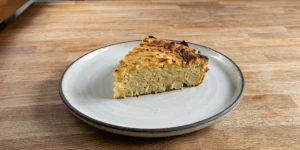
Rejbak Kurpiowski - Traditional Kurpie Potato Cake
Rejbak Kurpiowski is one of the characteristic dishes of the Kurpie region of northern Mazovia. It is a large, rustic potato cake made from raw potatoes grated into a wet, coarse mixture and baked in a generously greased baking tin. The dish is simple and filling, and its character comes from the potatoes themselves, together with the fat from fried pork cracklings, salt, pepper and marjoram.
Rejbak belongs to the old cooking tradition of the Kurpie people, whose cuisine developed around the products that could be grown, raised or obtained locally. Potatoes became particularly important in the region, and grated potatoes were used to make several substantial everyday dishes. Rejbak is one of the best-known examples of this tradition and remains closely associated with Kurpie cuisine.
The History of Rejbak
The history of the dish is closely connected with the traditional potato dishes of Kurpie. According to the description preserved by the Polish Ministry of Agriculture, the direct predecessor of rejbak was a type of potato dumpling known as rejbak. The same grated potato mixture was used for the dumplings, while in the baked version the fat from pork cracklings was mixed directly into the potato mass before baking.
The name comes from the Kurpie way of describing the process of grating potatoes. The potatoes were rubbed or grated on a traditional grater known as a rejbaśka. The preparation was therefore not based on an elaborate recipe with precisely measured ingredients, but on a familiar household method passed from one generation to another.
Kurpie developed as a distinctive cultural region in the forests of the Green and White Forests in northern Mazovia. The Kurpie people settled these areas from the late 15th and early 16th centuries, developing a cuisine based largely on locally available crops and products. Potatoes became an important part of this food tradition, alongside grains and pork products.
The traditional rejbak was therefore an economical dish: grated potatoes formed the bulk of the mixture, while pork fat and cracklings supplied richness and flavour. Depending on the household and the ingredients available, additional meat could be added. Sausage is a well-established variation, while some simpler versions used mainly potatoes and pork fat with cracklings.
What Makes a Kurpiowski Rejbak Traditional?
The most important thing is the potato mixture. The potatoes are grated raw, rather than boiled or mashed beforehand. The resulting mass should remain moist and slightly sticky. It is seasoned simply with salt, black pepper and marjoram, then enriched with fried bacon, pork cracklings or sausage. Eggs are commonly used in contemporary regional recipes to help the baked cake hold together.
There is no need for a long list of spices or elaborate additions. Rejbak is deliberately plain food. The flavour should remain dominated by baked potatoes, browned pork, rendered fat, onion and marjoram.
Traditional versions can differ from one household to another. Some cooks use only bacon or pork fat, while others add sausage as well. Some add onion, and the amount of flour or other binder can also vary. The important feature is the grated potato base and the characteristic baked form of the dish.
From the Kurpie Oven to the Table
Rejbak was traditionally baked as a large cake rather than as individual potato pancakes. The potato mixture was spread into a greased baking tin and baked until the surface became distinctly brown and crisp. Large traditional loaves could be baked in substantial bread tins, producing a thick, moist interior surrounded by a browned crust.
The finished rejbak should be firm enough to cut into slices, but the inside should remain moist and slightly sticky rather than dry. The flavour is savoury, with the sweetness of baked potatoes balanced by salty pork cracklings, pepper and marjoram.
How Rejbak Is Served in Kurpie
Rejbak can be eaten hot shortly after baking, but it is also very good once cooled. Regional descriptions traditionally associate it with simple accompaniments such as sour milk, sauerkraut or pickled cucumber. These sharp, fresh accompaniments work particularly well with the rich potato and pork cake.
Leftover slices can also be reheated and browned in a frying pan. For many people this is one of the best ways to eat rejbak: the outside becomes dark and crisp while the inside remains soft.
A Simple Dish with a Strong Regional Identity
Rejbak may look similar to potato babka, kugel or other baked potato dishes found elsewhere in Poland, but in Kurpie it has its own name and culinary history. It is officially recognised as a traditional product of the Mazovian region and was entered onto Poland's List of Traditional Products in 2018.
What makes rejbak interesting is precisely its simplicity. There is no complicated sauce and no elaborate preparation. Raw potatoes, pork, a few seasonings and a baking tin are enough to make a dish that has remained part of the culinary identity of Kurpie.
Expert tips:
Use mature potatoes
Older, floury potatoes are better suited to rejbak than young watery potatoes. The amount of liquid in the potatoes varies considerably, so the final consistency should be judged by eye rather than by following the flour quantity rigidly.
Do not dry the potato mixture too much
Rejbak should be moist and slightly sticky inside. Drain only excess watery liquid. Removing all of the potato juice can leave the finished cake too dry.
Let the pork fat stay in the mixture
The rendered fat from the bacon and pork is an important part of the traditional character of the dish. It gives the potatoes flavour and helps produce a rich, browned crust.
Keep the seasoning simple
Salt, black pepper and marjoram are enough. Rejbak is a rustic potato dish, and too many spices can easily overpower the characteristic flavour of the baked potatoes and pork.
Do not make the cake too thin
A traditional rejbak is baked as a substantial potato cake. If the mixture is spread very thinly, it will behave more like a large potato pancake and will lose the moist interior characteristic of a thicker rejbak.
Storage:
How to store
Allow the rejbak to cool completely, then cover it or transfer the slices to an airtight container. Keep refrigerated.
Shelf life
Rejbak keeps well in the refrigerator for up to 3-4 days.
Freezing instructions
Cut the cooled rejbak into thick slices and freeze them individually or separated with baking paper. Thaw in the refrigerator and reheat in an oven or frying pan.
Recipe information:
Ingredients
Substitutions for ingredients:
- Smoked sausage - Leave the sausage out and use additional smoked bacon or pork cracklings. The traditional dish does not require sausage; it is one of the common additions to the basic potato-and-fat mixture.
- Bacon - Use pork fat or finely diced salt pork with cracklings. The fat and cracklings are an important traditional element of the dish.
- Wheat flour - If needed, a small amount of potato flour or potato starch can be used, although the quantity should remain small. Depending on the potatoes, some traditional-style versions need little or no added flour.
Preparation
1. Prepare the bacon and sausage
2. Grate the potatoes
3. Mix the potato mass
4. Prepare the baking tin
5. Bake the rejbak
6. Rest and serve
Frequently Asked Questions (FAQ):
What is Rejbak Kurpiowski?
Rejbak is a traditional Kurpie potato cake made from finely grated raw potatoes and baked as one large cake. It is commonly enriched with pork fat, bacon or cracklings, and in many versions sausage, onion, eggs and marjoram.
Why is it called rejbak?
The name is connected with the Kurpie term for grating potatoes, known as rejbowanie, and with the traditional grater called a rejbaśka. The grated potato mixture is central to the dish.
Is sausage required in traditional rejbak?
No. The official description of Rejbak Kurpiowski states that various additions can be used, including fried sausage. The basic traditional character comes from the grated potatoes and fat with pork cracklings.
Should the potato mixture be squeezed completely dry?
No. Excess liquid can be removed, especially when using very watery potatoes, but the mixture should remain moist. The finished rejbak traditionally has a moist, slightly sticky interior and a crisp crust.
How is rejbak traditionally served?
It can be served hot immediately after baking or eaten cold. Traditional accompaniments include pickled cucumber, sauerkraut and sour milk.
Is rejbak the same as Polish potato babka?
They are closely related baked potato dishes, but Rejbak Kurpiowski has a specific identity within Kurpie cuisine. Its name, preparation and association with Kurpie make it more precise to describe it as a traditional Kurpie potato cake rather than simply a generic potato babka.