
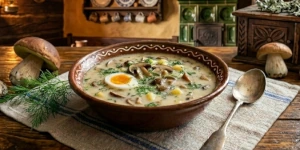
Šumavská kulajda - Czech Mushroom Dill Soup
The story behind the dish
If you visit the Šumava mountains in the south of the Czech Republic, this soup is everywhere. People go foraging in the pine forests early in the morning, bring back baskets of fresh mushrooms, and throw this together for lunch. My aunt lives near the border and she makes it whenever the weather gets foggy. It is a thick, sour, comforting soup that looks a bit strange because of all the dill, but everyone gets hooked after one bowl.
Every family there has their own way of doing it. Some like it thin, others thicken it until a spoon almost stands up. I prefer it somewhere in the middle so you can still taste the mushrooms clearly.
The whole thing relies on everyday stuff you probably already have in the pantry-just potatoes, a bit of cream, flour, and whatever mushrooms you managed to gather. When it is fresh mushroom season, everyone in the village is out in the woods looking for chanterelles or porcini, so you will see different versions of this soup on every single kitchen table. The secret to the flavor is how the fresh dill cuts through the heavy cream, especially when you finish it off with a poached egg that bleeds its warm yolk straight into the broth.
Down in southern Bohemia, this is what people grew up eating. Local folklore says the name itself comes from how old-timers used to stir the pot to thicken the soup with flour, though some folks down the street will try to tell you it was named after a 19th-century home cook named Adelajda Kuhová who used to serve a famous version of it. Either way, it was born out of the necessity of cooking with what was right outside the kitchen door.
Getting the base broth right
You do not need fancy meat stock for this. The flavor comes from the dried spices, the mushrooms, and the vinegar balance at the end. I usually just use plain water or a basic vegetable liquid. If you use dried mushrooms, make sure to save the dark water they soak in because that stuff is pure flavor gold and should go right into the pot.
Other parts of the country make different sour soups, like kyselo up north, but that uses a rye sourdough starter which gives it a completely different kind of tang. Kulajda stands out from all the other Central European mushroom soups specifically because of that heavy handful of dill thrown into the sour cream base.
What to do with the leftovers
Kulajda actually tastes better when it sits in the fridge overnight because the dill and vinegar mellow out. Just reheat it gently on the stove. I do not recommend reheating the poached eggs inside the soup though, as the yolks turn hard like rubber. Boil a fresh egg for the leftovers.
Similar dishes in the region
In the Czech Republic, there are other mushroom soups with a similar character. One of them is kyselo, a sour soup made with sourdough. Kyselo has a different flavor, but it also features mushrooms and sour notes.
In Central Europe, you can also find similar soups combining similar ingredients. The differences stem mainly from the spices and the proportions of the ingredients.
Kulajda, however, remains unique thanks to the combination of dill and mushrooms. This combination is characteristic of Czech cuisine. As a result, the soup stands out among other dishes of the region. It still appears on restaurant menus and is still cooked in homes.
Expert tips:
Preventing cream curdles
Adding cold sour cream straight into the boiling soup often makes it split into ugly little white dots. Mixing a little hot broth into the cream beforehand warms it up gradually so it blends smoothly into the pot.
Vinegar adjustments
People have different tastes for sourness. Start with just one tablespoon of vinegar, stir it well, and taste it before adding more. It is easy to add extra at the end, but difficult to fix if you pour too much too soon.
Storage:
How to store
Pour the cooled soup into a container with a tight lid and place it in the fridge. Keep any leftover poached eggs in a separate container with water.
Shelf life
The soup keeps well in the refrigerator for up to three days. The dill flavor gets much stronger by day two.
Freezing instructions
I prefer not to freeze this soup. Cream and potato soups tend to separate and become grainy and watery once thawed out.
Recipe information:
Ingredients
Substitutions for ingredients:
- Wild mushrooms - If you cannot find dried forest mushrooms, brown cremini mushrooms from the grocery store work fine. Just slice them thin and brown them in the butter before adding the flour.
- Sour cream - Heavy cream mixed with an extra squeeze of lemon juice can work if you run out of sour cream, though it will be slightly less tangy.
Preparation
1. Prep the mushrooms and spuds
2. Make the soup base
3. Whisk in the cream and herbs
4. Poach the eggs
Frequently Asked Questions (FAQ):
Can I use fresh mushrooms instead of dried ones?
Yes, fresh mushrooms are great, especially in late summer. Just slice them up and sauté them in the butter for a few minutes before you dust them with the flour to build the soup base. Dried mushrooms give a darker color, but fresh ones have a nicer texture.
What kind of vinegar is best for kulajda?
Standard spirit vinegar or simple white wine vinegar works best. Avoid dark balsamic or heavily flavored cider vinegars because they muddy the color of the cream and change the traditional taste too much.
Do I have to poach the eggs?
Not at all. If poaching feels like too much hassle or you are feeding a crowd, you can just hard-boil or soft-boil some eggs in their shells, peel them, cut them in half, and drop them into the bowls before pouring the hot soup over them.