
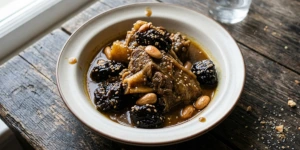
Tagine Lahm bil Barkouk Recipe (Moroccan Lamb Tagine with Prunes)
Tagine Lahm bil Barkouk is a pinnacle of Moroccan slow-cooking, showcasing the intricate balance of sweet and savory elements that defines Maghrebi cuisine. This recipe delivers incredibly tender lamb cooked in an aromatic, spiced broth, finished with glossy, honey-caramelized prunes and the crunch of toasted almonds. Achieving the perfect version of this dish relies on precise heat control, a calculated spice profile, and a two-stage cooking method that keeps the sweet elements distinct from the savory base until assembly.
What is Tagine Lahm bil Barkouk & Its Origins
Tagine Lahm bil Barkouk (frequently spelled Tajine de Veau/Agneau aux Pruneaux in French-influenced culinary texts) is an iconic Moroccan festive dish. Historically, it is served at special gatherings, family celebrations (such as weddings or baptisms), and during Eid al-Adha. The name refers to both the clay cooking vessel - the tagine - with its conical lid designed to return condensed steam back into the stew, and the core ingredients: "Lahm" (meat, traditionally mutton, lamb, or beef) and "Barkouk" (dried plums/prunes). This culinary tradition dates back centuries to Berber cooking methods, later influenced by Arab-Andalusian spice trade routes, which popularized the pairing of dried fruits with savory meats.
What Does It Taste Like?
The flavor profile of this dish is layered and complex. The foundation is intensely savory, characterized by slow-braised lamb infused with warm, earthy spices like ginger, turmeric, saffron, and black pepper. This rich, savory depth is offset by the deep sweetness of tender prunes simmered in honey, cinnamon, and a hint of floral orange blossom water. Every bite offers a contrast of textures: the melt-in-the-mouth, collagen-rich lamb, the jammy softness of the caramelized fruit, and the clean, structural crunch of blanched, shallow-fried almonds.
Popular Variations
While lamb shoulder is the premier choice for its balance of fat and connective tissue, beef chuck or bone-in short ribs are highly popular alternatives across different regions of Morocco. Some households introduce boiled eggs, halved and arranged alongside the prunes, as an additional traditional garnish representing prosperity. In the northern regions of Morocco, dried apricots (M'shmish) or dried figs are occasionally used in tandem with or as a substitute for the prunes, while modern variations might introduce a touch of grated fresh ginger or fresh orange juice into the sweet reduction glaze.
What To Serve With Tagine Lahm bil Barkouk
To enjoy this dish in the traditional Moroccan manner, serve it warm with freshly baked crusty Moroccan bread, known as Khobz. The bread acts as your utensil, designed to scoop up the tender meat and thick, emulsified sauce. While Moroccan culinary purists do not serve tagine over a bed of couscous (as couscous is treated as its own distinct course), a side of steamed fine couscous is widely popular in global dining contexts. For contrast, pair this rich dish with a light, refreshing Moroccan chopped tomato and cucumber salad dressed with a simple lemon-cumin vinaigrette.
Expert tips:
Avoid Cooking Prunes with Meat
Do not simmer the prunes in the main pot for the duration of the braise. This is a common error that turns the entire gravy dark, murky, and overwhelmingly sweet. Cooking them separately preserves the visual contrast of the golden onion sauce and keeps the sweet syrup controlled.
Searing from a Cold Start for Almonds
Always start frying blanched almonds in cold oil. Frying them in preheated hot oil browns the exterior too quickly while leaving the interior raw and soft. Starting cold ensures a uniform, crisp crunch all the way through.
Selecting the Best Lamb Cut
Use bone-in lamb shoulder (or neck). These cuts contain high amounts of collagen. Over a 2-hour simmer, this collagen breaks down into rich gelatin, which naturally thickens and emulsifies the onion gravy into a glossy, velvety consistency.
The Grated Onion Technique
Do not chop or slice the onions. Grating them releases water and cell structures that dissolve during the slow braise, acting as the primary thickening agent for the signature "deghmira" sauce base.
Storage:
How to store
Store the lamb and gravy separate from the fried almonds. Place the cooled lamb, gravy, and caramelized prunes in an airtight container in the refrigerator. Store fried almonds in a dry, room-temperature container to retain crispness.
Shelf life
The lamb tagine can be safely stored in the refrigerator for up to 3 to 4 days. Like most braises, the flavor matures and tastes even better the next day.
Freezing instructions
You can freeze the lamb and sauce (without the almond garnish) in an airtight container for up to 3 months. Thaw overnight in the refrigerator and gently reheat on the stovetop over medium-low heat, adding a splash of water if the sauce is too thick.
Recipe information:
The Lamb and Spiced Base
The Caramelized Prunes
Garnishes
Substitutions for ingredients:
- Smen (Preserved Butter) - Use ghee or a combination of unsalted butter and extra virgin olive oil to replicate the rich fat profile.
- Lamb Shoulder - Substitute with beef chuck roast, bone-in beef short ribs, or goat meat. Adjust cooking times as beef may require an extra 30 minutes to become tender.
- Orange Blossom Water - Use half the amount of rose water, or a teaspoon of fresh orange zest simmered with the prunes.
Preparation & Steeping Saffron
1. Bloom Saffron and Prepare Aromatics
2. Marinate the Lamb (Optional but Recommended)
Cooking the Tagine
1. Sear and Build the Flavor Base
2. Slow Braise
Glazing the Prunes & Preparing Garnishes
1. Caramelize the Prunes
2. Fry the Almonds
3. Reduce the Main Gravy
Assembly and Presentation
1. Plate and Garnish
Frequently Asked Questions (FAQ):
Do I need a clay tagine pot to make this recipe?
No. A heavy-bottomed cast-iron Dutch oven is an excellent substitute. It distributes and retains heat uniformly, mimicking the slow-braising environment of a traditional clay tagine.
Why are the prunes cooked separately from the lamb?
Cooking them separately prevents the sugars in the prunes from burning on the bottom of the pot during the long braise, keeps the lamb gravy from turning muddy and black, and allows you to control the level of sweetness.
Can I make this dish ahead of time?
Yes, this tagine tastes even better the next day as the spices, aromatics, and fats have time to meld. Reheat gently on the stovetop, and garnish with freshly fried almonds right before serving to keep them crunchy.
What is Ras el Hanout, and can I use it here?
Ras el Hanout is a complex North African spice blend. While some regions add a pinch (about 1/2 tsp) to this tagine, traditional Lahm bil Barkouk relies on a cleaner, simpler profile of ginger, turmeric, saffron, and cinnamon to let the lamb and sweet prunes shine.