
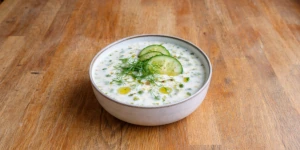
Таратор - Tarator Cold Cucumber Soup
Таратор, or tarator, is one of those dishes that immediately brings to mind summer. That is why it appears on tables very often in Bulgaria. It is a cold soup made from yogurt, cucumbers, garlic, and dill. Oil and sometimes walnuts are added. The whole thing is light and very refreshing. Bulgarians treat it a bit like a soup and a bit like a drink. Sometimes it is even drunk from a cup instead of eaten with a spoon. It is this simplicity that makes tarator so popular. On hot days, it is often served at the beginning of a meal. In many homes, it appears almost daily during the summer season. Interestingly, it can be served both as an appetizer and as an accompaniment to main courses. In restaurants, it is as common as Shopska salad. This shows how deeply rooted it is in everyday Bulgarian cuisine.
History and origin of tarator
The history of tarator dates back to ancient times. As with many dishes and recipes, there is no specific date of origin. Fermented milk-based dishes have been known in the Balkans for centuries. Yogurt was a staple product there. Therefore, it was natural to start combining it with vegetables. Many sources indicate that Ottoman cuisine had an influence on the development of tarator. For centuries, the Ottoman Empire covered the entire Balkans. And with it came culinary techniques and recipes. Over time, the recipe was adapted to local products. And so the version known today in Bulgaria was created. Some studies even mention roots dating back to Thracian times. However, this is difficult to confirm unequivocally. One thing is certain, though. For centuries, tarator has been the food of people working in the heat. It was quick to prepare. It was also cooling and filling. And that is why it has survived in tradition to this day.
Similar dishes in the Balkans and the region
Tarator is not a completely unique dish. Similar dishes exist in many countries in the region. This shows the common culinary roots of the Balkans. The most famous cousin is Greek tzatziki. The difference is mainly in the consistency. Tzatziki is thicker and treated as a sauce or dip. Tarator is thinner and functions as a soup. In Turkey, there is cacık. It is very similar, although often more sour and with the addition of mint. In Albania, you can also find a summer version of tarator. In Cyprus, there is a dish called talattouri with lemon and mint. Even in Bulgaria, there is a thick variety. It is a salad called Snezhanka, or so-called dry tarator. All these dishes share one idea. Yogurt, cucumber, and garlic as a base. And that is why we can talk about a whole family of yogurt dishes in the region. Interestingly, the similarities even extend to the Middle East. There are also cold yogurt soups there. This shows how much the cuisines of the world can intermingle.
Recipe information:
Ingredients
Preparation
1. Prepare cucumber
2. Dilute yogurt
3. Combine ingredients
4. Season and chill
Frequently Asked Questions (FAQ):
How do you keep tarator from becoming too watery or diluted?
Use thick yogurt and add cold water gradually until the desired consistency is reached. Some recipes also recommend draining grated cucumbers slightly to reduce excess moisture before mixing.
What is the best way to prepare cucumbers for tarator for the best texture?
Cucumbers can be finely diced or coarsely grated, depending on preference. Dicing gives a crunchier texture, while grating creates a smoother, more traditional soup consistency.
Should tarator be blended or mixed by hand?
Traditional tarator is mixed by hand rather than blended to preserve the fresh texture of cucumbers and herbs. Blending can make the soup too uniform and less refreshing.
How long should tarator be chilled before serving?
Chilling for at least 1-2 hours enhances the flavor and makes the soup more refreshing. Some versions are even served with ice cubes for extra cooling effect in hot weather.
What toppings or additions improve the flavor of tarator?
Common additions include crushed walnuts, fresh dill, a drizzle of olive or sunflower oil, and a touch of garlic. These ingredients add depth, texture, and traditional Balkan flavor.