
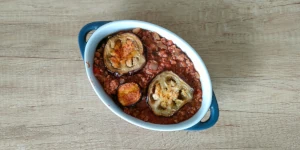
Turkish Musakka - Patlıcan Musakka
What is Turkish Musakka?
Turkish patlıcan musakka is a hot eggplant dish made with fried or lightly browned eggplant, minced meat, onions, tomatoes and usually tomato paste. The ingredients are combined with a small amount of water or broth and cooked gently until the eggplant is tender and has absorbed the flavor of the meat and tomato sauce.
Unlike the Greek version of moussaka that has become internationally famous, Turkish musakka is normally made without béchamel sauce, cheese or an egg-based topping. It is closer to a moist vegetable-and-meat stew or casserole and is commonly served as a main course with rice or pilav and often cacık.
The official Turkish Patlıcan Musakka
The Republic of Türkiye Ministry of Culture and Tourism publishes an official recipe for Patlıcan Musakka built around eggplant, minced meat, onion, tomato, tomato paste, hot water, black pepper and parsley. The eggplant is lightly fried, the meat is cooked with onion and tomato, and the two are combined with a little water before being cooked gently until tender.
The Ministry explicitly allows the final stage to be completed either by simmering the covered dish over low heat or by baking it in a moderate oven. This confirms that both methods belong comfortably within the Turkish tradition.
Just as importantly, the official recipe contains neither potatoes nor béchamel sauce. Potatoes can appear in other musakka traditions and dishes, but they are not a defining ingredient of Turkish patlıcan musakka. Béchamel belongs primarily to the internationally familiar modern Greek style rather than to this classic Turkish preparation.
Musakka is a family of dishes, not one fixed recipe
In Turkish cuisine, musakka does not refer to one immutable eggplant recipe. It describes a broader family of vegetable dishes prepared with minced or chopped meat, onion, tomato and cooking liquid.
Official Turkish culinary sources demonstrate this variation clearly. The Kültür Portalı records an Afyonkarahisar patlıcan musakka that includes fried eggplant, minced meat, onion, tomato and chickpeas. The finished dish is cooked gently with water and then inverted onto a serving tray.
The same official Turkish sources also document kabak musakkası, a zucchini or summer-squash musakka made with squash, minced meat, onion, tomatoes and water. This is strong evidence that musakka in Turkish cooking should be understood as a broader preparation style rather than simply another name for one specific eggplant casserole.
Where does Musakka come from?
Musakka belongs to a much wider family of dishes found across the eastern Mediterranean, Balkans and Middle East. Trying to assign the entire family to one modern country oversimplifies a long culinary history in which related vegetable-and-meat preparations developed and changed across Arab, Ottoman, Balkan and eastern Mediterranean kitchens.
Culinary historian Nawal Nasrallah examined this development in her study In the Beginning there Was No Musakka. She traces musakka back not to one original recipe but to a much older family of medieval Arab dishes with names such as maghmouma, buraniyya and buran. Related preparations later became established in Ottoman kitchens under forms including medfune and musakka.
According to Nasrallah, it was only toward the end of the nineteenth century that musakka became established as the standard name for a number of related variations prepared in broad, shallow cooking vessels. This means that the culinary ancestry of the dish is considerably older than the modern name.
It would therefore be misleading to say simply that modern musakka was invented by one culture or that the present Turkish recipe has existed unchanged since medieval times. The more accurate picture is one of a long transformation: older Middle Eastern vegetable-and-meat dishes entered and developed within Ottoman cooking, while the name musakka became firmly associated with a recognizable family of dishes much later, particularly by the late nineteenth century.
Eggplant in the Turkish tradition
Eggplant became extraordinarily important in Ottoman and Turkish cooking, and numerous dishes developed around it. Patlıcan musakka became one of the best-known applications of the musakka method and remains a familiar home-style dish in modern Turkey.
The official Turkish recipe describes the dish as widespread across the country during the summer months and recommends serving it hot with pilav and cacık.
Eggplant, not potatoes
Potatoes are not a defining ingredient of Turkish patlıcan musakka. Some musakka dishes can be prepared with potatoes or other vegetables, but the classic eggplant version is centered on eggplant, minced meat, onions, tomatoes and cooking liquid.
This is an important distinction from some Balkan and Greek moussaka recipes, where potatoes may form one of several layers. Turkish eggplant musakka does not require a potato layer.
Preparing the eggplant
The traditional method begins by peeling the eggplants in alternating strips, known in Turkish cooking as alacalı peeling. The eggplants are then sliced and commonly rested in salted water before being dried thoroughly.
Older eggplant varieties could have pronounced bitterness, which helps explain the traditional salted-water treatment. Modern eggplants are often much milder, but the technique remains common in Turkish recipes and also helps season the slices before cooking.
The eggplant is then fried until lightly golden. It does not need to become dark or completely soft at this stage because it will cook again with the meat sauce.
The minced meat mixture
The meat component is straightforward. Onion is cooked together with minced beef, followed by tomatoes and tomato paste. Black pepper and salt are the basic seasonings in the Ministry of Culture recipe.
Green pepper and Turkish red pepper are common additions in household and regional versions, but cumin is not an essential defining spice of patlıcan musakka. The flavor should remain centered on eggplant, meat and tomato rather than becoming heavily spiced.
Combining the Musakka
The fried eggplant is arranged in a shallow pan or baking dish and covered with the minced meat mixture. Some versions alternate eggplant and meat, while others arrange the eggplant first and spread the meat mixture over it.
A small amount of hot water or broth is added before the final cooking. This is important because Turkish musakka should remain moist rather than becoming a dry layered casserole.
The dish can be finished on the stovetop over low heat or baked in the oven. Both methods are documented by official Turkish culinary sources.
How to serve Turkish Musakka
Serve patlıcan musakka hot as a main course. Rice pilaf is one of the most traditional accompaniments because it absorbs the tomato and meat juices from the dish.
Cacık, the cold yogurt, cucumber and garlic preparation, is another particularly suitable accompaniment. The official Turkish Ministry recipe specifically recommends serving eggplant musakka with pilaf and cacık.
Regional and household variations
There is no single fixed Turkish musakka formula. The proportions of meat and vegetables, the amount of tomato, additional ingredients and even the main vegetable can vary considerably.
The official Afyonkarahisar version includes chickpeas alongside eggplant and minced meat. Official recipes from Niğde and the Ministry of Culture also document zucchini or summer-squash musakka. Afyonkarahisar culinary records list still more vegetable musakka dishes, including leek and parsley versions.
These examples show why Turkish musakka is better understood as a culinary family or preparation method rather than as a single recipe that every Turkish household must reproduce in exactly the same way.
Expert tips:
Use the official Turkish recipe as the baseline
The Turkish Ministry of Culture and Tourism documents patlıcan musakka with eggplant, minced meat, onion, tomato, tomato paste, water, black pepper and parsley. Neither potatoes nor béchamel are part of that reference recipe.
Do not confuse Turkish Musakka with Greek Moussaka
Turkish patlıcan musakka is normally a moist eggplant-and-meat dish without béchamel. A thick béchamel topping is characteristic of the internationally familiar modern Greek moussaka rather than this Turkish preparation.
Musakka is a family of dishes
Official Turkish sources document not only eggplant musakka but also zucchini musakka and regional variations containing ingredients such as chickpeas. Treat the name as a broader Turkish cooking tradition rather than one immutable formula.
Potatoes are not required
Potatoes appear in other musakka traditions and can themselves be used in vegetable musakka dishes, but they are not a defining ingredient of patlıcan musakka.
Fry the eggplant only until lightly colored
The eggplant cooks again with the meat mixture. Over-frying it at the beginning can make the finished dish excessively soft and oily.
Dry the eggplant before frying
After the salted-water rest, dry the slices thoroughly. Water on the surface causes dangerous splattering and interferes with browning.
Keep some liquid in the dish
Turkish musakka is not meant to be completely dry. A small quantity of water or broth allows the eggplant and meat flavors to combine during the final cooking.
Do not over-spice the meat
Black pepper and optionally Turkish red pepper are enough. Cumin can appear in individual recipes, but it is not a defining spice of classic patlıcan musakka.
Storage:
How to store
Cool leftover musakka promptly and transfer it to a covered container in the refrigerator.
Shelf life
Refrigerated Turkish musakka is best eaten within 3 to 4 days.
Reheating
Reheat gently in a covered pan or in the oven until thoroughly hot. Add a tablespoon or two of water if the sauce has become too thick.
Freezing
Musakka can be frozen for about 2 months, although the eggplant becomes softer after thawing. Defrost in the refrigerator before reheating.
Recipe information:
Eggplants
Meat and Tomato Sauce
Substitutions for ingredients:
- Ground Beef - Ground lamb or a mixture of beef and lamb can be used. Both suit the Turkish flavor profile, although beef is very common in contemporary patlıcan musakka.
- Fresh Tomatoes - Use good-quality canned chopped tomatoes when ripe fresh tomatoes are unavailable. Reduce the sauce slightly if the canned tomatoes contain a lot of liquid.
- Turkish Green Peppers - Use another mild thin green pepper or a small green bell pepper.
- Beef Broth - Use hot water. The official Turkish Ministry recipe uses hot water.
- Fried Eggplant - For a lighter modern variation, brush the eggplant lightly with oil and roast until browned. Frying, however, is the method documented in the official Turkish patlıcan musakka recipe.
Prepare the Eggplants
1. Peel and slice the eggplants
2. Soak in salted water
3. Fry the eggplants
Prepare the Meat Mixture
1. Cook the onion and pepper
2. Add the ground beef
3. Add the tomato paste and tomatoes
4. Add parsley
Assemble and Cook
1. Arrange the eggplant
2. Add the meat mixture
3. Add the liquid
4. Finish the Musakka
5. Serve
Frequently Asked Questions (FAQ):
What is Turkish Musakka?
Turkish musakka is a family of vegetable dishes cooked with minced or chopped meat, onion and sauce. Patlıcan musakka is the well-known eggplant version made with fried eggplant, minced meat, tomatoes and usually tomato paste.
What ingredients are used in the official Turkish Patlıcan Musakka recipe?
The Turkish Ministry of Culture and Tourism lists eggplant, oil, onion, ground meat, tomato, tomato paste, salt, black pepper, hot water and parsley. The official recipe contains neither potatoes nor béchamel.
What is the difference between Turkish Musakka and Greek Moussaka?
Turkish patlıcan musakka is generally a moist eggplant-and-meat dish without béchamel. Modern Greek moussaka is usually assembled in layers and finished with a thick béchamel topping, and it can also include potatoes.
Does Turkish Musakka contain potatoes?
Not necessarily. Potatoes are not part of the defining recipe for Turkish patlıcan musakka. Eggplant is the main vegetable in this version, although Turkish musakka as a broader category can be made with different vegetables.
Does Turkish Musakka contain béchamel sauce?
Traditional Turkish patlıcan musakka does not require béchamel. The official Turkish Ministry recipe contains no béchamel sauce.
Is Musakka always made with eggplant?
No. Official Turkish sources also document kabak musakkası made with zucchini or summer squash. Regional Turkish culinary records list still other vegetable musakka dishes, showing that the word refers to a broader family of preparations.
Are there regional versions of Patlıcan Musakka?
Yes. An official Afyonkarahisar version includes chickpeas together with eggplant, minced meat, onions and tomatoes. This demonstrates that regional Turkish musakka recipes can differ considerably from the basic national version.
Where does the word Musakka come from?
The name belongs to a much older Middle Eastern and Ottoman culinary history. Nawal Nasrallah traces modern musakka to earlier medieval Arab vegetable-and-meat preparations that later developed in Ottoman kitchens.
How old is Musakka?
Related vegetable-and-meat dishes go back to medieval Arab cuisine, but they did not necessarily use the modern name. Nawal Nasrallah argues that musakka became established as the standard name for a family of related shallow-pan dishes toward the end of the nineteenth century.
Was modern Turkish Musakka already made in medieval times?
Not in exactly the modern form. Medieval Arab cuisine contained related dishes such as maghmouma, buraniyya and buran. These traditions later influenced Ottoman cooking, but the modern name musakka became firmly established much later.
Do you have to fry the eggplant?
Frying or lightly browning the eggplant before combining it with the meat is the traditional method documented by the Turkish Ministry of Culture and Tourism. Roasting can be used as a lighter modern variation.
Can Musakka be cooked on the stovetop instead of baked?
Yes. The official Turkish Ministry recipe specifically says the assembled dish can be covered and simmered for 15 to 20 minutes or baked in a moderate oven.
Does authentic Turkish Musakka contain cumin?
Cumin can be added in individual household recipes, but it is not essential. The official Turkish patlıcan musakka recipe uses salt and black pepper without cumin.
What is traditionally served with Turkish Musakka?
The Turkish Ministry of Culture and Tourism recommends serving patlıcan musakka hot with pilaf and cacık.