
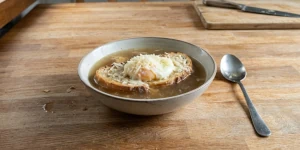
Zuppa alla Pavese Recipe - Traditional Pavia Egg and Bread Soup
Zuppa alla Pavese is one of the simplest and most recognizable dishes of Pavia in Lombardy. It is made from ingredients that were familiar to rural households: stale bread, hot broth, eggs and grated cheese. The bread is toasted, traditionally with butter, placed in a soup bowl and topped with a fresh egg. Very hot broth is then poured over everything, gently cooking the egg white while leaving the yolk soft. A generous sprinkling of Grana Padano completes the dish.
A Soup from Pavia
Zuppa alla Pavese belongs to the traditional cooking of Pavia and the surrounding countryside in Lombardy. It is a classic example of Italian cucina povera, in which ingredients that might otherwise be overlooked are turned into a satisfying meal. Stale bread was particularly valuable in rural kitchens because it could be kept for several days and softened in broth rather than thrown away.
The dish is officially recognized as part of the traditional food heritage of Lombardy. It is therefore more than simply a modern combination of bread, egg and broth: Zuppa alla Pavese has a long-standing connection with the territory around Pavia and remains one of the city's best-known traditional dishes.
The Story of Francis I and the Battle of Pavia
The most famous story surrounding Zuppa alla Pavese takes place in 1525, during the Battle of Pavia. Francis I, King of France, was defeated and captured by the forces of Charles V. According to local tradition, after his capture he was taken to a farmhouse known as Cascina Repentita near Pavia.
The story says that a local peasant woman had little food available for the unexpected and distinguished guest. She took what she had in the kitchen: broth, stale bread and an egg. The bread was toasted, the egg was placed on top and boiling broth was poured over it. In some versions of the story, cheese and butter are also included.
The story is deeply rooted in the culinary tradition of Pavia, but it should be treated as a legend rather than established historical fact. There is no reliable contemporary evidence proving that this particular bowl of soup was actually prepared for Francis I. The association with the Battle of Pavia nevertheless became an important part of the identity of the dish.
What the Historical Version May Have Looked Like
There is an interesting distinction between the famous modern recipe and the version traditionally imagined at the time of the Battle of Pavia. A local association devoted to preserving the tradition of Zuppa alla Pavese established a so-called “Rule of the Soup” based on what it considers the closest reconstruction of the historical preparation.
That reconstruction uses skinless chicken broth, toasted stale wholemeal bread, a raw egg and fresh watercress. The bread is placed in the bowl, the egg is carefully broken over it and the boiling broth is poured over the top so that the egg white sets. Watercress is sometimes included as a distinctive local element.
Cheese is often associated with Zuppa alla Pavese today, and Grana Padano or Parmesan is found in many traditional recipes. These cheeses certainly existed in northern Italy in the sixteenth century, but there is no good evidence that cheese was actually present in the legendary bowl served to Francis I. For that reason, the historical reconstruction and the later traditional recipe should not be presented as exactly the same thing.
The Traditional Pavese Recipe
The version commonly prepared today is slightly richer than the historical reconstruction. Thick slices of stale country bread are browned in butter until golden. Each slice is placed in an individual bowl and topped with a fresh egg. Grated Grana Padano is scattered over the bread and egg before very hot meat broth is poured around the bread.
The broth should be brought to a proper boil immediately before serving. It is poured carefully so that the egg yolk remains intact. The heat of the broth cooks the white around the yolk while the bread absorbs the savoury liquid. The result should be a soft egg with a still-creamy yolk, tender bread and a rich, clear broth.
Why Stale Bread Matters
Stale bread is not simply a convenient substitute for fresh bread. It reflects the way the dish developed from everyday rural cooking. Fresh bread would quickly become soft when surrounded by hot broth, while a day-old or older country loaf has enough structure to absorb the liquid without immediately disappearing into it.
In the Pavia area, local rustic breads such as Miccone are part of the region's food tradition. Stale bread from this type of loaf can be used particularly well in Zuppa alla Pavese.
Butter, Cheese and Egg
Butter gives the toasted bread a characteristic richness and is strongly associated with traditional versions of the dish. The cheese adds saltiness and a savoury flavour to the broth as it melts into the hot liquid. Grana Padano is a particularly appropriate choice for a Pavese preparation, although Parmigiano Reggiano is also widely used.
The egg is the centre of the dish. It should be fresh and handled carefully so that the yolk remains whole. The traditional method does not require a separate poaching operation: the egg is cooked directly in the serving bowl by the heat of the freshly boiled broth.
How the Egg Is Cooked
Getting the temperature right is important. The broth should be extremely hot when it reaches the bowl. Pour it quickly but carefully around the bread and egg rather than directly onto the yolk.
The hot liquid begins setting the white almost immediately. If the bowl is covered for a short time, the trapped heat can help finish cooking the white while the yolk remains soft. The finished egg should not resemble a hard-boiled egg. Its yolk is traditionally left soft and rich.
A Simple Dish with Strong Local Identity
Zuppa alla Pavese is a good example of how regional Italian cooking can turn a handful of inexpensive ingredients into a dish with a strong sense of place. Nothing about the recipe is elaborate. There are no complicated sauces or long list of seasonings. The quality of the broth, bread, eggs and cheese does most of the work.
That simplicity is part of its character. It is a soup that belongs to the countryside around Pavia, where stale bread, eggs and broth could become a complete meal. The famous royal legend later gave the humble dish an extraordinary story, but its character remains firmly rooted in everyday Lombard cooking.
How Zuppa alla Pavese Is Served
Zuppa alla Pavese should be served immediately after the broth is poured. It is normally prepared in individual bowls, with one egg and one or more slices of toasted bread per person.
The soup is best eaten while the bread is still holding some of its shape and the egg yolk remains soft. Freshly grated Grana Padano and a little black pepper can be added at the table. The result is a warm, filling first course particularly suited to cold weather.
Despite its humble origins, Zuppa alla Pavese has become one of the culinary symbols of Pavia. Its enduring appeal comes from exactly what makes it traditional: stale bread, hot broth, eggs, cheese and butter transformed into something much greater than the individual ingredients.
Expert tips:
Use stale rustic bread
A thick slice of day-old or older country bread is ideal. It should be dry enough to absorb the broth but strong enough to remain recognizable in the bowl.
Do not pour the broth directly onto the yolk
Pour the boiling broth around the bread and egg. This helps keep the yolk intact while the hot liquid cooks the white from the sides.
Keep the broth extremely hot
The traditional method relies on the heat of the freshly boiled broth to cook the egg. Bring it to a proper boil immediately before assembling the bowls.
Use Grana Padano
Grana Padano is particularly appropriate for a Pavese preparation. Parmigiano Reggiano is also commonly used, but finely grated Grana gives the dish a distinctly northern Italian character.
Do not overcook the egg
The ideal egg has a set white and a soft yolk. If the yolk becomes completely firm, the texture of the traditional preparation is lost.
Remember the historical distinction
The story connecting the soup with Francis I is a local legend. The modern traditional recipe should not be presented as a proven reconstruction of the exact meal served in 1525.
Storage:
How to store
Zuppa alla Pavese is best prepared and eaten immediately. If necessary, keep the plain broth refrigerated separately from the bread, cheese and eggs.
Shelf life
Homemade broth can generally be refrigerated for up to 3 days when cooled and stored properly. The assembled soup should not be stored because the bread becomes soggy and the egg continues to cook.
Freezing instructions
Freeze the broth by itself if necessary. Do not freeze the assembled soup with bread and egg.
Recipe information:
For the Soup
Optional Traditional Addition
Substitutions for ingredients:
- Grana Padano - Parmigiano Reggiano can be used and is also found in traditional versions of Zuppa alla Pavese.
- Meat broth - Chicken broth is particularly appropriate and is closer to some historical reconstructions of the dish. A clear vegetable broth is a later variation rather than the preferred traditional choice.
- Rustic country bread - Use a firm Italian-style white or wholemeal country loaf that has become stale. In the Pavia area, traditional local bread such as Miccone is especially appropriate.
- Butter - For a lighter modern version, the bread can be toasted without butter, but frying the bread in butter is characteristic of the traditional richer preparation.
Prepare the Bread and Broth
1. Heat the Broth
2. Toast the Bread in Butter
Assemble the Zuppa alla Pavese
1. Arrange the Bread
2. Add the Eggs
3. Pour in the Boiling Broth
4. Let the Egg Set
5. Serve Immediately
Frequently Asked Questions (FAQ):
Is Zuppa alla Pavese really from 1525?
The dish is traditionally associated with the Battle of Pavia in 1525 and the capture of Francis I, but the story of its creation for the French king is a legend rather than a documented historical fact.
What are the essential ingredients in Zuppa alla Pavese?
The dish is built around stale toasted bread, hot broth and a fresh egg. Traditional modern versions commonly add grated Grana Padano or Parmesan and butter.
Should Zuppa alla Pavese contain cheese?
Yes, cheese is very common in the traditional version served today, particularly Grana Padano or Parmesan. However, the historical reconstruction associated with the 1525 legend does not necessarily include cheese.
What broth is traditionally used?
Modern traditional recipes commonly use meat broth. A historical reconstruction promoted in Pavia uses skinless chicken broth, while other traditional recipes use beef or mixed meat broth.
What is crescione in Zuppa alla Pavese?
Crescione is watercress. It appears in a historical reconstruction of the dish associated with the Battle of Pavia, although it is not present in most modern versions of Zuppa alla Pavese.
Can I cook the egg separately?
You can, but it is less characteristic of the classic preparation. Traditionally the raw egg is placed directly on the toasted bread and the boiling broth is poured into the bowl so that the heat cooks the white.
Should the bread be fried in butter?
Yes. Frying the stale bread in butter is a characteristic feature of the traditional richer version of Zuppa alla Pavese. Some lighter modern recipes simply toast the bread.
What should the finished egg be like?
The white should be set while the yolk remains soft. The hot broth is poured immediately before serving so that the egg cooks gently in the bowl.