Babovka - Traditional Czech Marble Bundt Cake
Babovka, or bábovka in Czech, is one of the most recognizable homemade cakes in Czech cuisine. It is baked in a distinctive ring-shaped mold, usually has a light, tender crumb, and is commonly served simply dusted with powdered sugar alongside coffee or tea. There is no single recipe for bábovka: Czech families have traditionally made it in many forms, using butter, oil, milk, cream, nuts, raisins, vanilla, lemon zest or cocoa depending on the household and occasion.
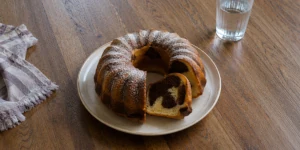
This marble version is a particularly familiar style of Czech home baking. A simple light batter is divided, part of it is mixed with cocoa, and the two batters are layered and gently swirled together before baking. The result is the characteristic light-and-dark pattern seen when the cake is sliced. The recipe uses sunflower oil rather than butter, a method that became especially common in practical Czech home recipes because oil is easy to keep in the pantry and produces a soft cake.
A little history of Czech bábovka
The history of bábovka reaches much further back than the modern marble cake. Czech culinary sources trace the word and the older form of bába or bábovka back several centuries. One of the earliest recorded references to a dish called bába dates to the second half of the 15th century, while a recipe for babu mandlovú appeared in a Czech printed cookbook from 1581. That early preparation was very different from the cake baked today: it involved almonds, sugar, anise and pieces of white bread rather than the familiar raised or sponge-like cake.
Over the following centuries the dish changed considerably. By the late 18th and early 19th centuries, bábovka had developed into a sweet baked cake prepared in a special mold. A recipe from 1819 describes a Czech-style bába made from a rich yeast dough containing eggs, cream and raisins. By the 20th century, bábovka appeared in many household versions, including recipes using baking powder rather than yeast.
This history is important because today's Czech bábovka is not one fixed historical recipe. It is better understood as a whole family of cakes sharing the characteristic ring-shaped form. The marble cocoa version belongs to this later tradition of everyday and festive home baking rather than being the original form of the dish.
Babovka in Czech homes
Bábovka became closely associated with ordinary family baking. It is the sort of cake that can be prepared from ingredients normally kept at home and served without elaborate decoration. A freshly baked bábovka can be placed on the table for breakfast, an afternoon coffee, a visit from friends or a family Sunday gathering.
The simplicity of the cake is part of its character. Czech recipes vary from rich butter-based versions to lighter oil-based cakes. Some contain raisins, walnuts, almonds or candied fruit, while others are flavored with vanilla, lemon zest or cocoa. In many households the finished cake is simply turned out of its mold and covered with a light dusting of powdered sugar.
Why the marble pattern is so characteristic
The cocoa pattern gives this version its familiar appearance without requiring a separate filling or decoration. Most of the batter remains light, while a smaller portion is mixed with cocoa and a little milk before being added to the mold. A knife or skewer can then be drawn gently through the two batters to create irregular dark and light swirls.
The pattern should remain clearly visible after baking. There is no need to mix the two batters thoroughly. A few deliberate movements are enough to create the traditional marbled appearance.
Choosing the right flour and preparing the mold
For a distinctly Czech-style result, polohrubá mouka is a good choice. This medium-textured Czech flour is commonly used in traditional Czech baking and gives the cake a different texture from one made entirely with very fine all-purpose flour.
The bábovka mold should be thoroughly greased before the batter is added, including the central tube and all the grooves. The traditional approach is to dust the greased mold with flour, although fine breadcrumbs or semolina can also be used. The important thing is that the entire surface is covered so the baked cake can be released without tearing.
Serving traditional Czech babovka
Once cooled, bábovka is commonly served in slices and lightly dusted with powdered sugar. It needs little else. Coffee, black tea or another hot drink makes a natural accompaniment, especially when the cake is served as an afternoon sweet or when guests arrive.
A good bábovka should be light enough to slice cleanly but moist enough that it does not crumble into dry crumbs. The cocoa portion should provide a gentle chocolate flavor rather than turning the entire cake into a heavy chocolate dessert.
Expert tips:
Use Czech-style polohrubá flour
Polohrubá mouka is one of the ingredients that gives this cake a distinctly Czech character. If you cannot find it, a mixture of all-purpose flour and a little semolina can approximate its texture.
Do not overwork the batter
Once the flour has been added, mix only until the ingredients are combined. Fold the beaten egg whites in gently so the finished cake stays light.
Grease every part of the mold
Bábovka molds have deep grooves and a central tube, so even a small ungreased patch can make the finished cake stick. Take particular care around the center and upper edges of the mold.
Do not overdo the marbling
Only a few gentle movements with a knife or skewer are needed. Too much swirling blends the cocoa batter into the light batter and removes the characteristic marble pattern.
Storage:
How to store
Once completely cooled, keep the bábovka covered at room temperature. A cake dome or a clean container works well.
Shelf life
The cake is best within the first two or three days, although it can remain enjoyable for several days when kept well covered.
Freezing instructions
Bábovka can be frozen. Cut it into slices, place baking paper between them and wrap them well before freezing. Thaw the slices at room temperature.
Recipe information:
Ingredients
Substitutions for ingredients:
- Sunflower oil - Melted butter can be used instead. It gives the bábovka a richer buttery flavor and a somewhat different crumb.
- Polohrubá flour - Use all-purpose flour, or replace part of it with fine semolina to approximate the texture of Czech semi-coarse flour.
- Breadcrumbs for the mold - Fine flour or semolina can be used to dust the greased mold.
Preparation
1. Prepare the oven and mold
2. Whip the egg whites
3. Prepare the light batter
4. Fold in the egg whites
5. Create the marble pattern
6. Bake and cool
7. Serve
Frequently Asked Questions (FAQ):
Is bábovka really a traditional Czech cake?
Yes. Bábovka has a long history in Czech culinary tradition, although the modern cake exists in many different forms. Historical sources document older forms of bába and bábovka centuries ago, while recipes closer to the modern baked cake became established later.
Is marble bábovka the original Czech bábovka?
No. Marble bábovka is a traditional and very familiar modern variation, but the history of bábovka is much older and includes yeast-raised and other versions without cocoa.
Why is polohrubá flour used?
Polohrubá mouka is a common Czech flour used in many traditional baked dishes and gives bábovka a characteristic texture. It is coarser than standard fine wheat flour.
Can I make bábovka with butter instead of oil?
Yes. Butter-based bábovka is also traditional. Oil is particularly common in simple home recipes because it produces a soft cake and is easy to incorporate into the batter.
How should traditional bábovka be served?
The simplest traditional presentation is to turn the cooled cake out of its mold, dust it with powdered sugar and cut it into slices. Coffee or tea is a natural accompaniment.
Why does Czech bábovka have a hole in the middle?
The characteristic ring-shaped mold is part of the traditional identity of bábovka. The central tube also helps a relatively deep cake bake more evenly.
Can bábovka contain other ingredients?
Yes. Czech households make many variations with raisins, nuts, vanilla, lemon zest, cocoa and other additions. There is no single fixed recipe that represents every Czech family tradition.