
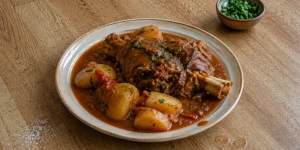
Bansko Chomlek: Traditional Bulgarian Veal Shank with Potatoes
Bansko Chomlek from the Pirin Mountains
Bansko Chomlek, known in Bulgarian as бански чомлек or чомлек по бански, is one of the dishes most strongly associated with the traditional cuisine of Bansko and the Pirin region of southwestern Bulgaria. It is a rustic slow-cooked meal built around a large veal shank, potatoes, onions and garlic. The ingredients are placed together in a deep earthenware pot and cooked for several hours until the meat is extremely tender and the vegetables are saturated with the juices from the meat, wine and seasonings.
Chomlek belongs to the same broad tradition of long-cooked mountain dishes for which Bansko is known. Alongside dishes such as kapama, it reflects an older style of cooking in which substantial cuts of meat were combined with vegetables and simple seasonings and left to cook slowly in a heavy clay vessel. The method required little attention once the pot had been prepared and was particularly well suited to winter cooking.
Bansko and the Pirin Culinary Tradition
Bansko lies at the foot of the Pirin Mountains in southwestern Bulgaria. The town has a long history, although its first known documentary mention is much more recent than the settlement itself. Bansko is first recorded in an Ottoman register of cattle breeders from 1576. By the eighteenth century, the inhabitants were mainly involved in livestock farming and crafts, while during the Bulgarian National Revival the town became an important centre of trade and craftsmanship.
This background is relevant to Bansko's food. Livestock, potatoes, onions, garlic, preserved foods and locally available wine were practical ingredients for households living in a mountain environment. Traditional cooking relied heavily on earthenware vessels and long cooking times. Chomlek is a particularly clear example of this approach: a substantial cut of meat is placed together with potatoes and vegetables, the vessel is tightly closed and the food is allowed to cook slowly for hours.
What Makes Bansko Chomlek Traditional?
The defining ingredients of Bansko Chomlek are veal shank, potatoes, onions, garlic, wine and a small group of simple seasonings. Traditional Bulgarian recipes for Chomlek po Banski also include sweet red paprika, whole black pepper, bay leaves, salt and, in some versions, small hot peppers.
The meat is normally kept in large pieces, often with the bone. The potatoes and onions are cut into large pieces rather than being finely chopped. Everything is arranged directly in the clay pot instead of being prepared as a conventional stew with a separately cooked sauce.
There is some variation between recipes. Some Bulgarian versions use white wine, while others use red wine. Older recipes simply specify wine without identifying its colour. Sunflower oil and allspice are also found in modern Bansko recipes, while some versions include hot peppers. Tomato, tomato paste or a thick tomato sauce appear in some contemporary adaptations, but they are not necessary for the traditional core of Bansko Chomlek.
The Traditional Clay Pot Method
The clay pot is an important part of the character of Chomlek. The ingredients are placed in a deep earthenware vessel, the lid is fitted and the edge is traditionally sealed with a simple dough made from flour and water. The seal helps prevent steam from escaping during the long cooking period.
Unlike a typical meat stew, the ingredients are not normally stirred during cooking. The meat slowly releases its juices while the onions soften, the potatoes absorb the cooking liquid and the garlic perfumes the whole dish. The long cooking time is what transforms the veal shank into meat that can be easily pulled away from the bone.
Traditional recipes describe cooking the sealed pot for approximately five hours over moderate heat. Modern oven methods vary. Some cooks begin at a higher temperature until the liquid reaches a simmer and then reduce the heat, while others place the covered pot in a cold oven and cook it slowly at around 150°C / 300°F for five to six hours. The exact temperature is less important than maintaining a long, gentle cooking process without allowing the pot to dry out.
Veal Shank, Potatoes, Onions and Garlic
Veal shank is the characteristic meat for the Bansko version. The cut contains both meat and bone and is particularly suitable for a long cooking process. Keeping the bone in the pot also contributes to the rich, concentrated character of the cooking juices.
Potatoes are not merely a side dish. They are cooked together with the meat and form an essential part of the traditional meal. Large potatoes withstand the long cooking better than small pieces and remain recognizable when the dish is served.
Onions are cut into large pieces and become very soft and sweet during the long cooking. Garlic is generally added as whole cloves, and some traditional recipes leave part of the cloves unpeeled. Hot dried or fresh peppers can also be included, giving the dish a gentle warmth when used.
Wine and Seasoning
Wine is added directly to the clay pot rather than being used to make a separate sauce. Bulgarian recipes differ on whether white or red wine should be used. For this reason, either a dry Bulgarian wine can be considered appropriate. Red wine gives a darker and deeper-looking cooking liquid, while white wine produces a lighter result.
The seasoning is deliberately restrained. Sweet red paprika, whole black pepper, bay leaves and salt provide the basic flavour. Allspice is common in contemporary versions, while hot peppers occur in traditional recipes as well. The dish should not taste like a heavily spiced stew; the meat, onions, garlic and slow-cooked potatoes remain the main flavours.
Chomlek and the Bansko Table
Chomlek is traditionally a substantial dish intended for a family meal or festive table rather than a light everyday stew. The large clay pot can be brought directly to the table, allowing the meat, potatoes, onions and garlic to be served together with their concentrated cooking juices.
In Bansko, the dish remains part of the local culinary identity and can still be encountered in traditional restaurants and mehana-style establishments. Modern kitchens may use an ovenproof casserole instead of a traditional earthenware pot, but the essential method remains the same: large pieces of meat and vegetables, a tightly covered vessel and several hours of slow cooking.
A Rustic Dish Rather Than a Refined Stew
The finished Chomlek should look rustic. The meat should remain in large pieces, the potatoes should be clearly visible and the onions should be very soft without disappearing completely into the sauce. There is normally no need to thicken the cooking liquid with flour or starch.
The best result has a small amount of intensely flavoured cooking liquid rather than a large quantity of broth. The long cooking concentrates the juices naturally while the potatoes and onions absorb part of the liquid. When the dish is served, spoon some of the juices over the meat and potatoes.
Traditional Recipe and Modern Variations
There is no single universally fixed recipe for Bansko Chomlek. Bulgarian sources show small differences in the amount of meat, the quantity and type of wine, the use of sunflower oil, allspice and hot peppers, and whether tomato is included.
The most conservative traditional version is based on veal shank, potatoes, onions, garlic, wine, paprika, black pepper, bay leaves and salt. Hot peppers are also documented in traditional recipes. Oil and allspice are common in modern versions and can be used without changing the basic character of the dish.
For a recipe intended to remain close to the traditional Bansko style, tomato paste, carrots, mushrooms and large quantities of additional vegetables are best avoided. They occur in modern recipes for Chomlek, but they are not necessary components of the classic Bansko combination.
From the Clay Pot to the Modern Oven
A traditional cook would have relied on an earthenware vessel and a long, gentle cooking process. Today, a modern oven makes the same method practical in a home kitchen. A heavy clay pot or ovenproof casserole with a tight-fitting lid can reproduce the basic conditions needed for the dish.
If using an unglazed or traditional clay pot, follow the manufacturer's instructions because some earthenware vessels should not be exposed to sudden temperature changes. Starting in a cold oven is a safe traditional-style approach for suitable clay cookware.
Serve Bansko Chomlek hot, preferably in the same vessel in which it was cooked. The combination of tender veal, soft potatoes, sweet onions, garlic and concentrated wine-infused juices is the essence of this hearty Pirin mountain dish.
Expert tips:
Use Veal Shank with Bone
Veal shank is the characteristic meat of Bansko Chomlek. Pieces containing bone are preferred because the long cooking produces a richer and more concentrated cooking liquid.
Keep the Pieces Large
Large pieces of potatoes, onions and meat are characteristic of the rustic preparation and hold their shape better during the long cooking process.
A Clay Pot Is Traditional
A deep earthenware pot is the traditional vessel for Bansko Chomlek. If using modern clay cookware, follow the manufacturer's instructions and avoid sudden temperature changes.
Do Not Brown the Meat
The traditional style does not depend on separately browning the meat. The ingredients are placed directly into the pot and slowly cooked together.
Do Not Stir
Once the pot has been assembled and sealed, leave it undisturbed. Stirring is unnecessary and can break apart the potatoes during the long cooking period.
Seal the Lid
A flour-and-water dough seal is a characteristic traditional technique. It helps retain steam and cooking juices during the long slow cooking.
Wine Can Be White or Red
Bulgarian recipes differ on the colour of the wine. Traditional sources may simply specify wine, while modern Bansko recipes use both white and red wine. A dry wine is the most suitable choice.
Keep the Seasoning Simple
The characteristic flavour comes from veal, potatoes, onions, garlic and slow cooking. Paprika, black pepper and bay leaves are sufficient for the basic version; hot peppers and allspice can be added according to the regional variation being followed.
Storage:
How to store
Allow the Chomlek to cool, then transfer the meat, vegetables and cooking liquid to a covered container and refrigerate.
Shelf life
Keep refrigerated for up to 3-4 days. Reheat gently until thoroughly hot.
Freezing instructions
The meat and cooking liquid can be frozen for up to 3 months. Potatoes can become softer after freezing, so the dish is best frozen when intended for reheating as a stew.
Recipe information:
Meat & Vegetables
Substitutions for ingredients:
- Veal shank - Young beef shank can be used when veal is unavailable, although veal shank is the more traditional choice for Bansko Chomlek.
- Clay pot - A heavy ovenproof casserole with a tight-fitting lid can be used in a modern kitchen.
- Wine - Use another dry wine if Bulgarian wine is unavailable. Both white and red wine are found in Bulgarian versions of Chomlek.
- Sunflower oil - The oil can be omitted or replaced with another mild cooking fat. Traditional recipes vary in whether additional fat is included.
Preparation
1. Prepare the Meat
2. Prepare the Vegetables
3. Layer the Clay Pot
4. Add the Wine and Oil
5. Seal the Clay Pot
6. Slow Cook
7. Check for Tenderness
8. Rest and Serve
Frequently Asked Questions (FAQ):
What is Bansko Chomlek?
Bansko Chomlek is a traditional dish associated with Bansko and the Pirin region of Bulgaria. It is based on veal shank, potatoes, onions, garlic and wine and is slowly cooked in a covered clay pot.
Is Bansko Chomlek a traditional Bulgarian dish?
Yes. Chomlek po Banski is documented as a traditional dish of the Bansko area and is still regarded as part of the local culinary identity.
What meat is traditionally used in Bansko Chomlek?
Veal shank is the characteristic meat used in the Bansko version. Other types of meat occur in broader Bulgarian Chomlek recipes, but veal shank is the best choice for the Bansko style.
Does Bansko Chomlek contain potatoes?
Yes. Potatoes are one of the defining ingredients of the Bansko version and are cooked together with the meat, onions and garlic.
Does Chomlek have to be cooked in a clay pot?
A clay or earthenware pot is traditional. A heavy ovenproof casserole with a tight-fitting lid is a practical modern substitute, although the traditional clay vessel is part of the dish's character.
Why is the clay pot sealed with dough?
The flour-and-water dough creates a seal around the lid and helps retain steam and cooking juices during the long cooking period.
Should Bansko Chomlek use red or white wine?
Both are found in Bulgarian recipes. Some modern Bansko recipes use white wine, others use red wine, while older recipes may simply specify wine without giving a colour. A dry wine is appropriate.
Does traditional Bansko Chomlek contain tomato?
Tomato and tomato paste appear in some modern variations, but they are not necessary ingredients of the traditional core recipe. A more conservative Bansko version uses meat, potatoes, onions, garlic, wine and simple spices.
Is hot pepper traditional in Chomlek?
Yes. Traditional Bulgarian recipes for Chomlek po Banski include small hot peppers. They can be omitted if a milder dish is preferred.
Can I use beef instead of veal?
Yes. Young beef shank is a practical substitute, but veal shank is the better choice if the goal is to stay close to the traditional Bansko version.