
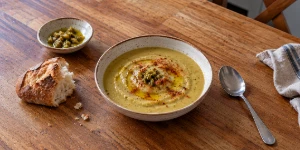
Bissara: Puréed Fava Bean Soup
What is Moroccan Bissara?
Bissara, also spelled bessara, is a Moroccan soup or thick purée made from dried fava beans or, in other versions, dried split peas. This recipe uses peeled split fava beans cooked until completely soft with garlic, then finished with cumin, paprika and olive oil.
The texture can range from a thick purée that holds its shape on the plate to a looser soup eaten with a spoon. Both styles are found in Morocco. What matters more than the exact thickness is the simple combination of legumes, garlic, olive oil and warm spices.
Bissara is especially associated with inexpensive, filling everyday food and is particularly welcome during colder weather. It is eaten throughout Morocco and is strongly associated with the north, where bowls of hot bissara are a familiar breakfast and street-food dish.
A much older dish than the modern street-food version
There is no need to trace Moroccan bissara through an uncertain story about an ancient Egyptian dish called "Bisaour". A much stronger historical connection exists within the medieval western Mediterranean itself.
An anonymous thirteenth-century cookbook from the Maghreb and al-Andalus contains a preparation described as a variety of bayssar. It uses fava beans cooked with ingredients including garlic, cumin and oil until they become a thick, smooth preparation. The medieval recipe is not identical to every bowl of bissara eaten in Morocco today, but the name, main ingredient and cooking method make it a much more useful historical comparison.
This also shows why it is difficult to assign bissara to one modern country through a simple invention story. Fava beans have been eaten around the Mediterranean and North Africa for thousands of years, and related bean purées developed in several culinary traditions.
Fava beans or split peas?
Moroccan bissara is not limited to only one legume. Dried fava beans are particularly characteristic, especially in northern versions, but split-pea bissara is also well established in Morocco. Moroccan public-health material itself describes bissara as a soup made from either dried fava beans or split peas.
This recipe focuses on the fava-bean version. Peeled split beans are particularly convenient because they break down easily and produce a smooth consistency without the need to remove tough skins after cooking.
The basic Moroccan flavor
The ingredient list is short: dried fava beans, garlic, water, cumin, paprika, salt and olive oil. The beans provide the earthy base, garlic adds depth, and cumin gives the dish its characteristic warm aroma. Sweet paprika contributes color and another layer of spice without making the soup hot.
Olive oil is important both in the pot and at the table. A generous drizzle over the finished bowl is part of the familiar way bissara is served. There is no need to describe the cumin as smoky or citrusy; ordinary ground cumin brings a warm, earthy and slightly bitter aroma of its own.
Cooking the beans
Peeled split fava beans can be cooked without soaking, although some Moroccan recipes soak them beforehand and older or particularly dry beans may benefit from it. The most useful rule is to cook them until they are completely tender rather than rely on one fixed cooking time.
Put the rinsed beans in water with the garlic and bring them to a boil. The beans tend to produce foam as they begin cooking. Skimming it is useful if it threatens to boil over or if you want a cleaner-looking pot, but the foam should not be described as dangerous impurities that must be removed.
Reduce the heat and simmer gently until the beans collapse easily when stirred. Depending on the beans, this can take roughly 60 to 75 minutes without soaking.
Purée or soup?
Traditional bissara can be quite thick. Some cooks let the beans break down naturally during cooking, while others mash, strain or blend them. An immersion blender is simply a convenient modern way to obtain a smooth texture.
Blending the beans thoroughly does not automatically make the soup gummy. A thick or pasty bissara usually means there is too little liquid for the consistency you want. Add hot water gradually until it becomes as thick or fluid as you prefer.
Finishing with spices and olive oil
Once the beans are smooth, return them to gentle heat and stir in cumin, paprika, salt and olive oil. Give everything a few minutes to come together, stirring so the thick purée does not catch on the bottom of the pot.
Taste before serving. The cumin should be noticeable but should not overwhelm the fava beans. Extra cumin, paprika or chili can be added at the table.
Popular Variations
Bissara belongs to a broader North African family of fava-bean and legume preparations, and even within Morocco the recipe is not fixed:
- Bissara Jelbana: A Moroccan version made with dried split peas instead of fava beans, or occasionally a mixture of the two. It is not merely a substitute invented for people who cannot find fava beans; split-pea bissara is an established Moroccan variation.
- Egyptian Bessara: The Egyptian dish is closely related but usually much greener because herbs or leafy greens such as parsley and coriander are puréed with the fava beans. It is generally eaten as a thick dip with bread rather than as the looser soup commonly found in Morocco.
- Spiced Bissara: Household recipes vary. Some add onion, ginger, turmeric, chili or other seasonings, while simple versions remain focused on beans, garlic, cumin, paprika and olive oil.
What to Serve with Bissara
Serve bissara hot with Moroccan bread such as khobz for dipping. Drizzle olive oil generously over the surface and sprinkle with ground cumin and, if you like, paprika or chili.
Olives, raw onion or mint tea may accompany the meal depending on the household or setting, but they are not required parts of the dish. The simplest serving of hot bissara, olive oil, cumin and bread is already complete.
Expert tips:
Use peeled split fava beans
They cook much more quickly and break down more evenly than whole dried fava beans with their skins intact.
Cook the beans until completely soft
A grainy bissara usually begins with beans that were not fully tender. They should crush almost effortlessly before you blend or strain them.
Do not worry about every bit of foam
Fava beans can foam during cooking. Skim excessive foam to control the pot, but it is not a harmful impurity that must be removed completely.
Use good olive oil for serving
Because the finished bowl is traditionally topped with olive oil, use an oil you enjoy eating raw. Its flavor will be much more noticeable on top than in the cooking pot.
Adjust the consistency with hot water
Bissara thickens considerably as it stands and cools. Add hot water gradually when cooking or reheating until it reaches the consistency you prefer.
Storage:
How to store
Transfer leftover bissara to shallow covered containers and refrigerate promptly. Do not leave the cooked bean soup at room temperature until it is completely cold.
Shelf life
Keep refrigerated and eat within 3 to 4 days. The soup will become considerably thicker in the refrigerator.
Freezing instructions
Bissara freezes well. Freeze cooled portions in suitable containers for up to about 3 months. Thaw in the refrigerator and reheat gently, adding hot water as needed to restore the consistency.
Recipe information:
Bissara
Substitutions for ingredients:
- Dried Split Fava Beans - Use dried split peas to make another traditional Moroccan style of bissara. The flavor and color will be different, but split-pea bissara is an established variation rather than merely an emergency substitute.
- Fresh Garlic - Fresh garlic is characteristic and is worth keeping. Garlic powder can be used only as a practical modern substitute, but it gives a different flavor.
- Water - Water is the traditional and simplest cooking liquid. Mild vegetable stock can be used as a modern variation, but it is not needed for an authentic fava-bean flavor.
- Sweet Paprika - Use another mild ground red pepper if necessary. Avoid strongly smoked paprika if you want to keep the familiar Moroccan flavor profile.
Preparation
1. Sort and rinse the beans
2. Start the beans and garlic
3. Skim if needed
4. Simmer until completely tender
5. Purée the Bissara
6. Add the spices and olive oil
7. Adjust the consistency
8. Serve
Frequently Asked Questions (FAQ):
Do I need to soak split fava beans before making Bissara?
Not in every recipe. Some Moroccan methods cook peeled split fava beans directly, while others soak them first. Soaking can shorten the cooking time, especially with older beans, but the important thing is to cook them until completely soft.
Is Moroccan Bissara always made with fava beans?
No. Dried fava beans are a classic base, but Moroccan bissara is also made with dried split peas or sometimes a mixture of the two.
What is the difference between Bissara and Hummus?
Moroccan bissara is based on cooked dried fava beans or split peas and is commonly served hot as a soup or thick purée with cumin and olive oil. Hummus is based on chickpeas and tahini and is usually served as a dip.
Can I make Bissara with canned fava beans?
Yes, as a shortcut, but the flavor and consistency will differ from bissara made from dried peeled beans. Drain and rinse the canned beans, simmer them with garlic and water until very soft, then purée and season.
Is Bissara vegan?
This Moroccan fava-bean version is naturally vegan when made with beans, garlic, spices, water and olive oil.
Is Bissara nutritious?
Fava beans provide plant protein and dietary fiber, while olive oil contributes most of the added fat. The overall nutritional profile depends on portion size, the amount of olive oil and how much salt is used.
How is Bissara traditionally served in Morocco?
It is commonly served hot with a generous drizzle of olive oil and extra cumin or paprika, with Moroccan bread for dipping.