
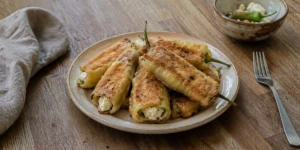
Bulgarian Chushki Burek: Cheese-Stuffed Fried Peppers
Chushki Burek: A Bulgarian Classic
Chushki Burek (чушки бюрек) is a traditional Bulgarian dish made from roasted sweet peppers filled with Bulgarian sirene cheese, coated and fried until golden. It is a familiar part of Bulgarian home cooking and is also commonly found in traditional restaurants and mehani, the informal establishments associated with Bulgarian regional cuisine.
The name combines chushki, the Bulgarian word for peppers, with burek, a term used throughout the Balkans and the wider region for foods prepared in a filled and baked or fried pastry-like style. In Bulgaria, however, chushki burek refers specifically to stuffed peppers that are roasted first, filled with cheese and then coated before frying. It is not a pastry burek in the usual sense.
Peppers, Cheese and the Bulgarian Table
The ingredients are simple and closely connected with everyday Bulgarian cooking. Sweet peppers have long been an important part of the Bulgarian diet, particularly during the warm growing season and during the preparation of preserved foods for winter. Sirene, the firm white brined cheese made throughout Bulgaria, is one of the country's most characteristic dairy products and appears in countless traditional dishes.
Chushki Burek brings these two familiar ingredients together. The peppers are first roasted until their skins loosen and their flesh becomes soft. They are then peeled and filled with crumbled sirene, usually combined with egg and sometimes fresh parsley or dill. The stuffed peppers are coated in flour and beaten egg, and in many traditional versions finished with dry breadcrumbs before being fried in sunflower oil.
A Dish of Bulgarian Home Cooking
Unlike elaborate festive dishes that require many ingredients, Chushki Burek belongs to the practical side of Bulgarian cooking. The preparation makes good use of seasonal peppers and a small amount of cheese to create a substantial meal or appetizer. The peppers can be roasted ahead of time, making the final preparation relatively quick.
This style of cooking is characteristic of Bulgarian household food: a few familiar ingredients are transformed by roasting, stuffing and frying rather than by complicated sauces or elaborate seasoning. The sirene provides most of the flavor inside the pepper, while the roasted pepper supplies sweetness and a gentle smoky taste.
The Traditional Preparation
There are several household variations of Chushki Burek. Some cooks mix sirene with egg and herbs and fry the stuffed peppers after coating them only in flour and beaten egg. Other versions use a more substantial coating of flour, egg and dry breadcrumbs, producing the crisp golden exterior that is especially familiar in Bulgarian restaurants and home kitchens.
The peppers are traditionally roasted whole before they are stuffed. Once their skins have loosened, they are peeled and carefully opened so that the filling can be inserted without tearing the flesh. The filled peppers are then coated and fried in hot oil until the outside is golden and crisp while the cheese inside is warm and soft.
Sirene: The Heart of the Filling
For a genuinely Bulgarian version, sirene should be used whenever it is available. This white brined cheese is traditionally made from cow's, sheep's or mixed milk and is an important part of Bulgarian cuisine. Its salty, crumbly character works particularly well with the sweetness of roasted peppers.
Because sirene varies in saltiness and moisture, the filling does not need much additional seasoning. A little parsley or dill is enough in versions that use herbs. Black pepper can be added, but it should remain in the background rather than dominate the dish.
From Seasonal Peppers to a Year-Round Favorite
Roasting peppers has a long place in Bulgarian food culture. Peppers are commonly roasted, peeled and preserved during the summer harvest, and roasted peppers appear in many Bulgarian preparations. Chushki Burek takes the same familiar roasted pepper and turns it into a freshly cooked dish by filling it with cheese and frying it.
This connection with seasonal produce is one reason the dish fits so naturally into Bulgarian home cooking. It does not depend on expensive or exotic ingredients. Peppers, white brined cheese, eggs, flour and oil were all practical ingredients for a household kitchen, while the preparation could be adapted according to what was available.
How Chushki Burek Is Served
Chushki Burek is usually served warm, when the roasted pepper is tender and the sirene filling is soft. It can be served as an appetizer, as part of a larger Bulgarian meal, or as a light main course accompanied by salad.
Fresh tomatoes, cucumbers and other simple seasonal salads make natural accompaniments. Some Bulgarian cooks also serve the peppers with plain yogurt or a garlic-flavored yogurt sauce, but such accompaniments are optional rather than an essential part of the dish.
The best Chushki Burek does not need elaborate presentation. Serve the golden peppers warm on a simple plate, with the roasted pepper, white sirene filling and crisp coating clearly visible. It is a straightforward Bulgarian dish whose character comes from good peppers, good cheese and careful frying.
Expert tips:
Use Bulgarian Sirene
Sirene is the traditional cheese for Chushki Burek. It has a salty, crumbly texture that works particularly well with roasted sweet peppers.
Choose Meaty Sweet Peppers
Kapia peppers are an excellent choice because they have sweet, fleshy walls and are easy to roast and peel. Choose peppers large enough to fill without tearing.
Drain the Roasted Peppers
Roasted peppers naturally release liquid as they cool. Let them drain before filling so the cheese mixture remains inside and the coating adheres properly.
Do Not Overfill
Fill the peppers generously but leave enough room to close the opening. Overfilled peppers are more likely to split during coating or frying.
Use Fine Breadcrumbs
Fine dry breadcrumbs give the traditional coating a relatively even golden crust. Avoid panko if the goal is to reproduce the usual Bulgarian style.
Fry Gently
Keep the heat moderate and turn the peppers carefully. The roasted pepper is already cooked, so the purpose of frying is mainly to brown the coating and warm the filling.
Storage:
How to store
Allow the fried peppers to cool and refrigerate them in a covered container.
Shelf life
Keep refrigerated for up to 3 days. Reheat gently in an oven or air fryer to restore some of the crispness.
Freezing instructions
For the best texture, Chushki Burek is better eaten fresh. If necessary, freeze the stuffed peppers before frying rather than freezing the finished fried dish.
Recipe information:
Peppers & Filling
Coating & Frying
Substitutions for ingredients:
- Bulgarian Sirene - Firm Greek feta can be used when Bulgarian sirene is unavailable, although sirene is the traditional Bulgarian cheese.
- Kapia Peppers - Other large, sweet red peppers can be used, provided they are fleshy enough to roast, peel and stuff without tearing.
- Sunflower Oil - A neutral vegetable oil can be used, although sunflower oil is particularly appropriate for a traditional Bulgarian preparation.
Roasting the Peppers
1. Roast the Peppers
2. Steam and Peel
3. Drain the Peppers
Preparing the Filling
1. Mix the Sirene Filling
2. Fill the Peppers
Coating & Frying
1. Prepare the Coating
2. Coat the Peppers
3. Fry the Chushki Burek
4. Drain and Serve
Frequently Asked Questions (FAQ):
What is Chushki Burek?
Chushki Burek is a traditional Bulgarian dish of roasted sweet peppers filled with sirene cheese, coated and fried until golden. It is commonly served as an appetizer or part of a larger Bulgarian meal.
What cheese is traditionally used in Chushki Burek?
Bulgarian sirene is the traditional cheese. It is a white brined cheese with a firm, crumbly texture and a salty flavor.
Do Chushki Burek need breadcrumbs?
Not every Bulgarian version uses breadcrumbs. Some recipes coat the stuffed peppers with flour and egg before frying, while other traditional versions add dry breadcrumbs for a thicker, crisp coating.
Are the peppers roasted before they are stuffed?
Yes. Traditional Chushki Burek starts with whole sweet peppers that are roasted, peeled and seeded before being filled with the cheese mixture.
Can Chushki Burek be baked instead of fried?
It can be baked as a modern alternative, but frying is the traditional method and gives the dish its characteristic golden coating.
What is usually served with Chushki Burek?
Chushki Burek can be served on its own or alongside simple Bulgarian salads. Plain yogurt or a garlic yogurt sauce is also sometimes served with it, although neither is essential to the traditional dish.