
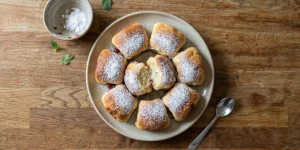
České Buchty - Traditional Sweet Yeast Buns
Traditional Czech Buchty
České buchty are traditional Czech sweet yeast buns made from a soft enriched dough and baked closely together in a buttered pan. Each bun is filled before baking, so the finished pastry has a soft golden outside and a sweet filling hidden inside. The buns are usually baked as one group rather than separately, which gives them their characteristic pull-apart form.
Buchty belong to the long Czech tradition of sweet yeast baking. Czech culinary heritage includes many forms of yeast dough, from filled buchty and koláče to regional pastries such as frgály. The Czech National Museum of Agriculture describes filled buchty and other yeast pastries as an important part of traditional Czech baking rather than simply modern bakery food. :contentReference[oaicite:1]{index=1}
Traditional fillings
Plum preserves, known in Czech as povidla, are one of the classic fillings for buchty. Povidla are much thicker than ordinary fruit jam, which makes them particularly suitable for baking inside yeast dough. They have an intense plum flavour and usually contain much less free liquid than a typical spreadable jam.
Other traditional fillings are also common. Czech recipes use sweetened tvaroh, a fresh curd cheese, as well as poppy seed filling. Some versions combine the fillings in the same baking dish so that different buns contain different flavours. This is one of the reasons there is no single filling that defines every Czech buchta.
The enriched yeast dough
The dough is richer than ordinary bread dough. Milk, egg yolks, sugar and butter give it a soft crumb and a lightly sweet flavour. The dough should be kneaded until smooth and elastic before it is left to rise.
The first rise gives the yeast time to increase the volume of the dough. After filling and shaping, the buns need another short rise in the baking pan. This second rise helps them become light and soft rather than dense.
Shaping the buchty
The risen dough can be rolled into a thicker sheet and cut into squares, or divided into pieces and flattened individually. A small amount of filling is placed in the centre of each piece. The edges are then brought together and pinched firmly to close the filling inside.
The filled pieces are placed close together in a buttered baking dish. Each bun is traditionally coated with melted butter before being placed next to the others. This helps prevent the buns from sticking together too firmly and gives the finished pastry a tender buttery surface.
Why the buns are baked together
Buchty are normally arranged side by side rather than spaced widely apart like individual rolls. During the second rise and baking, the buns expand against one another. Their sides remain soft while the exposed tops become golden.
Once baked, the individual buns can be separated by hand. This pull-apart character is an important part of the traditional presentation.
Choosing the right plum filling
Thick povidla are particularly useful because they stay inside the dough during baking. Very thin jam contains more liquid and is more likely to escape through a weak seam or spread underneath the buns.
If the filling is unusually thick, it can be loosened slightly with a small amount of rum or water. It should still remain thick enough to sit in the centre of the dough without running.
How Czech Buchty are served
Buchty are usually served as a sweet pastry, either for breakfast, as a snack or as part of a larger selection of homemade baking. They can be eaten warm or at room temperature and are often finished with a light dusting of icing sugar.
Fresh buchty are soft and buttery, with the filling providing most of the sweetness. The combination of yeast dough, fruit preserves, curd cheese or poppy seed filling reflects the wider tradition of Czech home baking, where a basic enriched dough could be prepared with different seasonal or preserved fillings.
Regional and family variations
There is no single recipe used throughout the Czech Republic. The proportion of butter, sugar and eggs varies, as does the choice of filling. Some recipes use plum preserves, while others favour tvaroh or poppy seeds. Czech recipes also differ in the way the dough is divided and shaped.
The basic idea remains the same: a soft yeast dough is filled, closed, brushed with butter and baked in a closely packed group. This simple method is what gives traditional buchty their familiar shape and texture.
Expert tips:
Keep the dough soft
Avoid adding large amounts of flour while kneading. A soft, elastic dough produces lighter buchty, while an overly stiff dough can make them dense.
Use thick filling
Povidla should be thick enough to sit on a spoon without running. Thin jam is more likely to escape from the seams during baking.
Seal every bun firmly
Pinch the edges together carefully before placing each bun in the pan. A properly closed seam helps keep the filling inside while the dough expands.
Brush the buns with butter
Coating the individual buns with melted butter before arranging them in the pan helps keep the sides tender and makes the baked buns easier to pull apart.
Watch the second rise
The buns should become visibly fuller before baking but do not need to double in size. If they are left too long, the dough can become weak and the buns may lose their shape.
Storage:
How to store
Allow the buchty to cool completely, then keep them covered at room temperature or in an airtight container.
Shelf life
They are best during the first two days. After that the yeast dough gradually becomes drier, although the buns can still be gently reheated.
Freezing instructions
Buchty can be frozen after they have cooled completely. Wrap them well and freeze for up to 2 months. Thaw at room temperature and warm gently before serving.
Recipe information:
Yeast Dough
Filling and Assembly
Substitutions for ingredients:
- Plum preserves (povidla) - Sweetened tvaroh or a thick poppy seed filling can be used. Both are traditional Czech fillings for buchty.
- Fresh yeast - Use 7 g active dry yeast instead of 30 g fresh yeast. Follow the activation instructions for the particular dry yeast used.
- Semi-coarse flour - All-purpose flour can be used if Czech semi-coarse flour is unavailable. The dough may need a small adjustment in the amount of milk.
- Whole milk - A similar dairy milk can be used, although whole milk gives the dough a richer texture.
Prepare the yeast dough
1. Prepare the yeast mixture
2. Mix the dough
3. Knead the dough
4. Let the dough rise
Fill the buchty
1. Prepare the dough pieces
2. Add the filling
3. Close the buns
Arrange and bake
1. Prepare the baking dish
2. Arrange the buns
3. Let the buns rise again
4. Bake the buchty
5. Finish and cool
Frequently Asked Questions (FAQ):
What are Czech buchty?
Czech buchty are soft sweet yeast buns filled with ingredients such as plum preserves, sweet tvaroh or poppy seed filling. They are placed close together in a baking dish and baked as a group.
What is the traditional filling for buchty?
Plum preserves called povidla are one of the classic fillings. Sweet tvaroh and poppy seed fillings are also traditional and commonly found in Czech recipes.
Can I use ordinary jam instead of povidla?
You can, but it should be thick. Very runny jam contains more liquid and is more likely to leak from the dough during baking. Thick plum preserves are better suited to traditional buchty.
What is povidla?
Povidla are thick Czech fruit preserves traditionally made from plums. They have a concentrated fruit flavour and a firm consistency that makes them particularly suitable as a pastry filling.
Why are buchty baked close together?
The buns are traditionally arranged side by side so that they rise and bake together. Their exposed tops become golden while the sides remain soft, and the finished buns can be pulled apart individually.
Can I fill buchty with tvaroh?
Yes. Sweetened tvaroh is one of the traditional alternatives to plum preserves. Raisins can also be added to the curd filling.
Can buchty be filled with poppy seeds?
Yes. Sweet poppy seed filling is another traditional Czech option. It is usually prepared as a thick mixture before being enclosed in the yeast dough.
Why do I need to brush each bun with butter?
Butter keeps the sides of the buns tender and helps prevent them from sticking too firmly to one another. It also contributes to the rich flavour of the finished pastry.
How long do Czech buchty stay fresh?
They are best during the first two days. Keep them covered so the enriched yeast dough does not dry out.
Can Czech buchty be frozen?
Yes. Once completely cooled, they can be wrapped well and frozen. Thaw them at room temperature and warm gently before serving.