
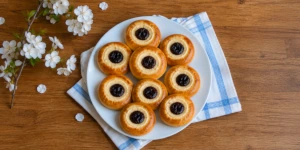
České koláče - Czech sweet pastries
How I make these sweet pastries at home
I have been baking these koláče from time to time in the last few years. They usually disappear that same evening. I got the basic idea from an old neighbor who grew up near Prague.
This is the kind of baking I like at home. The dough is soft, the ingredients are simple, and you do not need any fancy equipment. A large bowl, a wooden spoon, and your hands are enough. The finished koláče should be light and tender, with a generous layer of filling on top rather than a thick pastry shell around it.
What are Czech koláče?
Koláče are traditional Czech sweet pastries made from yeast dough and topped or filled with sweet ingredients. The most familiar traditional combinations include tvaroh (a fresh Czech curd cheese), poppy seed filling, and povidla, a thick plum preserve.
There is no single recipe for Czech koláče. Their appearance, size, dough and decoration vary considerably from one region to another. Some are small individual pastries, while others are large, flat and elaborately decorated. In Moravia, for example, you can find large regional koláče such as frgály, while the famous koláče of the Chodsko region are decorated with tvaroh, poppy seed and plum fillings in distinctive patterns.
A little history of Czech koláče
Koláče have a long history in Czech and Central European baking. They were not originally just an everyday sweet eaten with coffee. Yeast pastries of this kind were closely connected with festive occasions and the rural calendar, including weddings, village celebrations, harvest festivities and other important family or community events.
The round shape is one of the characteristic features of the pastry. Over time, different parts of the Czech lands developed their own versions, with local differences in the size of the pastry, the dough, the fillings and the way it was decorated. Historical Czech culinary sources from the 19th century already describe small round or four-sided koláče made from yeast dough and spread with plum preserves, poppy seed or tvaroh.
Some regional versions became particularly elaborate. Chodské koláče from western Bohemia, for example, traditionally combine tvaroh, poppy seed and plum fillings and are decorated with carefully arranged patterns. They were associated with celebrations and were also a way for the baker to show her skill.
Koláče also became part of Czech culinary traditions outside Europe. Czech immigrants brought them to the United States, particularly to communities in Texas and the Midwest, where the pastry developed its own local traditions. The Czech koláč therefore has a history that is both distinctly Czech and broader than the modern Czech Republic.
Getting the dough right
The main thing is the yeast. I use fresh yeast if I can get it from the European shop down the street, but active dry yeast from the supermarket works fine too.
Make sure the milk is comfortably warm rather than hot. Very hot milk can damage the yeast, while cold milk will simply make the dough take longer to rise. If it feels pleasantly warm when you touch it, you are in the right range.
Do not worry if the dough feels a little sticky at first. Keep kneading it on the table, adding only a little flour if it really needs it. After about ten minutes of pushing and folding, it should become smooth, soft and easier to handle.
Try not to make the dough unnecessarily stiff by adding too much flour. A softer dough gives you the tender texture that makes homemade koláče so good.
Choosing the fillings
For a traditional Czech-style batch, I usually choose between three classic fillings: poppy seed, tvaroh and plum povidla. These are among the combinations most strongly associated with Czech koláče.
I often make a batch with plum jam because that is what my kids like and it is the easiest filling to prepare. If you want something closer to some of the more traditional regional versions, try combining tvaroh with poppy seed or plum filling instead of using just one topping.
One important detail is that Czech povidla is not quite the same thing as an ordinary runny plum jam. It is a thick plum preserve traditionally made by cooking plums down until the mixture becomes dense enough to sit on the pastry without spreading everywhere.
Adding the crumble
The crumble, or drobenka, is simply butter, flour and sugar rubbed together between your fingers until it looks like coarse sand. Sprinkle it over the koláče before baking.
It gives the soft yeast dough a little crunch and adds another layer of sweetness. Not every regional koláč uses crumble, though, so think of it as one traditional Czech finishing touch rather than a rule that applies to every version.
Making them at home
For me, the best thing about koláče is that they do not need to look perfect. A slightly uneven edge or a filling that is not perfectly centered is part of the charm of making them at home.
Let the dough rise properly, keep it soft, use a generous amount of filling and do not rush the baking. Fresh from the oven, the combination of tender yeast dough, sweet filling and buttery crumble is exactly why these simple Czech pastries have remained popular for generations.
Expert tips:
Warm the bowl first
If your kitchen is cold, pour some hot water into your mixing bowl and pour it out before adding your ingredients. A warm bowl gives the yeast a better start.
Press the wells deeply
When using the smaller glass to make the wells in the dough, press down hard. If you do not make the wells deep enough, the middle of the pastry will rise too much in the oven and push your sweet plum filling off the sides.
Storage:
How to store
Put them in a clean container with a lid or wrap them in tin foil once they are cold.
Shelf life
They are best eaten on the same day, but they are still good for breakfast the next morning if you warm them up for a few seconds.
Freezing instructions
You can freeze these easily. Wrap them individually in plastic wrap once they are fully cool. To eat, let them thaw on the counter for an hour.
Recipe information:
Dough Ingredients
Topping and Crumble
Substitutions for ingredients:
- Plum jam - You can use thick apricot jam, raspberry jam, or even blueberry filling. Just make sure it is not runny, or it will spill over the edges.
- Butter - Lard is a good substitute. Many older cooks use half lard and half butter because it makes the baked pastry very tender.
- Dry yeast - Use about 20g of fresh yeast instead. Just crumble it right into the warm milk with a pinch of sugar and let it bubble before mixing.
Preparation
1. Mix the dough
2. Prepare fillings and crumble
3. Shape the pastries
4. Fill and bake
Frequently Asked Questions (FAQ):
Can I make the dough the night before?
Yes, you can mix the dough, cover the bowl tightly, and leave it in the fridge overnight. It will rise slowly in the cold. Just bring it back to room temperature for about an hour before you try to roll it out.
What is the traditional cheese filling?
In Czechia, they use a dry curd cheese called tvaroh. If you cannot find it, you can use quark or farmer cheese mixed with a spoonful of sugar and an egg yolk. Avoid regular cream cheese as it is too wet and salty.
How big should I make these pastries?
I make them about the size of a tea saucer for regular home eating. At Czech weddings, they make them tiny - about the size of a coin - but that is a lot of tedious work.