
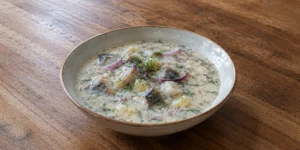
Cibulynė recipe: Lithuanian cold onion and herring soup
Cibulynė is one of the distinctive traditional cold soups of Samogitia, the western ethnographic region of Lithuania. At first glance, the combination can seem almost too simple: roasted herring, onions, cooled boiled water, pepper and a little vinegar. But this is exactly the point of the dish. Cibulynė belongs to an old style of home cooking in which a few ordinary ingredients were used to make something filling and full of character.
The soup is served cold, while the potatoes eaten alongside it are served hot. That contrast is one of the things that makes Cibulynė memorable. A spoonful of cold, sharp herring soup followed by a hot boiled potato is the traditional way to enjoy it.
A traditional dish of Samogitia
Cibulynė is strongly associated with Žemaitija, or Samogitia, and is part of the region’s distinctive culinary heritage. It is particularly connected with traditional Christmas Eve meals, known in Lithuania as Kūčios, although versions of the dish were also prepared at other times of the year.
The name itself is connected with the Samogitian word cibulis, meaning onion. That makes sense once you taste the soup: onions and roasted herring are the two flavours that define it.
Traditional Samogitian food includes several related cold dishes based on herring. Cibulynė, rasalynė and šmakalas are closely related preparations, but their additions can differ. Cibulynė is generally the simpler water-based version, while other related dishes may include beet liquid, sour milk or other additions.
The old way of roasting the herring
Older descriptions of the dish mention herring being prepared over hot embers or in a traditional oven. The fish was roasted before being added to the cold soup, giving the finished dish a much deeper flavour than uncooked salted herring.
Modern home cooks usually replace the old hearth with a frying pan or an oven. This does not change the basic character of the dish. The important part is that the salted herring is cooked or roasted first and then allowed to cool before it is combined with the water and onions.
If you have whole salted herring, it is particularly suitable for this recipe. Traditional family preparations often made use of parts of the fish that would not normally be served in a herring salad. This is one of the reasons Cibulynė has such a distinctive, full flavour.
Why cooled boiled water is used
Cibulynė is not a hot fish soup. The water is boiled first and then allowed to cool before the ingredients are combined. The finished dish is chilled and served cold.
This simple base allows the flavour of the roasted herring and raw onion to remain clearly noticeable. Vinegar adds a sharp note, while black pepper gives the soup a little warmth.
The proportions are flexible. Traditional home cooking did not always depend on exact measurements, and the final seasoning can vary according to the saltiness of the herring and the strength of the onions.
Onions are one of the main ingredients
There is no reason to hide the onion flavour in Cibulynė. Fresh onions are an essential part of the dish and should remain noticeable in the finished soup.
Finely chopping the onions helps distribute their flavour through the cold liquid. If the onions are exceptionally strong, allowing the finished soup to stand in the refrigerator for a while will soften their sharpness naturally.
Some families may use more onion than others. This kind of variation is completely normal in a traditional regional dish with many household versions.
Cold soup with hot potatoes
Cibulynė is traditionally eaten cold with hot boiled potatoes, often cooked in their skins. The potatoes are not normally mixed into the soup itself. They are served separately and eaten alongside it.
In Samogitia, hot potatoes may also be served with hemp salt or other simple regional accompaniments. The potatoes help balance the salty, sour and sharp flavour of the cold soup.
The contrast between the cold liquid and the steaming potatoes is part of the traditional experience, so it is worth serving the potatoes immediately after cooking.
A simple dish with many household variations
There is no single modern recipe that every Lithuanian family follows. Some versions include dill, some use more vinegar, and some related Samogitian soups include beet liquid or sour milk.
The recipe presented here follows the familiar basic form of Cibulynė: roasted salted herring, onions, cooled boiled water, pepper and vinegar, served cold with hot potatoes.
It is an old-fashioned dish with a very direct flavour. If you enjoy salted herring and simple regional food, Cibulynė is one of the most distinctive traditional dishes worth trying from Samogitia.
Expert tips:
Use salted herring rather than sweet marinated fillets
The flavour of traditional Cibulynė depends on the strong taste of salted herring. Sweet or heavily seasoned supermarket herring salads will change the character of the dish completely. Plain salted herring in brine is the best starting point.
Taste before adding salt
Different herrings can vary greatly in saltiness. Combine the ingredients first, then taste the chilled soup before deciding whether it needs additional salt.
Roast the fish instead of simply adding it cold
Roasting the herring is one of the details that separates Cibulynė from an ordinary cold herring salad diluted with water. The old method used embers or a traditional oven, while a dry pan or oven works well in a modern kitchen.
Give the soup time to rest
Cibulynė benefits from standing in the refrigerator before serving. One or two hours is enough for a good result, while a longer rest can give the onions and herring more time to flavour the liquid.
Serve the potatoes hot
Do not serve cold leftover potatoes with Cibulynė if you want the traditional contrast. The soup should be cold and the potatoes freshly cooked and steaming hot.
Do not overcomplicate the seasoning
Cibulynė is a very simple regional dish. Herring, onion, water, pepper and vinegar are enough. Dill and other additions can be pleasant, but they should not overpower the main flavours.
Storage:
How to store
Keep leftover Cibulynė covered in the refrigerator in a clean glass or ceramic container. Keep it cold and avoid leaving the fish soup at room temperature for extended periods.
Shelf life
The soup is best eaten on the day it is prepared or the following day. Store it continuously in the refrigerator and use it promptly, especially because the recipe contains cooked fish and raw onions.
Freezing instructions
Freezing is not recommended. The onions lose their fresh texture after thawing and the cold soup becomes watery and much less pleasant.
Store the potatoes separately
Do not put the hot potatoes into the stored soup. Keep leftover potatoes and Cibulynė in separate containers and reheat the potatoes before serving again.
Recipe information:
For the Cibulynė
For Serving
Substitutions for ingredients:
- Whole salted herring in brine - Plain salted herring fillets can be used if whole fish is unavailable. Choose fillets with as little additional seasoning as possible and roast them briefly before adding them to the soup.
- Roasting over embers - A dry frying pan or a hot oven is the most practical modern alternative. The traditional character of the recipe comes from roasting the herring before making the cold soup.
- Spirit vinegar - A mild clear vinegar can be used instead. Add it gradually because the strength of different vinegars varies. Avoid strongly coloured vinegars that would noticeably change the appearance of the soup.
- Fresh dill - Dill is optional. You can leave it out for a simpler version closer to the basic herring, onion and water preparation.
- Hemp salt - Serve the hot potatoes plain with a little salt if hemp salt is unavailable. Hemp salt is a regional accompaniment rather than an essential ingredient in every version of Cibulynė.
Preparation
1. Prepare and roast the herring
2. Remove the bones
3. Prepare the onions
4. Combine the soup
5. Chill the Cibulynė
6. Boil the potatoes
Frequently Asked Questions (FAQ):
Is Cibulynė an authentic Lithuanian dish?
Yes. Cibulynė is a traditional dish of Samogitia in western Lithuania. It is especially associated with Samogitian food traditions and is commonly mentioned among the region’s distinctive cold soups and Christmas Eve dishes.
Is Cibulynė served hot or cold?
Cibulynė is served cold. The traditional contrast comes from eating the cold herring and onion soup together with freshly boiled hot potatoes.
Do I have to roast the herring?
Roasting the herring is an important traditional feature of many Cibulynė preparations. Historically it could be cooked over embers or in an oven. A dry frying pan or modern oven is a practical substitute.
Can I make Cibulynė with ordinary pickled herring?
It is better to use plain salted herring in brine. Sweet, creamy or heavily marinated herring will give the soup a very different flavour from traditional Cibulynė.
What is the difference between Cibulynė and Šmakalas?
They are related Samogitian cold dishes based around herring. Cibulynė is generally water-based, while Šmakalas is commonly made with sour milk or another fermented dairy base.
Why is the soup eaten with potatoes?
Hot boiled potatoes balance the salty, sour and sharp flavour of the cold soup. Serving hot potatoes alongside a cold Cibulynė is one of the characteristic features of the traditional meal.
Can I prepare Cibulynė in advance?
Yes. Preparing it a few hours before serving works very well because the flavours have time to come together. Keep the soup refrigerated until serving and boil the potatoes shortly before the meal.