
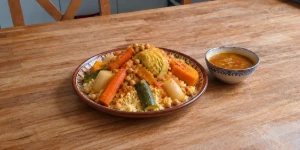
Couscous aux Sept Légumes: Seven-Vegetable Couscous
Couscous aux Sept Légumes (Seven-Vegetable Couscous) is the crown jewel of Moroccan culinary heritage. Traditionally prepared on Fridays for holy day gatherings and family celebrations, this dish is a masterclass in balancing textures, temperatures, and spices. While modern adaptations often take shortcuts, this recipe honors the classical culinary technique of multiple-stage semolina steaming over a simmering, highly aromatic vegetable broth. By utilizing a traditional couscoussier, the steam from the spiced vegetable broth rises to cook and flavor the individual semolina grains, resulting in a light, fluffy texture that cannot be replicated by simply pouring boiling water over instant couscous.
What is Couscous aux Sept Légumes & Its Origins
Couscous has deep roots in North African food traditions, including Amazigh communities; an exact invention date is not established here. The name "Couscous aux Sept Légumes" refers specifically to the inclusion of seven distinct vegetables in the stew. Seven is often given symbolic significance, but the vegetable selection and counting vary by household. The traditional selection of vegetables changes slightly with the seasons but almost always includes a foundational mix of hard roots and tender squashes: carrots, sweet turnips, cabbage, zucchini, pumpkin or butternut squash, onions, and tomatoes, bolstered by protein-rich chickpeas. This culinary technique of layered cooking ensures that delicate vegetables do not dissolve, while dense root vegetables cook completely to release their natural sugars into the broth.
What Does It Taste Like?
The flavor profile of a proper Couscous aux Sept Légumes is deeply layered and complex, yet wonderfully comforting. It is not aggressively spicy, but rather warm and deeply aromatic. The broth is infused with saffron, ginger, turmeric, and the complex notes of Ras el Hanout, balanced by the natural, earthy sweetness of the slow-cooked root vegetables and pumpkin. The semolina grains themselves have a delicate, nutty flavor, enhanced by a touch of salted butter or smna (a traditional Moroccan preserved fermented butter). Every bite offers a contrast of textures, from the silky squash and tender cabbage to the slight bite of the carrots, all unified by the light-as-air, melt-in-your-mouth texture of the hand-worked couscous.
Popular Variations
This recipe is a meat-free household version; meat-based vegetable couscous is also common. It contains butter. Other variations across North Africa include:
- With Meat (Couscous au Bœuf ou Agneau): Beef shank or lamb shoulder is slow-braised at the bottom of the couscoussier before the vegetables are added, giving the broth an ultra-rich, savory depth.
- With Chicken (Couscous au Poulet): Another common variation, utilizing whole chicken pieces simmered with sweet onions and spices.
- Tfaya Variation: A sweet-and-savory variation topped with a caramelized mixture of onions, raisins, cinnamon, and honey, often served alongside the vegetables.
- Barley Couscous (Belboula): Barley couscous has an earthier flavor and requires its own hydration and cooking schedule; belboula does not mean spelt.
What To Serve With Couscous aux Sept Légumes
A traditional seven-vegetable couscous is a complete, self-contained meal. However, custom dictates serving it with a few traditional accompaniments to balance and elevate the dining experience:
- Lben (Buttermilk): A cold glass of fermented buttermilk is traditionally served alongside the hot couscous as a refreshing accompaniment.
- Harissa Paste: For those who prefer a heat element, dilute a spoonful of hot harissa paste with a ladle of the hot vegetable broth and serve it on the side.
- Moroccan Mint Tea: Serve a fresh, hot pot of sweet gunpowder mint tea after the meal to cleanse the palate.
Expert tips:
Avoid Instant Couscous
Repeated steaming is a traditional method. Commercial precooked couscous can also be steamed, but hydration varies by product. For a quick version follow its package directions; do not substitute loose semolina flour.
Size Consistency of Vegetables
Cut the vegetables into large, uniform chunks. Delicate vegetables like zucchini and squash should be cut much larger than carrots and turnips because they cook faster. This ensures all seven vegetables finish cooking at the same time without disintegrating.
The Sealing Technique
Ensure no steam escapes from the seal between the bottom pot and top steamer of your couscoussier. Escaping steam can leave some grains insufficiently cooked. Keep the top open; a couscoussier is not a pressure cooker. Use a damp cloth dusted with flour, or kitchen foil, to seal the seam tightly.
Working the Hot Grains
Separate the grains with a spoon between steamings; use your hands only once the grains are cool enough to touch safely. This manual aerating process (raking with open fingers) introduces air between the grains, ensuring the end result is ultra-fluffy rather than dense and compacted.
Storage:
How to store
Refrigerate in shallow containers within 2 hours (1 hour above 32°C), at 4°C or colder. Store the couscous grains and the vegetable stew in separate, airtight containers in the refrigerator. Storing them together will cause the grains to absorb too much liquid and turn mushy.
Shelf life
Reheat cooked leftovers to 74°C throughout. When properly separated, both the cooked semolina and the vegetable broth/stew will keep well in the refrigerator for up to 3 to 4 days.
Freezing instructions
The steamed couscous grains freeze beautifully for up to 2 months in freezer bags. However, it is not recommended to freeze the vegetable stew, as watery vegetables like zucchini and pumpkin lose their texture and become stringy upon thawing.
Recipe information:
The Vegetables & Broth Base
The Spices
The Couscous Semolina
Substitutions for ingredients:
- Dry Semolina Couscous - Barley couscous is a traditional alternative. Follow a recipe for that grain; bulgur is a different product and not a direct replacement.
- Smna (Fermented Butter) - Use unsalted butter or ghee. Neither reproduces the aged flavor of smen.
- Turnips - Rutabaga or parsnips can be used to maintain the rustic, sweet-earthy root vegetable profile.
Step 1: Build the Broth Base
1. Sauté Aromatics & Add Hard Veggies
Step 2: Prepare and First Steam the Couscous
1. First Hydration of Semolina
2. First Steam
Step 3: Second Hydration and Steam with Intermediate Vegetables
1. Second Hydration & Fluffing
2. Add Squash and Zucchini to Pot
3. Second Steam
Step 4: Final Steam and Finish
1. Third Hydration
2. Finish with Butter/Smna & Plate
Frequently Asked Questions (FAQ):
What are the traditional seven vegetables used in couscous?
One common selection is carrots, sweet white turnips, zucchini, red pumpkin (or butternut squash), cabbage, onions, and tomatoes, with chickpeas acting as the traditional legume companion.
Can I make Moroccan couscous without a couscoussier?
Yes, you can improvise by placing a deep, fine-mesh metal colander over a standard deep stockpot. Ensure the fit is tight and wrap the joint with foil to prevent steam from escaping.
Is traditional couscous gluten-free?
No, traditional couscous is made from semolina, which is derived from durum wheat and contains gluten. For a gluten-free alternative, you can steam coarse millet or pre-prepared corn couscous.
Why do you steam the couscous three times?
Steaming three times allows the semolina grains to slowly absorb moisture and expand to their maximum volume without breaking. This results in incredibly light, fluffy, and separate grains that easily absorb the flavorful broth.