
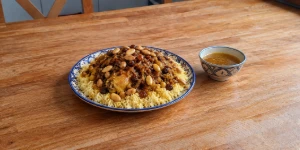
Couscous Tfaya: Moroccan Sweet & Savory Couscous
Couscous Tfaya is a pinnacle of Moroccan culinary artistry, celebrated for its complex interplay of sweet and savory elements. While many western preparations treat couscous as a quick-boil grain, this traditional recipe utilizes the authentic multi-stage steaming method. This technique yields incredibly light, fluffy semolina grains capable of holding the rich, spiced broth and the signature jammy onion and raisin topping known as Tfaya.
What is Couscous Tfaya & Its Origins
Couscous Tfaya is a Moroccan sweet-and-savory couscous preparation. A precise royal-kitchen origin is not established; medfoun means buried and is not a name for sweet-savory pairing. Tfaya couscous is prepared for special occasions, Friday family gatherings, and religious celebrations such as Eid. The star component, Tfaya, is a sweet relish made of onions slow-cooked with honey, cinnamon, and raisins until caramelized to a deep amber hue. It is traditionally served over a bed of steamed semolina and tender meat—most commonly chicken or lamb—steeped in a highly aromatic, yellow-hued ginger and saffron broth.
What Does It Taste Like?
The flavor profile of Couscous Tfaya is dynamic and layered. The base consists of melt-in-the-mouth meat infused with the earthy warmth of ginger, turmeric, and authentic saffron. This savory foundation contrasts beautifully with the topping: a deeply sweet, jammy caramelization of onions and plump raisins scented with ground cinnamon. Texturally, the dish offers a masterclass in contrast—fluffy, individual grains of steamed semolina absorb the thin, savory broth, while toasted almonds provide a clean, crunchy finish to break up the rich, soft textures of the stewed meat and caramelized onions.
Popular Variations
While the classic preparation features bone-in chicken or lamb shoulder, several regional and modern variations exist:
- Vegetarian Tfaya: The meat is omitted entirely, and the broth is prepared with chickpeas, carrots, and sweet potatoes, then topped with the classic caramelized onion and raisin mixture.
- Restaurant-style Royal Couscous with Tfaya: A modern mixed-meat presentation featuring a combination of roasted lamb, chicken, and merguez sausage, crowned with both stewed vegetables and a generous portion of Tfaya.
- Fish Tfaya: Fish with a sweet onion topping is another variation; it should not be presented as an established Essaouira specialty without a specific source.
What To Serve With Couscous Tfaya
To respect Moroccan culinary tradition and balance the richness of the sweet-savory profiles, serve Couscous Tfaya with:
- Lben (Buttermilk): Cold, fermented buttermilk is the traditional accompaniment served in small bowls alongside hot couscous to cleanse the palate.
- Moroccan Mint Tea: A hot glass of heavily sweetened gunpowder green tea steeped with fresh spearmint leaves is highly recommended post-meal.
- Simple Tomato and Cucumber Salad: A finely diced, refreshing salad dressed with lemon juice and olive oil to cut through the sweetness of the caramelized onions.
Expert tips:
The Triple Steaming Protocol
Never skip the three-stage steaming process in favor of boiling. Traditional steaming allows the starch in the semolina to expand slowly, resulting in light, airy grains that absorb the spiced broth without becoming soggy or mushy.
Low and Slow Onion Caramelization
Do not rush the onion caramelization by raising the temperature. High heat burns the onions and produces a bitter flavor. Slow cooking softens the onions and reduces their liquid before the sweetener is added.
Smen (Moroccan Preserved Butter) Usage
Smen adds a distinct, slightly funky, aged flavor characteristic of authentic Moroccan cuisine. If you have access to it, use it sparingly—start with just half a teaspoon to finish the couscous grains, as its flavor is highly concentrated.
Saffron Activation
To maximize the aroma and golden hue of your saffron, gently toast the threads in a dry pan for 30 seconds, crush them between your fingers, and steep them in 3 tbsp of warm water before adding to the broth.
Storage:
How to store
Refrigerate in shallow containers within 2 hours (1 hour above 32°C), at 4°C or colder. Store the couscous grains, savory meat broth, and Tfaya topping in separate airtight containers in the refrigerator. Storing them together will cause the couscous to absorb all the liquid and become soggy.
Shelf life
Reheat cooked leftovers to 74°C throughout. When properly stored in separate containers, the components will remain fresh in the refrigerator for up to 3 to 4 days.
Freezing instructions
The caramelized Tfaya topping and the meat broth freeze exceptionally well for up to 3 months in airtight containers. The cooked couscous can also be frozen separately for up to 3 months; fluff after reheating.
Recipe information:
The Tfaya (Caramelized Onion & Raisin Topping)
The Meat and Savory Broth
The Couscous and Garnish
Substitutions for ingredients:
- Smen (Moroccan Preserved Butter) - Use unsalted butter or ghee; neither has the aged flavor of smen.
- Medium-Grain Dry Semolina Couscous - If traditional semolina is unavailable, you can use instant couscous. Prepare it by adding boiling salted broth, covering for 5 minutes, fluffing with a fork, and stirring in butter. Follow the package liquid ratio; texture differs by product.
- Honey - Brown sugar or dark brown sugar can be used in a 1:1 ratio. Brown sugar adds a deep molasses note that complements the cinnamon beautifully.
Preparation
1. Brown the Meat and Build the Broth Base
2. Simmer the Stew
3. First Couscous Hydration and Prep
4. First Steaming of the Couscous
5. Prepare the Tfaya (Caramelized Onions)
6. Second Couscous Steaming and Hydration
7. Caramelize the Tfaya
8. Third Steaming and Buttering
9. Assembly and Presentation
Frequently Asked Questions (FAQ):
What is the difference between Couscous Tfaya and regular Moroccan couscous?
Regular Moroccan couscous is typically topped with a variety of stewed root vegetables (like carrots, zucchini, and pumpkin) in a savory broth. Couscous Tfaya is a sweet-and-savory variation topped with a sweet, spiced relish of slowly caramelized onions, raisins, and cinnamon.
Can I make Couscous Tfaya vegetarian?
Yes. Simply omit the chicken or lamb. Increase the quantity of chickpeas to 2 cups (400g) and add hardier vegetables like carrots, butternut squash, or sweet potatoes to the boiling broth to create a hearty vegetarian base.
Do I have to use a couscoussier to cook the couscous?
While a traditional Moroccan couscoussier is highly recommended for the best texture, you can use a standard stockpot fitted with a metal colander or universal steamer insert. Just ensure the seam is tightly sealed so steam only escapes through the top.
How do I reheat leftover Couscous Tfaya?
Reheat the couscous grains by steaming them in a colander over boiling water for 5-10 minutes, or microwave them covered with a damp paper towel. Reheat the meat broth and the Tfaya topping separately in saucepans over low heat before assembling.