
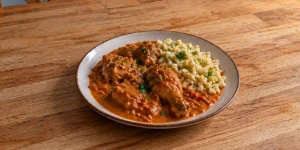
Csirkepaprikás: Hungarian Chicken Paprikash
The paprika matters
Csirkepaprikás is one of those dishes where a short ingredient list means every ingredient has to do its job. The paprika matters especially. Fresh Hungarian sweet paprika should smell warm, slightly fruity, and earthy when you open the bag. If your jar has been sitting open in a cupboard for years and smells mostly of dust, the sauce will taste flat no matter what else you do.
This is proper comfort food: chicken slowly cooked with onions and paprika, then finished with sour cream until the sauce becomes thick and creamy. It is one of the best-known dishes of Hungarian cooking and is traditionally served with nokedli or galuska, the small soft dumplings that soak up the sauce.
The dish has a long written history too. A recipe called Paprikás Tsirke appeared in the fourth edition of István Czifray's Magyar nemzeti szakácskönyv in 1830. That early recipe already used chicken, fat, onion, paprika, flour, stock and sour cream, so the basic character of the dish has changed surprisingly little.
Preparing the base
You need a good amount of onion because it forms part of the body of the sauce. Chop it fairly small and cook it slowly in the lard until soft and lightly golden. There is no need to deliberately brown it deeply, but a little color is not a disaster. What you really want to avoid is burning it.
Lard is a very natural choice here and has a long place in Hungarian cooking, although old recipes also used butter and modern cooks sometimes use oil. What matters most is giving the onion enough time to soften before the paprika goes in.
Adding the paprika
This is the part where you need to pay attention. Pull the pot off the heat before adding the ground paprika. Paprika can scorch quickly in very hot fat, and once it burns it turns unpleasantly bitter.
Stir the paprika into the warm onions and fat, then add a small splash of water straight away. The fat takes on the deep red color of the paprika and becomes the base of the sauce. Put the pot back over gentle heat only after you have added the liquid.
Cooking the meat
Add the chicken pieces and turn them in the paprika and onion mixture. Bone-in thighs and drumsticks work particularly well because they stay juicy during the slow cooking. Older recipes used pieces from whole chickens, so there is no rule that says only thighs can be used.
Add the yellow pepper and tomato. They are common in modern Hungarian versions, although they were not part of Czifray's early nineteenth-century recipe. Cover the pot and let everything simmer gently. You do not need to flood it with stock. The chicken, onions, pepper and tomato will release liquid as they cook, so start with only a small amount of water or broth and add more if the pot begins to dry out.
Finishing with sour cream
The sour cream is not just a modern addition. It already appears in the nineteenth-century written recipe for paprikás csirke. Mix it with a little flour, then stir some of the hot sauce into the mixture before adding it back to the pot. This keeps the sauce smooth and makes it much less likely that the sour cream will separate.
Once the sour cream goes in, bring the sauce back to a gentle simmer for a few minutes. Do not boil it violently. The finished sauce should be creamy and rich but still loose enough to run around a pile of nokedli.
Expert tips:
Use fresh Hungarian paprika
Paprika loses aroma during long storage. Use sweet Hungarian paprika that still has a strong smell and bright red color rather than an old jar that has faded to brown.
Take the pot off the heat for the paprika
Ground paprika can scorch quickly in very hot fat. Stir it into the onions away from direct heat and add a little liquid before returning the pot to the stove.
Lard is a traditional choice
Lard works very well with the onions and paprika and is a traditional cooking fat in Hungarian food. It is not required for paprika to develop its flavor, however, and older recipes also mention butter.
Do not drown the chicken
Csirkepaprikás should develop a concentrated sauce rather than cook in a large pot of stock. Start with a small amount of liquid and add more only when necessary.
Temper the sour cream
Mix some of the hot sauce into the sour cream and flour before returning it to the pot. This gives you a smoother sauce and reduces the chance of the dairy separating.
Storage:
How to store
Cool leftover chicken paprikash promptly and transfer it to a covered container in the refrigerator.
Shelf life
Keep refrigerated for up to 3 days. Reheat it slowly over low heat and avoid boiling the sour cream sauce hard.
Freezing instructions
Chicken paprikash can be frozen, although the sour cream sauce may separate slightly after thawing. For the best result, freeze the chicken and paprika sauce before adding the sour cream, then finish it with fresh sour cream after reheating.
Recipe information:
Ingredients
Substitutions for ingredients:
- Lard - Use a neutral oil or butter. Lard is a traditional choice, but it is not the only fat that has been used for chicken paprikash.
- Hungarian Wax Pepper - Use a mild green or pale yellow pepper. The flavor will be slightly different, but it is better than replacing it with a strongly sweet red bell pepper.
- Hungarian Sweet Paprika - Use another good-quality sweet paprika if Hungarian paprika is unavailable. Do not replace it with smoked paprika, because smoke is not part of the classic flavor of csirkepaprikás.
- Sour Cream - Crème fraîche is the closest practical substitute because it has both richness and acidity. Heavy cream can be used, but it produces a milder and less traditional sauce.
Preparation
1. Chop the vegetables
2. Cook the onions
3. Stir in the paprika
4. Add the chicken
5. Braise the chicken
6. Prepare the sour cream mixture
7. Finish the paprikash
Frequently Asked Questions (FAQ):
Is Csirkepaprikás a traditional Hungarian dish?
Yes. Chicken paprikash is one of the best-known Hungarian dishes. A recipe under the name Paprikás Tsirke appeared in István Czifray's Hungarian cookbook in 1830.
What is the difference between Csirkepaprikás and chicken pörkölt?
They are closely related paprika-based dishes, but sour cream is characteristic of paprikás. Hungarian culinary writing traditionally treats paprikás and pörkölt as distinct preparations rather than simply calling paprikás pörkölt with sour cream.
Do tomatoes and peppers belong in traditional Csirkepaprikás?
They are common in modern Hungarian home recipes, but they were not listed in Czifray's 1830 recipe. They should therefore be treated as established later additions rather than essential ingredients in every historical version.
Can I use chicken breasts instead of thighs?
Yes, but breast meat cooks much faster and dries out more easily. Add it later or reduce the cooking time and cook only until it is completely done.
What should I serve with Csirkepaprikás?
Nokedli or galuska are among the classic accompaniments because the small dumplings hold the paprika and sour cream sauce very well. Egg noodles or boiled potatoes also work.
Should I brown the chicken first?
It is not necessary. Traditional recipes often cook the chicken directly in the onion and paprika base rather than deeply searing it first.
Why should paprika be added off the heat?
Ground paprika can scorch and turn bitter when it hits very hot fat. Taking the pot off direct heat gives you more control before liquid is added.
Do I need to peel the tomato?
No. For a home-style version you can leave the skin on. If you want a completely smooth sauce, peel the tomato first or strain the finished sauce.