
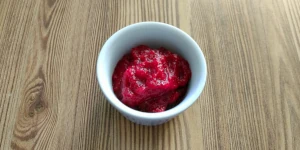
Ćwikła - Traditional Polish Beetroot and Horseradish Relish
Traditional Polish Ćwikła
Ćwikła is a traditional Polish relish made from cooked or baked beetroot and grated horseradish. The beetroot provides sweetness and an earthy flavour, while horseradish gives the mixture its characteristic sharpness. Vinegar or lemon juice is usually added to balance the sweetness and preserve the bright flavour.
It is mainly served as an accompaniment rather than as a dish on its own. Ćwikła works particularly well with roast and cold meats, sausages, eggs and other rich savoury foods. It is especially familiar on Polish festive tables, including Easter meals, but it can also be served throughout the year.
A recipe with a long Polish history
Ćwikła has one of the better documented histories among traditional Polish vegetable preparations. Mikołaj Rej described a preparation of ćwikła in his sixteenth-century work Wizerunek własny żywota człowieka poczciwego. His version used baked beetroot, grated horseradish, fennel, salt and vinegar.
Nuż też ćwikiełki w piec namiotawszy a dobrze przypiekszy, nadobnie ochędożyć, w talerzyki nakrajać, także w faseczkę ułożyć, chrzanikiem, co nadrobniej ukrążawszy, przetrząsać, bo będzie długo trwała, także koprem włoskim, troszkę przetłukszy, przetrząsać, a octem pokrapiać, a solą też trochę przesalać; tedy to jest tak osobny przysmak ani twoje limunije, bo i rosołek barzo smaczny, i sama pani ćwikła, bo już będzie i barzo smaczna, i barzo nadobnie pachnęła.
Translation:
Then take the beetroots, put them in the oven and roast them well, clean them carefully and cut them into slices. Place them in a small cask, sprinkling them with finely sliced horseradish, for this will make them keep for a long time. Also sprinkle them with a little crushed fennel, splash them with vinegar and add some salt. This is such a special delicacy, finer even than your lemons, for the brine is very tasty, and the beetroot itself is delicious and smells wonderfully.
The old recipe is not identical to the ćwikła commonly prepared today, but it shows that the combination of beetroot, horseradish and acid was already established in Polish cuisine in the sixteenth century. Modern versions are generally simpler and may use sugar, lemon juice or vinegar according to taste.
Beetroot and horseradish
The balance between beetroot and horseradish is the most important part of ćwikła. Sweet beetroot softens the sharpness of the horseradish, while the horseradish prevents the relish from becoming overly sweet.
The amount of horseradish is not fixed. Freshly grated root is much stronger than prepared horseradish from a jar, so the quantity should be adjusted after tasting. A little acid helps bring the flavours together and keeps the relish from tasting flat.
Boiled or baked beetroot
Beetroot can be boiled or baked before making ćwikła. Boiling produces a softer beetroot and is convenient when several roots are being prepared at once. Baking concentrates the natural sweetness and produces a slightly deeper flavour.
Whichever method is used, the beetroot should be cooked until tender but not waterlogged. After cooling, the skin can be removed easily and the flesh grated or finely chopped.
Preparing the relish
The cooked beetroot is grated and combined with finely grated horseradish. Vinegar or lemon juice provides acidity, while a small amount of sugar can be added when the beetroot needs more sweetness or the horseradish is particularly strong.
Ćwikła can be made fairly smooth or left with a more noticeable beetroot texture. The horseradish should be distributed evenly through the beetroot rather than left in large pieces.
Letting the flavours develop
Ćwikła can be served shortly after mixing, but allowing it to rest in the refrigerator gives the flavours time to combine. The sharpness of the horseradish also becomes more integrated with the sweetness of the beetroot.
The final flavour should remain clearly beetroot-based with a noticeable horseradish heat. If the mixture becomes too sharp, more grated beetroot can be added. If it tastes too sweet or heavy, a little more vinegar or lemon juice can restore the balance.
Ćwikła on the Polish table
Ćwikła is particularly well suited to rich and salty foods. It is commonly associated with ham, sausages, roast meats and hard-boiled eggs. The acidity and heat of the relish provide a strong contrast to fatty meats and other mild foods.
It is also closely associated with Polish Easter food. Red beetroot preparations and horseradish have long been part of Polish festive cooking, and ćwikła remains a familiar accompaniment to holiday cold cuts and eggs.
Regional and family variations
There is no single modern recipe for ćwikła. Some households make it with freshly grated horseradish, while others use prepared horseradish. The amount of sugar and vinegar varies considerably, and apples can sometimes be added to create a milder and fruitier version.
Older recipes also used different seasonings. Rej's sixteenth-century preparation included fennel, salt and vinegar alongside baked beetroot and horseradish. Modern home recipes are generally more restrained, allowing the beetroot and horseradish to remain the main flavours.
Expert tips:
Taste the horseradish first
Fresh horseradish can vary greatly in strength. Start with a smaller amount and add more after mixing rather than making the relish too hot from the beginning.
Bake the beetroot for a sweeter flavour
If you prefer a more concentrated beetroot flavour, bake the whole roots instead of boiling them. The flesh loses less water and becomes naturally sweeter.
Balance the sweetness
The amount of sugar depends on the beetroot. Very sweet roots may need little or no added sugar, while less sweet beetroot benefits from a small amount.
Add the acid gradually
Vinegar or lemon juice should sharpen the relish without dominating it. Add it gradually and taste after each addition.
Let it rest
Ćwikła can be eaten immediately, but several hours in the refrigerator allow the beetroot, horseradish and acid to develop a more balanced flavour.
Storage:
How to store
Transfer the ćwikła to a clean airtight container and keep it refrigerated.
Shelf life
For best quality, use refrigerated ćwikła within about 1 to 2 weeks. Always use a clean utensil when serving.
Freezing instructions
Freezing is not recommended. The beetroot can become watery and the texture of the relish may deteriorate after thawing.
Recipe information:
Ingredients for Ćwikła
Substitutions for ingredients:
- Fresh horseradish - Prepared horseradish from a jar can be used. Choose a relatively simple product and adjust the amount because its strength and acidity vary.
- Wine vinegar - Fresh lemon juice can be used. It gives the relish a slightly fresher and softer acidity.
- Sugar - Sugar can be omitted when the beetroot is naturally sweet enough. A small amount of honey can also be used in a modern variation.
Cook the beetroot
1. Prepare the beetroot
2. Boil the beetroot
3. Cool and peel
Prepare the ingredients
1. Grate the beetroot
2. Prepare the horseradish
Mix the ćwikła
1. Combine the beetroot and horseradish
2. Balance the flavour
Rest and serve
1. Let the flavours develop
2. Serve
Frequently Asked Questions (FAQ):
What is ćwikła?
Ćwikła is a traditional Polish relish made mainly from cooked or baked beetroot and horseradish. It is usually seasoned with vinegar or lemon juice and sometimes sugar and salt.
How old is ćwikła?
A preparation called ćwikła is documented in the sixteenth-century writings of Mikołaj Rej. His recipe used baked beetroot, grated horseradish, fennel, salt and vinegar, showing that this combination was already part of Polish cuisine at that time.
Is modern ćwikła the same as the recipe described by Mikołaj Rej?
Not exactly. Rej's sixteenth-century preparation used baked beetroot, horseradish, fennel, salt and vinegar. Modern versions commonly use similar core ingredients but often add sugar and may use lemon juice or prepared horseradish.
Should beetroot for ćwikła be boiled or baked?
Both methods work. Boiling is convenient and produces tender beetroot, while baking concentrates the natural sweetness and gives the relish a deeper beetroot flavour.
What meat is ćwikła traditionally served with?
Ćwikła pairs particularly well with ham, sausages, roast pork, cold meats and other rich savoury dishes. It is also commonly served with hard-boiled eggs.
Is ćwikła an Easter dish?
Ćwikła is strongly associated with Polish festive food and is commonly served during Easter alongside cold meats, sausages and eggs. It is not limited to Easter and can be eaten throughout the year.
Can ćwikła be made without sugar?
Yes. Sugar is not essential. Very sweet beetroot may provide enough sweetness on its own, while the amount of sugar can be adjusted according to taste.
Why is my ćwikła too spicy?
The horseradish is probably particularly strong or too much was added. Mix in more grated beetroot and adjust the acidity and sweetness to restore the balance.
Can I add apple to ćwikła?
Yes. Grated apple is used in some modern and family variations. It makes the relish milder and adds natural sweetness, although it is not part of the basic beetroot and horseradish combination.
How long should ćwikła rest before serving?
It can be served immediately, but several hours in the refrigerator, preferably overnight, allow the flavours to combine and mellow.