
Frusta Sorrentina - Traditional Sorrento Pizza
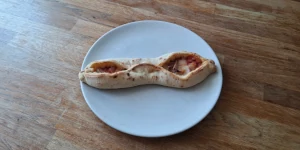
Frusta Sorrentina is one of the more unusual modern pizzas associated with the Sorrento Peninsula. Unlike the familiar round Neapolitan pizza, it is stretched into a long, narrow shape and pinched in the middle, creating a form that resembles a small boat, a bow tie or a whip. The name frusta means "whip" in Italian.
The Story of Frusta Sorrentina
Frusta Sorrentina is not an ancient Italian recipe. Its history is much more recent and can be traced to the pizzaiolo Antonino Esposito in Sorrento. Esposito created the distinctive pizza in 1996, developing the idea from a leftover portion of pizza dough. Instead of forming the dough into the traditional round pizza, he stretched it lengthwise and pinched it at the centre and at both ends, producing the characteristic elongated shape.
The new shape quickly became associated with Esposito and Sorrento. The Frusta Sorrentina was subsequently registered and became one of the signatures of his work. It is therefore more accurate to describe it as a modern Sorrento pizza specialty than as an ancient or traditional pizza of Calabria or Campania in the historical sense.
The Original Sorrento Style
The earliest and most characteristic version is deliberately simple. The elongated pizza is made with a pizza dough and topped with tomato and mozzarella, with fresh basil providing the final aromatic note. Sources describing the original Frusta Sorrentina specifically identify tomato and mozzarella as its basic filling, while later versions have been made with many different combinations of ingredients.
For a recipe intended to represent the original style, there is no need to add salami, scamorza, oregano or a large quantity of tomato sauce. Those ingredients may be perfectly suitable for modern variations, but they should not be presented as part of the original Frusta Sorrentina.
A Pizza Designed Around Its Shape
The defining feature of the Frusta is not a particular filling but its unusual shape. The dough is stretched into a long form and the centre is pinched together, leaving the tomato and mozzarella visible in the open sections. The result is somewhere between a pizza and a small elongated pizza bread, but it should not be treated as a calzone because the topping is deliberately left exposed.
The shape also makes the pizza convenient to eat away from a formal table. Frusta Sorrentina has been associated with the pizzerias and food culture of Sorrento and can be eaten as an individual pizza rather than being cut and shared like a large round pizza.
Ingredients from the Sorrento Area
The original idea is based on the same simple ingredients that define much of Campanian pizza: wheat flour, water, yeast, salt, tomato, mozzarella and basil. The emphasis is on good ingredients rather than a complicated topping.
Fior di latte and local Campanian mozzarella are particularly appropriate choices. Later versions of the Frusta have used other products associated with the Sorrento Peninsula and Campania, including local cheeses, tomatoes and other regional ingredients, but these should be understood as variations rather than as the original recipe.
How Frusta Sorrentina Is Served
Frusta Sorrentina is best served immediately after baking, while the crust is still warm and the mozzarella is soft. A small amount of extra-virgin olive oil can be added after baking. The simplicity of the original version allows the tomato, mozzarella, basil and baked dough to remain the main flavours.
Because the Frusta Sorrentina is a relatively recent creation, there is no single centuries-old family recipe that defines it. Its authenticity comes instead from respecting the Sorrento origin, the characteristic elongated shape and the simple tomato-and-mozzarella combination associated with the original.
Frusta Sorrentina and Its Modern Variations
Today the name Frusta Sorrentina can be encountered with different toppings. Pizzerias and the creator himself have developed numerous versions using ingredients from Campania and the Sorrento Peninsula. These can include different cheeses, vegetables, cured meats and other pizza toppings.
For a traditional-style preparation, however, keeping the topping simple is the better choice. Tomato, mozzarella and basil represent the original concept much more faithfully than a heavily stuffed version with salami and several types of cheese.
Expert tips:
Do not treat it like a calzone
The Frusta Sorrentina is not a fully enclosed stuffed pizza. Its characteristic appearance comes from the elongated dough and the pinched centre, with the tomato and mozzarella remaining visible.
Keep the original topping simple
For the most historically faithful version, use tomato, mozzarella and basil. Salami, scamorza, vegetables and other toppings belong to later variations rather than the original Frusta Sorrentina.
Drain the mozzarella well
Excess liquid can make the centre of the pizza wet. Cut the mozzarella into pieces and allow it to drain before using it.
Use a very hot oven
Frusta Sorrentina is a pizza, so a thoroughly heated oven gives the dough a better rise and helps the crust brown before the topping dries out.
Storage:
How to store
Frusta Sorrentina is best eaten immediately after baking. If you have leftovers, allow them to cool and refrigerate them in a covered container.
Shelf life
Leftover Frusta can be kept refrigerated for up to 2 days.
Reheating
Reheat in a hot oven until the crust is warm and crisp again. Avoid the microwave if possible because it softens the crust.
Freezing instructions
For the best result, freeze the dough rather than an already baked Frusta. Portion the dough after kneading, wrap each portion well and thaw it slowly in the refrigerator before bringing it back to room temperature.
Recipe information:
Pizza Dough
Traditional Topping
Substitutions for ingredients:
- Fior di latte mozzarella - Fresh Campanian mozzarella can be used, provided it is drained well before adding it to the pizza.
- Fresh tomatoes - Good-quality crushed tomatoes or passata can be used for a practical home version.
- Fresh brewer's yeast - About 1 g of active dry yeast can be used in its place, adjusting the fermentation time as necessary.
Prepare the Dough
1. Mix the dough
2. Let the dough rise
3. Divide the dough
Shape the Frusta
1. Stretch the dough
2. Create the characteristic shape
3. Add the tomato and mozzarella
Bake and Finish
1. Bake the Frusta
2. Finish with basil and olive oil
Frequently Asked Questions (FAQ):
Where does Frusta Sorrentina come from?
Frusta Sorrentina comes from Sorrento in Campania. It was created by pizzaiolo Antonino Esposito in 1996 and became one of his signature pizza creations.
Is Frusta Sorrentina a traditional Calabrian dish?
No. It should not be described as a traditional Calabrian dish. Its documented origin is Sorrento, in the Campania region of southern Italy.
Is Frusta Sorrentina an old traditional Italian recipe?
No. Unlike historic regional dishes, Frusta Sorrentina has a clearly documented modern origin in 1996. Its authenticity comes from following the Sorrento style and the original concept rather than from an ancient recipe tradition.
What was the original Frusta Sorrentina topped with?
The original version is associated with a simple combination of tomato and mozzarella, with basil and, in later descriptions, additional mozzarella added after baking. Modern versions can use many other toppings.
Is Frusta Sorrentina the same as a calzone?
No. Although both use pizza dough and can contain similar ingredients, Frusta Sorrentina has its characteristic elongated shape and an exposed topping rather than being completely enclosed.
Why is it called Frusta?
The Italian word frusta means "whip". The name refers to the elongated shape of the pizza, which resembles a whip.