
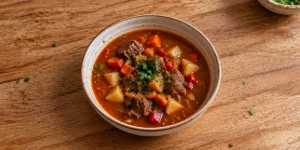
Gulyásleves - Traditional Goulash Soup
What Hungarian Gulyásleves actually is
Gulyásleves is a proper soup. It has chunks of beef, potatoes and vegetables sitting in plenty of red paprika broth, and you eat it with a spoon. That matters because outside Hungary the word goulash is often used for thick beef stews that are much closer to other dishes than to Hungarian gulyásleves.
The dish is strongly connected with the cattle-herding culture of the Great Hungarian Plain. The Hungarian word gulyás originally means a cattle herder, and the older family of gulyás dishes grew out of simple meat dishes cooked by herdsmen. Over time the dish changed. Potatoes, root vegetables and small pinched noodles became common in the soup version familiar today.
The name gulyásleves itself belongs to the later development of the dish. Hungarian ethnographic sources describe the soup form appearing regularly from the late nineteenth century, while older references to gulyás or gulyáshús could describe somewhat different meat preparations.
Getting the beef and onions right
Beef shank is excellent here. It contains connective tissue that softens during the long simmer and gives the broth body. Chuck also works if you cannot find shank.
Cut the meat into small cubes, roughly 2 to 3 cm across. Gulyásleves is supposed to be easy to eat with a spoon, so you do not want enormous stew-sized chunks.
You also need a good amount of onion, but there is no rule that the onion must weigh half as much as the meat. Two large onions for this amount of beef give the soup plenty of flavor and body without turning the broth excessively sweet or thick.
Cooking the onion and paprika base
Melt the lard and cook the onions slowly until they are soft and translucent. They can pick up a little color, but there is no need to deliberately brown them deeply.
Lard is a traditional and very good choice for this dish. It is not magic, though. If you do not use pork fat, a neutral cooking oil will still produce a good gulyásleves. Strongly flavored extra virgin olive oil is simply less typical of Hungarian cooking.
Take the pot off the direct heat before stirring in the ground paprika. Paprika can scorch quickly in very hot fat and burned paprika becomes unpleasantly bitter. Mix it with the onions, then continue with the meat and liquid.
The paprika matters
Use good Hungarian sweet paprika if you can get it. It should have a strong red color and a fresh, warm, slightly sweet and peppery aroma. It should not naturally taste smoky; smoked paprika is a different product and gives gulyásleves a different flavor.
You can also add a little hot Hungarian paprika if you want some heat, but the soup does not have to be fiery.
The slow simmer
Add the beef, garlic, crushed caraway, tomato and fresh pepper, then add only enough water to keep the meat gently simmering at first. Let the beef cook slowly until it begins to soften.
Once the meat is nearly tender, add the potatoes, carrots and parsley root and pour in enough additional water to turn the concentrated meat base into a proper soup. This two-stage method keeps the meat flavorful while still giving you the generous broth expected from gulyásleves.
Carrots, parsley root and potatoes
Modern Hungarian gulyásleves commonly contains potatoes and soup vegetables such as carrots and fehérrépa. Fehérrépa is usually parsley root, which looks a little like a pale carrot. It is often incorrectly translated as parsnip, but the two vegetables are not quite the same.
If parsley root is impossible to find, parsnip can be used, but it is sweeter. Use a little less so it does not change the character of the broth too much.
What about Csipetke?
Csipetke are tiny pinched pieces of stiff egg-and-flour dough traditionally cooked with soups such as gulyásleves. Their name comes from the Hungarian verb csípni, meaning to pinch.
You do not absolutely need them for a simple home pot of gulyásleves, especially when the soup already contains plenty of potatoes. But they are a very traditional addition and worth making when you want the full version.
Expert tips:
Do not use flour to thicken the soup
Traditional gulyásleves is made without a flour roux. The onions, potatoes, meat and long cooking give the broth enough body on their own.
Use fresh paprika
Good sweet Hungarian paprika should have a strong red color and a fresh, warm, slightly sweet and peppery smell. Replace old paprika that has become dull brown and nearly odorless.
Hungarian paprika is not naturally smoky
Do not use smoked paprika unless you deliberately want a different flavor. Classic Hungarian sweet paprika gives color, sweetness and pepper aroma without the smoke associated with Spanish-style smoked paprika.
Parsley root is better than parsnip
Hungarian fehérrépa normally means parsley root. Parsnip can work when parsley root is unavailable, but it is noticeably sweeter.
Let the beef decide the cooking time
Beef shank does not always soften on the same schedule. If it is still firm after 90 minutes, keep simmering it gently before adding the vegetables.
Storage:
How to store
Cool the soup promptly and transfer it to a covered container in the refrigerator.
Shelf life
Keep refrigerated for up to 3 days. Reheat gently until piping hot.
Freezing instructions
The soup can be frozen, but cooked potatoes often become softer and slightly grainy after thawing. If you are deliberately making a freezer batch, freeze the meat and broth before adding the potatoes.
Recipe information:
Gulyásleves
Optional Csipetke
Substitutions for ingredients:
- Pork Lard - Use sunflower oil or another neutral cooking oil. Lard gives a more traditional flavor, but it is not essential for the dish to work.
- Beef Shank - Use beef chuck or another well-marbled stewing cut with enough connective tissue for long cooking.
- Hungarian Wax Pepper - Use a mild pointed yellow or green pepper. Half a green bell pepper will also work if Hungarian peppers are unavailable.
- Parsley Root - Use a small parsnip if parsley root is unavailable, but use less because parsnip is sweeter.
- Csipetke - Simply leave them out. Potatoes already make the soup substantial, although csipetke are a traditional addition.
Preparation
1. Cook the onions
2. Add the paprika
3. Add the beef and seasonings
4. Add the tomato and pepper
5. Slowly cook the beef
6. Add the vegetables
7. Finish the soup
8. Make the csipetke
Frequently Asked Questions (FAQ):
Is Hungarian Gulyásleves a soup or a stew?
Gulyásleves is a soup. It contains plenty of broth along with beef, onions, paprika, potatoes and often root vegetables and csipetke. Thick Hungarian meat dishes are better compared with pörkölt than with gulyásleves.
Where does Gulyásleves come from?
The wider gulyás tradition is strongly associated with Hungarian cattle herders and the Great Hungarian Plain. The modern soup developed over time from older meat dishes and became established nationally.
Is Gulyásleves a Hungarikum?
Yes. Hungarian goulash soup was added to the official Collection of Hungarikums in 2017.
Does authentic Gulyásleves contain potatoes?
Potatoes are standard in the modern form of gulyásleves. Ethnographic sources indicate that potatoes were added to the older meat dish later, but they are now one of the defining ingredients of the familiar soup.
Does Gulyásleves contain carrots?
Many modern Hungarian recipes contain carrots and other soup vegetables such as parsley root or celery. Exact vegetable combinations vary by household and region.
Do I need to add Csipetke?
No, but they are very traditional. Csipetke are tiny pieces of stiff egg-and-flour dough pinched by hand and cooked in the soup.
Should Gulyásleves be thickened with flour?
No. The official Hungarian description specifically notes that good gulyásleves is prepared without a flour roux.
Can I make this in a slow cooker?
Yes, but prepare the onion and paprika base separately first. Then transfer it with the beef and other ingredients to the slow cooker and add the potatoes and root vegetables late enough that they do not completely break down.
Can I use smoked paprika?
It is not the best choice for a classic gulyásleves. Traditional Hungarian sweet paprika is not smoked, so smoked paprika gives the soup a noticeably different character.