
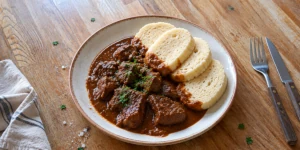
Hovězí guláš - Authentic Czech Beef Goulash
My experience with this stew
I have cooked this goulash in my kitchen more times than I can count. It is the kind of food that tastes better on the second day when all the flavors have had time to sit together in the fridge. In Czech pubs, they usually serve it with bread dumplings and some raw sliced onions on top. It is simple stuff - no fancy tricks needed, just patience and a big pot.
What meat to buy
You need beef shank. In Czech butcher shops, look for "kližka". It has a lot of tough white bits and fat running through it. Do not trim this off. If you use lean beef like sirloin, the meat will end up dry and tough like shoe leather. The tough bits melt down during the slow simmer and make the sauce thick and sticky. I usually cut it into chunks about two fingers wide.
The onions are just as important as the meat. The old rule is to use the same amount of onions as meat. I do not weigh the onions, I just pile up chopped onions next to the meat chunks on the board until they look about equal in volume. If you use too little onion, your sauce will be thin and watery.
How to get the sauce right
The deep brown color comes from browning the onions. Cook them in lard over medium heat. Do not rush this step. They need to go dark yellow, almost brown, but do not let them burn or the sauce will taste bitter. Once they are dark, throw in the meat and let it brown. Then turn down the heat before adding the paprika. If paprika hits dry, burning hot fat, it turns bitter and ruins the whole pot. I stir it for maybe thirty seconds, then add a splash of water to stop it from burning.
For thickening, some people use flour, but I prefer using a slice of stale rye bread. Just grate it or crumble it into the pot during the last half hour of cooking. It dissolves into the sauce and gives it a nice, rustic feel without making it taste like raw flour.
Expert tips:
Patience with onions
The color of your goulash depends on how long you cook the onions. If they are pale yellow, your sauce will be light red and watery. Let them go dark brown. Just stand by the stove and stir so they do not catch.
Bread instead of flour
Traditional cooks sometimes use a flour-and-water slurry, but stale rye bread gives a much better flavor and texture. It adds a subtle sourness that cuts through the heavy fat of the beef shank.
Storage:
How to store
Put the cooled goulash into a container with a tight lid and store it in the fridge.
Shelf life
It tastes even better after 24 hours. It keeps well in the fridge for up to 4 days.
Freezing instructions
It freezes very well. Put it in a freezer-safe container for up to 3 months. Thaw it overnight in the fridge and warm it up slowly on the stove, adding a tiny splash of water if it looks too thick.
Recipe information:
Main Ingredients
Substitutions for ingredients:
- Beef shank (kližka) - You can use beef chuck roast if you cannot find shank. It has a good amount of fat and works well for long braising.
- Lard - Pork lard gives the most authentic flavor, but you can use canola oil, sunflower oil, or unsalted butter if you do not have lard.
- Stale rye bread - If you do not have rye bread, you can grate a raw potato into the sauce during the last 30 minutes of cooking. The potato will dissolve and thicken the liquid.
Preparation
1. Brown the onions
2. Sear the beef
3. Add spices and liquid
4. Simmer until tender
5. Thicken the sauce
6. Finish with herbs
Frequently Asked Questions (FAQ):
What should I serve with Czech goulash?
Bread dumplings (houskové knedlíky) are the classic choice because they soak up the thick gravy beautifully. If you do not have those, fresh rye bread, boiled potatoes, or even pasta work well. Do not forget to top the plate with some fresh, raw onion rings.
Can I make this in a slow cooker?
Yes, but you still need to brown the onions and sear the meat in a pan first. Do not skip that part or you will lose all the deep flavor. Once browned, transfer everything to the slow cooker and cook on low for 6 to 8 hours.
Is Czech goulash spicy?
Generally, no. It uses sweet European paprika which gives a warm, sweet, and smoky flavor rather than heat. If you like it hot, you can add a pinch of hot paprika or some fresh chili peppers, but that is not how it is traditionally served in Czech homes.