
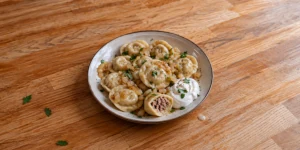
Koldūnai: Homemade Lithuanian Meat Dumplings
What these dumplings actually are
Koldūnai are small filled dumplings that have been part of Lithuanian cooking for a long time. They are especially closely connected with the historical food culture of Vilnius, although they are not limited to the city. Some forms of filled dumplings probably reached Lithuania with communities such as the Tatars, Karaites and Jews who settled there during the late Middle Ages, but there is no single proven moment when Lithuanian koldūnai were invented.
Old recipes are not all the same. One of the best-known versions from Wincenta Zawadzka's Kucharka litewska used raw beef mixed with beef kidney suet, onion, marjoram, pepper and a little broth. Other old recipes used cooked meat, ham and mushrooms or completely different fillings. So raw meat is traditional, but it is not the only filling that belongs under the name koldūnai.
This recipe uses pork shoulder instead of the older beef-and-suet mixture. That is not the exact nineteenth-century Vilnius formula, but pork-filled koldūnai are well established in modern Lithuanian home cooking. The important thing is to use meat with enough fat so the filling stays tender instead of becoming dry.
Making the dough without a mess
You do not need a machine for this. Put the flour in a big bowl or make a mound on a clean table. Make a well in the middle, add the egg and salt, then pour in the warm water gradually. Start mixing from the center so the liquid picks up the flour little by little.
Once it comes together, knead it for about eight to ten minutes. The dough should feel smooth, firm and flexible, not dry and cracked. If it sticks badly, use a little more flour. If it feels too dry, wet your hands and keep kneading before adding more water.
Cover the dough with a bowl or cloth and leave it alone for about twenty to thirty minutes. This is worth doing. The dough relaxes and becomes much easier to roll thinly without constantly pulling itself back.
The meat should not be too lean
Very lean pork can turn dry inside a small boiled dumpling. Pork shoulder works well because it naturally contains more fat than loin. If your mince looks extremely lean, a small amount of finely minced pork fat can be mixed into it.
A few tablespoons of cold water or broth can also be mixed into the meat. This is not a modern trick pulled from nowhere: older Lithuanian koldūnai recipes also added a little broth to meat filling. It keeps the mixture moist and helps produce a juicy center, although the finished dumpling does not need to contain a literal spoonful of soup.
Grate the onion finely or chop it very small. The point is not that larger onion pieces are impossible to cook, but that finely prepared onion spreads more evenly through the small amount of filling. Add dried marjoram, salt and black pepper. Marjoram is especially worth keeping because it appears in historical Lithuanian meat koldūnai recipes.
Folding and boiling them
Roll the rested dough roughly 1.5 to 2 mm thick. Cut out small circles with a glass or round cutter and put a modest amount of raw meat filling in the center. Koldūnai are usually smaller than large half-moon pierogi, so do not try to pack too much meat into each one.
Fold the dough over and press the edges together firmly. You can leave the seam plain or join the corners for a more compact dumpling shape. What matters is keeping raw filling away from the seam. Meat or onion caught between the edges makes them much more likely to open in the pot.
Cook the koldūnai in batches in salted simmering water. Once they rise to the surface, continue cooking for several minutes until the dough is tender and the raw meat in the center is completely cooked. The exact time depends on their size and thickness, so test one from the first batch rather than relying blindly on the clock.
How to serve koldūnai
A simple topping of rendered bacon or pork belly with fried onion works very well with these dumplings. Sour cream is also a common modern accompaniment. Lithuanian regional recipes still use this combination today.
You can also serve the boiled dumplings more simply with butter or broth. Old Lithuanian cookbooks show that the way koldūnai were served varied just as much as their fillings.
Expert tips:
Keep the dough covered
While rolling one batch, keep the rest under a bowl or cloth. Once the surface dries out it becomes much harder to seal cleanly.
Do not use very lean pork
Pork shoulder with some visible fat produces a softer filling. Very lean mince can become firm and dry after boiling.
A little broth is traditional
Adding a small amount of broth to meat filling is not just a modern shortcut. Historical Lithuanian koldūnai recipes also used a few spoonfuls of broth with the meat.
Keep the marjoram
Dried marjoram appears in historical Lithuanian meat koldūnai recipes and works naturally with onion, meat and black pepper.
Do not overfill
Koldūnai are small dumplings. Too much filling makes them difficult to seal and increases the chance that they will open while boiling.
Storage:
How to store
Cool leftover cooked koldūnai and keep them in a covered container in the refrigerator. Toss them with a little melted butter if you want to prevent them from sticking together.
Shelf life
Cooked koldūnai are best eaten within 2 to 3 days. Reheat them in a frying pan with butter or a little rendered bacon fat.
Freezing instructions
Freeze uncooked koldūnai in a single layer on a floured or parchment-lined tray. Once solid, transfer them to a freezer bag. Cook them directly from frozen and allow a little extra cooking time.
Recipe information:
Dough Ingredients
Meat Filling
For Serving
Substitutions for ingredients:
- Ground Pork Shoulder - For a version closer to historical Lithuanian meat koldūnai, use finely chopped or ground beef combined with beef suet or another suitable beef fat.
- Dried Marjoram - It can be omitted, but marjoram is historically documented in Lithuanian meat koldūnai and is worth keeping when authenticity is the goal.
- Cold Broth - Use cold water. The small amount of liquid is there to keep the meat mixture moist.
- Bacon Topping - Serve the boiled koldūnai with melted butter, sour cream or broth instead.
Preparation
1. Knead the dough
2. Rest the dough
3. Mix the pork filling
4. Roll the dough
5. Cut and fill
6. Seal the koldūnai
7. Boil the dumplings
8. Make the topping
9. Serve
Frequently Asked Questions (FAQ):
What are Lithuanian koldūnai?
Koldūnai are small Lithuanian filled dumplings made from thin wheat dough. Meat fillings are especially well known, but historical Lithuanian recipes also include other fillings.
Are koldūnai originally from Vilnius?
Koldūnai have a particularly strong connection with the historical cuisine of Vilnius, but they are part of a wider Lithuanian and former Grand Duchy culinary tradition. Some related dumpling traditions probably entered Lithuania with Tatars and other communities during the late Middle Ages.
What meat is traditionally used in koldūnai?
Historical Lithuanian recipes often use raw beef combined with beef kidney suet, onion, marjoram and pepper. Modern Lithuanian home recipes also commonly use pork, including pork shoulder with some fat.
Do I need to cook the pork before putting it in the dough?
No. In this version the pork goes into the dumplings raw and cooks while the koldūnai boil. Make the dumplings small and cook them until the filling is completely done.
Do koldūnai always contain raw meat?
No. Raw meat is an important traditional filling, but old Lithuanian cookbooks also contain koldūnai or koldūnėliai filled with cooked meat, ham and mushrooms, curd and even fruit.
What is the difference between koldūnai and pierogi?
There is no single ingredient that separates every koldūnai from every pierogi. Lithuanian koldūnai are generally associated with smaller filled dumplings and have their own historical meat recipes and shaping traditions, but both belong to the wider Eastern and Central European family of boiled filled dough dishes.
Is marjoram traditional in koldūnai?
Yes. Dried marjoram appears in documented nineteenth-century Lithuanian meat koldūnai recipes together with beef, fat, onion, pepper and broth.
How are koldūnai served?
Serving varies. Modern Lithuanian versions may come with bacon cracklings, fried onion and sour cream, while older recipes also use butter, onions or broth.