
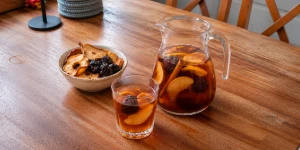
Kompot z suszu (Polish Dried Fruit Compote)
What is Kompot z Suszu?
Kompot z suszu is a traditional Polish drink prepared by gently cooking dried fruit in water and allowing the liquid to steep until it becomes deeply aromatic. The most characteristic fruits are dried apples, pears and plums.
Today the drink is particularly associated with Polish Christmas Eve, or Wigilia, and is commonly served toward the end of the meal. Depending on the family and region, it may be served warm, at room temperature or chilled.
There is no single national formula. Some versions are made only from dried orchard fruit, while others include smoked fruit, cinnamon, cloves, citrus peel or additional dried fruits. The balance depends strongly on regional traditions and the fruit available from local orchards.
Why dried fruit became part of the Polish winter kitchen
Before modern refrigeration and year-round access to fresh fruit, drying was one of the simplest ways to preserve the autumn harvest. Apples, pears and plums could be stored through winter and later cooked into drinks, soups and other dishes.
Official documentation of regional Polish food traditions repeatedly connects dried-fruit compote with household orchards. Fruit that could not be eaten fresh was dried after the harvest, providing an important source of fruit during winter.
This explains why the basic ingredients of kompot z suszu are so closely connected with traditional Polish orchard fruit rather than imported dried fruits. Apples, pears and plums form the most historically representative core.
Kompot z Suszu and the Polish Christmas Eve
Kompot from dried fruit is one of the characteristic drinks of the Polish Christmas Eve table. Official Polish food-quality guidance describes it directly as a traditional Christmas Eve preparation made from dried fruit, sometimes with aromatic spices.
Regional traditions confirm how widespread the custom became. In Wielkopolska, dried-fruit compote was traditionally served at the end of Christmas Eve supper. On Upper Silesia and in Cieszyn Silesia a related dried-fruit preparation is known as pieczki. Łemko traditions also preserve a dried-fruit drink known as juha.
These regional forms differ in detail, but they share the same practical foundation: fruit from autumn orchards was dried and then cooked during the winter festive season.
The Podkarpackie tradition
Podkarpackie has an especially well-documented regional version called Górecki kompot z suszu, entered on Poland's List of Traditional Products.
The official description connects the drink with the village of Górki near Mielec and the traditions of the Lasowiak population of the former Sandomierz Forest. Apples, plums and pears grew around local homes and were dried after the autumn harvest.
The traditional Górecki compote was prepared particularly from sweet dried pears known as cukrówki, dried Hungarian plums and apples such as Szara Reneta. The fruit could be naturally sweet enough that no additional sugar was required.
Although the drink was also consumed with ordinary winter meals, the official record describes it primarily as a traditional Christmas Eve drink and notes that fasting Christmas porridge could even be cooked using the dried-fruit compote.
A Łemko dried-fruit tradition
Another officially documented regional form is juha, a dried-fruit compote associated with Łemko Christmas Eve traditions. It is prepared from dried apples, pears and plums.
Ethnographic material cited by the Ministry of Agriculture describes dried pears and apples being cooked on Christmas Eve and the resulting liquid being drunk. This provides useful evidence that drinking the liquid from cooked dried orchard fruit was part of regional Christmas traditions rather than merely a recent reinterpretation of fruit compote.
Are smoked plums traditional?
Yes, but they are not mandatory in every Polish kompot z suszu. Polish food-quality authorities explicitly note that dried-fruit mixtures may contain smoked fruit and that using it gives the drink a much more pronounced smoky aroma.
Regional Polish traditions of smoking and drying plums are well documented. Suska sechlońska from Małopolska is a protected product made by drying and smoking plums, giving them a characteristic sweet, smoky aroma. Śliwka szydłowska from Świętokrzyskie is another traditional dried and smoked plum.
Podkarpackie also has a long tradition of drying Hungarian plums. The officially registered Pruchnicka suszona śliwka węgierka was traditionally dried in bread ovens and used, among other things, in fruit mixtures for Christmas compote.
For this reason, smoked plums are an excellent traditional variation, especially if you like a pronounced wood-smoke aroma, but a compote made with ordinary dried plums is equally legitimate.
The basic fruit mixture
A balanced traditional base consists of dried apples, pears and plums. Pears provide natural sweetness and a deep aroma, apples give a lighter fruit character, while plums add darker color and richness.
The exact proportions do not need to be rigid. Traditional households used the fruit they had dried after the harvest. This recipe uses roughly equal quantities as a practical starting point.
If using smoked plums, replacing only part of the ordinary dried plums creates a noticeable smoky character without allowing smoke to overwhelm the pears and apples.
Should Kompot z Suszu contain dried apricots or raisins?
They can be added, and modern commercial Christmas fruit mixtures often contain dried apricots, raisins, cranberries and other fruits. However, these additions are not necessary for the most traditional Polish orchard-fruit profile.
For a basic historical-style version, apples, pears and plums are enough. Additional dried fruits are better treated as household or modern variations.
Should the fruit be soaked?
Soaking dried fruit before cooking is useful, particularly when the pears are very hard. It allows the fruit to begin rehydrating and reduces the amount of vigorous cooking needed later.
An hour is sufficient for most commercially dried fruit. Very hard traditional dried pears can be soaked longer or even overnight in the refrigerator.
Cook the fruit in the soaking water rather than discarding it because much of the fruit aroma and soluble sugars move into the water during soaking.
Cooking the compote gently
Bring the soaked fruit and water slowly to a simmer, then reduce the heat. The goal is to soften the fruit and extract its flavor rather than break it down into purée.
About 25 to 30 minutes of gentle simmering is sufficient for most dried fruit. Very hard whole dried pears may require longer.
After cooking, leave the covered pot to rest for at least 2 hours. During this time the liquid continues to take on color and aroma even though the fruit is no longer boiling.
Cinnamon and cloves
Spices are traditional in some versions but are not essential to kompot z suszu. Official Polish descriptions allow aromatic spices as optional additions, and regional recipes vary considerably.
Cinnamon works particularly well because it complements apples, pears and plums without obscuring their flavor. Cloves should be used sparingly because their aroma can quickly dominate the drink.
A single cinnamon stick and two or three cloves are sufficient for a large pot.
What about orange and lemon?
Citrus is also optional rather than fundamental. The official description of Wielkopolska Christmas dried-fruit compote mentions lemon or orange peel as an addition used according to preference.
Use only a few thin strips of zest with as little white pith as possible. Large orange slices left in the pot for a long time can release bitterness from the peel and pith.
A small amount of lemon juice can also be added after cooking if the compote tastes excessively sweet.
Does Kompot z Suszu need sugar?
Not necessarily. Traditional dried pears and plums can contain enough natural sugar to make the drink pleasantly sweet without any added sweetener.
The official description of Górecki kompot z suszu specifically notes that old varieties of sweet pears, Hungarian plums and apples produced a compote sweet enough that no sugar was necessary.
For that reason, always taste the finished drink after it has rested before adding sugar. If additional sweetness is needed, add only a small amount.
How to serve Kompot z Suszu
Kompot z suszu can be served warm, at room temperature or chilled. There is no need to add ice to a traditional Christmas version.
The cooked fruit can remain in the pitcher or be served separately. It is completely edible and can also be used in porridge, desserts or baking rather than discarded.
At Christmas Eve the drink is traditionally served alongside or after the meal. Claims that it is necessary to "digest" the twelve Christmas dishes should be treated as culinary folklore rather than a medical reason for drinking it.
Expert tips:
Apples, pears and plums are the traditional core
Official Polish regional records repeatedly use these three orchard fruits. Apricots, cranberries, raisins and other dried fruits are legitimate additions but are not necessary for a basic traditional version.
Smoked plums are optional, not mandatory
Smoked dried plums create a strongly traditional regional flavor, but official Polish guidance confirms that both smoked and unsmoked fruit mixtures are used for Christmas compote.
Use smoked fruit in moderation
Replacing only part of the dried plums with smoked plums gives a noticeable smoky character without overwhelming the apple and pear aromas.
Do not automatically add sugar
Sweet dried pears and plums can provide enough natural sweetness. Taste the rested compote first and sweeten only when necessary.
Do not boil aggressively
A gentle simmer extracts flavor while helping the fruit retain its shape. Hard boiling can break soft apples and plums into pulp and make the drink cloudy.
Let the compote rest
The flavor develops significantly after cooking. A 2-hour covered rest gives the dried fruit and spices time to continue infusing the liquid.
Use citrus peel sparingly
Thin strips of zest add fragrance, but too much white pith or long cooking with thick orange slices can make the drink bitter.
Storage:
Refrigeration
Cool the compote promptly after the resting period, transfer it to covered containers and refrigerate.
Shelf life
For best quality, drink refrigerated kompot z suszu within about 3 to 4 days.
Fruit in the Compote
The cooked fruit can remain in the refrigerated compote during normal short-term storage. It does not need to be strained out after two days.
Freezing
The strained liquid can be frozen for up to about 2 to 3 months. Leave expansion space in the container and thaw it in the refrigerator.
Recipe information:
Dried Fruit Compote
Optional Smoked Plum Variation
Substitutions for ingredients:
- Regular Dried Plums - Replace part of them with traditionally smoked dried plums for a deeper smoky character. Suska sechlońska or another naturally smoked Polish plum is particularly suitable.
- Smoked Dried Plums - Use ordinary dried plums. A smoky aroma is a regional variation rather than a requirement for authentic kompot z suszu.
- Dried Pears - Use additional dried apples and plums if pears are unavailable, although pears provide an important traditional sweetness and aroma.
- Cinnamon and Cloves - Omit them entirely for a simpler version focused exclusively on the dried fruit. Spices are optional rather than essential.
- Sugar - Omit it if the dried fruit is sufficiently sweet. Honey can be added after the compote has cooled slightly as a household variation, but a version containing honey is no longer vegan.
Prepare the Fruit
1. Check the dried fruit
2. Rinse the fruit
3. Soak
Cook the Compote
1. Add optional spices
2. Bring slowly to a simmer
3. Cook gently
4. Add citrus zest
Rest and Serve
1. Rest the compote
2. Taste before sweetening
3. Adjust the flavor
4. Serve
Frequently Asked Questions (FAQ):
Is Kompot z Suszu a traditional Polish Christmas Eve drink?
Yes. Official Polish regional and food-quality sources describe dried-fruit compote as a traditional part of Christmas Eve supper.
What fruits are traditionally used in Kompot z Suszu?
Dried apples, pears and plums form the most consistently documented traditional combination. Other dried fruits can be added according to household and regional custom.
Are smoked plums necessary?
No. Smoked fruit is a traditional regional option that gives a pronounced smoky aroma, but authentic Polish kompot z suszu can also be made entirely from ordinary dried fruit.
Where does the tradition of smoked plums come from?
Several Polish regions preserve old traditions of drying and smoking plums. Suska sechlońska from Małopolska and Śliwka szydłowska from Świętokrzyskie are well-known examples, while Podkarpackie also has documented traditions of drying Hungarian plums for Christmas fruit mixtures.
Is Kompot z Suszu traditional in Podkarpackie?
Yes. Górecki kompot z suszu from the village of Górki near Mielec is registered on Poland's List of Traditional Products. It is made from local dried orchard fruit and is particularly associated with Christmas Eve.
What is Górecki Kompot z Suszu?
It is a traditional Podkarpackie dried-fruit drink associated with the Lasowiak region. The official description highlights dried sweet pears, Hungarian plums and apples such as Szara Reneta and notes that naturally sweet fruit could make added sugar unnecessary.
What is Juha?
Juha is a Łemko dried-fruit compote documented as a Christmas Eve dish. It is made from dried apples, pears and plums and belongs to the wider regional tradition of drinking liquid from cooked dried fruit.
Should Kompot z Suszu contain dried apricots?
They are common in modern dried-fruit mixtures but are not essential. Apples, pears and plums are a more representative traditional base.
Should Kompot z Suszu contain cinnamon and cloves?
They can be used, but they are optional. Some regional and household versions contain spices while others rely entirely on the aroma of dried fruit.
Should orange be added?
Orange or lemon peel appears in some documented regional versions but is not essential. Use only a little zest if you want a citrus aroma.
Does Kompot z Suszu need sugar?
No. Sweet dried pears, apples and plums can provide sufficient sweetness. The official description of Górecki kompot z suszu specifically notes that traditional fruit could make added sugar unnecessary.
How long should the dried fruit be soaked?
About 1 hour is usually enough for modern dried fruit. Very hard traditionally dried pears can benefit from several hours or an overnight soak in the refrigerator.
How long should Kompot z Suszu cook?
About 25 to 30 minutes at a gentle simmer is enough for most dried fruit. The fruit should become tender without disintegrating completely.
Why should the compote rest after cooking?
The fruit continues releasing flavor, color and natural sugars into the liquid as the drink cools. A rest of about 2 hours produces a fuller flavor.
Is Kompot z Suszu served hot or cold?
Both are traditional household choices. It can be served warm, at room temperature or chilled, depending on family custom.
Does Kompot z Suszu help digestion after Christmas Eve dinner?
It is traditionally served during or after the Christmas Eve meal, but claims that it medically improves digestion should not be treated as established fact.
Can the cooked fruit be eaten?
Yes. The fruit is fully edible and can be served with the drink or reused in porridge, desserts, cakes or other dishes.