
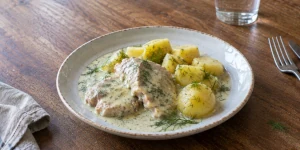
Koprová omáčka - Creamy Dill Sauce
Koprová omáčka - or just koprovka to anyone who grew up eating it - is one of those dishes that divide people. It is a thick, white, sweet and sour dill sauce that you see on school lunch trays, family tables, and in traditional pubs across the Czech Republic. Some people can’t stand it because of bad school cafeteria memories, but when it is made right at home, it is incredible comfort food.
My experience with koprovka
I first had this in a small apartment in Prague. My friend’s grandmother made it for Sunday lunch. The kitchen smelled of vinegar, boiled beef, and fresh dill. I was skeptical at first because a warm, sweet dill sauce sounded strange to my ears. But after one bite of the thick sauce soaked into a soft bread dumpling, I understood. It is heavy, rich, and has a sharp kick that cuts through the fat.
I make this sauce when the weather gets cold and I want something that feels like a warm blanket. It does not require fancy tools or rare ingredients. You just need some patience to keep the flour from burning and a good hand with the seasoning.
Getting the base right
The foundation of a good koprovka is the broth and the flour mixture. I prefer to use beef broth because it has a deep, savory taste that balances the sweet sugar and sour vinegar. Some people use vegetable stock, which is fine, but the sauce will taste lighter and less traditional.
You start by melting butter and stirring in plain flour. You want to cook this mixture until it bubbles and smells slightly nutty, but keep the heat low so it does not turn brown. If it gets brown, your sauce will look muddy instead of a nice cream color. Whisking the cold broth into this hot flour paste slowly is the secret to keeping it smooth.
What to serve with the sauce
In most Czech homes, you will see this served with two main options. The classic way is to serve it with thick slices of boiled beef - usually from the beef you used to make your broth - and Czech bread dumplings. If you do not want to make dumplings, boiled potatoes and a hard-boiled or poached egg are just as good and much faster for a weeknight. The runny yolk of a soft egg mixes with the warm dill sauce beautifully.
Expert tips:
Preventing cream curdling
If you add cold sour cream straight from the fridge into the hot sauce, it will clump up. It is better to spoon some of the hot sauce into a small bowl with your sour cream, stir them together first, and then pour that warm mixture back into the main pot.
The dill timing
If you boil fresh dill for a long time, it turns a sad brown color and loses that bright, punchy flavor. I prefer to stir it in at the very end of cooking, right before taking the pot off the stove.
Storage:
How to store
Pour the leftover sauce into a glass container with a tight lid. Let it cool down to room temperature before putting it in the fridge.
Shelf life
It stays fresh in the fridge for up to three days. When you reheat it, do it slowly over low heat and add a splash of milk if it got too thick.
Freezing instructions
I do not recommend freezing this sauce. Cream-based sauces usually separate and get a watery, grainy texture when thawed and reheated.
Recipe information:
Sauce Base
Seasoning and Herbs
Substitutions for ingredients:
- Beef broth - Vegetable broth or even a quality chicken stock. The color will be lighter and the flavor milder.
- White vinegar - Lemon juice can work in a pinch. It has a different kind of sourness, but it still brightens the sauce.
- Sour cream - You can use heavy cream with a bit more vinegar, or creme fraiche. Avoid low-fat yogurt as it will curdle.
Preparation
1. Make the flour paste
2. Build the sauce body
3. Add the cream and flavor
4. Finishing with dill
Frequently Asked Questions (FAQ):
What kind of beef is best to serve with koprovka?
Traditionally, people use boiled beef brisket or beef shoulder. You boil the beef whole in water with root vegetables to make your broth, then you slice the beef and serve it with the warm sauce.
Can I use dried dill instead of fresh?
I strongly advise against dried dill. It does not have the same bright flavor and ends up tasting like dry grass in the creamy sauce. If you cannot get fresh dill, wait until you can.
Why did my sauce split and look oily?
This usually happens if you boil the sauce too hard after adding the cream, or if you used low-fat cream. Use full-fat sour cream and keep the heat very low once it is in the pot.