
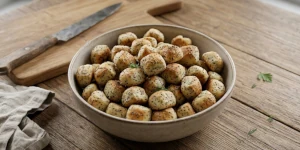
Kučiukai: Lithuanian Christmas Eve Poppy Seed Biscuits
Kūčiukai are one of the most recognizable foods served during Kūčios, the traditional Lithuanian Christmas Eve supper. These tiny pieces of yeast dough are mixed with poppy seeds, baked until dry and lightly golden, and traditionally eaten with aguonų pienas, sweet Lithuanian poppy seed milk. They may look like ordinary little biscuits, but on a Lithuanian Christmas Eve table they have a much more specific role than a simple holiday snack.
The finished kūčiukai are deliberately small, dry and firm. They are not meant to be soft bread rolls or buttery cookies. After baking, they should have a dry, slightly crisp bite. When dropped into poppy seed milk, however, they gradually soften and become tender. This contrast between dry baked dough and sweet poppy milk is one of the characteristic parts of eating them.
Kūčiukai are known by several regional names. Depending on the part of Lithuania and family tradition, you may also encounter names such as šližikai or prėskučiai. Recipes and shapes have varied between regions, but the familiar modern form consists of small wheat-flour pieces of dough containing poppy seeds.
Kūčiukai and the Lithuanian Christmas Eve table
Kūčiukai belong specifically to Kūčios, the Lithuanian Christmas Eve celebration. The traditional meal is meatless and based on foods such as grains, fish, mushrooms, vegetables, dried fruit and seeds. Because of this tradition, kūčiukai are normally prepared without butter, milk or other dairy ingredients.
A bowl of kūčiukai is traditionally served with aguonų pienas, or poppy seed milk. The poppy seeds are soaked, ground or crushed and mixed with water to create a pale, sweet liquid. The small baked pieces are placed in a bowl and covered with the poppy milk, then eaten with a spoon after they have softened slightly.
They can also be eaten dry. Many families keep a bowl on the table throughout Christmas Eve and snack on them directly. Some households serve them with kissel or other traditional sweet dishes, depending on local and family custom.
Keep them small and dry
The most important part of making good kūčiukai is their size. Roll the dough into thin ropes and cut it into very small pieces. The pieces should not look impressive before baking. If they are too large, they can remain soft inside and start resembling small bread rolls instead of the dry little pieces traditionally served with poppy milk.
Do not expect every piece to be perfectly identical. Traditionally these are simple home-baked Christmas Eve pastries, and slight differences in size are completely natural. What matters more is that the pieces are small enough to bake through and dry properly.
The dough should not be rich
Kūčiukai are based on a simple dough. Flour, water, yeast, poppy seeds, a little sugar, salt and oil are enough for a traditional-style version. The dough should be easy to roll into thin ropes but should not be overly soft or sticky.
There are different recipes, including versions with egg yolks or modern recipes made with other raising agents. For a simple Christmas Eve version, however, a lean yeast dough without dairy works particularly well and fits the traditional character of the Kūčios table.
How to serve Kūčiukai
The classic way is to pour sweet poppy seed milk over a small handful of kūčiukai and eat them once they have absorbed some of the liquid. Do not leave them soaking for too long. They are best when softened but still have a little shape and texture.
If you are serving them dry, let them cool completely first. Warm kūčiukai may still seem softer than the finished biscuits should be. As they cool, they become drier and firmer, which is exactly what you want before serving them on the Christmas Eve table.
Expert tips:
Make the pieces smaller than you think
Kūčiukai are supposed to be small. If the pieces look like tiny bread rolls before baking, they are probably too large. Roll thin ropes and cut small pieces so they can bake through and dry properly.
Do not make the dough too soft
A very wet dough is difficult to roll into thin ropes and produces larger, softer pieces. Add flour gradually and stop when the dough is smooth, soft and manageable.
Let them cool completely before judging the texture
Freshly baked kūčiukai can feel softer when they first come out of the oven. Their characteristic dry texture becomes clearer as they cool.
Bake one tray at a time if possible
Because the pieces are very small, even baking matters. If you are making a large batch, bake in separate batches rather than crowding several trays together.
Use poppy seeds generously
Poppy seeds are one of the defining ingredients of kūčiukai. They should be visible throughout the dough rather than appearing as an occasional decoration.
Storage:
How to store
Allow the kūčiukai to cool completely, then store them in a clean dry container with a lid. The most important thing is protecting them from humidity, which can soften them.
Shelf life
Because they are baked dry, kūčiukai can keep well for several weeks when stored in a cool, dry place. Check them occasionally and make sure no moisture has entered the container.
If they lose their crunch
If the biscuits soften during storage, spread them on a baking tray and place them in a low oven for a few minutes. Let them cool completely again before returning them to storage.
Freezing instructions
Freezing is usually unnecessary because properly baked kūčiukai keep well at room temperature. If you do freeze them, cool them completely and use an airtight container to protect them from moisture.
Recipe information:
Dough Ingredients
Substitutions for ingredients:
- Dry yeast - You can use approximately 20g of fresh yeast. Dissolve or crumble it into the lukewarm water with a little sugar before adding the remaining ingredients.
- Sunflower oil - Rapeseed oil or another mild vegetable oil can be used. Choose an oil with a neutral flavour so it does not dominate the simple taste of the dough.
- White sugar - A small amount of honey can be used in some home-style versions, although the dough should remain only lightly sweet.
- Plain wheat flour - For the closest traditional-style result, use wheat flour. Historical and regional variations exist, but changing the flour substantially will also change the texture and character of the finished kūčiukai.
- Poppy seeds - Poppy seeds are a defining ingredient of traditional kūčiukai and are not recommended for substitution if you want an authentic result.
Preparation
1. Prepare the yeast
2. Make the dough
3. Let the dough rise
4. Roll and cut the Kūčiukai
5. Arrange on the baking tray
6. Bake until dry and lightly golden
Frequently Asked Questions (FAQ):
What do you eat Kūčiukai with?
They are traditionally eaten with aguonų pienas, Lithuanian poppy seed milk. The dry kūčiukai are placed in a bowl and covered with the sweet poppy milk until they soften slightly. They can also be eaten dry or served with kissel depending on family and regional tradition.
Are Kūčiukai supposed to be hard?
Yes. Properly baked kūčiukai are small, dry and firm. They soften after being soaked in poppy seed milk, which is one of the traditional ways of serving them.
Can I make these without yeast?
There are modern and quick versions made with baking powder or other raising agents. A yeast dough, however, is one of the traditional and widely recognised ways of making kūčiukai.
Why are Kūčiukai served on Christmas Eve?
Kūčiukai are closely connected with Kūčios, the traditional Lithuanian Christmas Eve supper. They are part of the broader Christmas Eve food tradition based on meatless dishes and foods such as grains, seeds, fish, mushrooms and dried fruit.
Can I eat Kūčiukai without poppy seed milk?
Yes. They are often eaten dry as small holiday snacks. Serving them with sweet poppy seed milk is the most characteristic traditional combination, but family customs vary.
How long should Kūčiukai soak in poppy seed milk?
Only long enough for them to soften slightly. If left for too long, they can lose their shape and become overly soft. Many people add a small handful to the bowl shortly before eating.
Why did my Kūčiukai stay pale?
They may simply need a few more minutes in the oven, or your oven may run cooler than the displayed temperature. Bake until the outside is lightly golden while keeping a close eye on the small pieces.