
Lithuanian Curd Cheese Recipe (Varškės Sūris)
Lithuanian pressed curd cheese
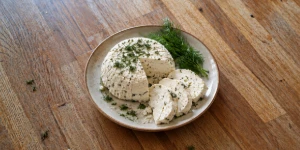
Varškės sūris is a fresh, pressed curd cheese with a mild sourness and a firm, slightly crumbly texture. Caraway is a familiar seasoning, although plain and unsalted versions also exist. A triangular cloth bag gives the cheese its characteristic wedge shape and leaves a knot impression at the wider end.
How the traditional method differs
The published specification for Lietuviškas varškės sūris describes milk soured with lactic acid bacteria, without rennet, followed by draining and pressing. It records a household practice of drying cheese for longer storage and also describes baked and smoked forms. These are distinct preparations, not storage instructions for fresh cheese.
The milk-and-kefir method below is a home adaptation. It does not reproduce the full cultured-milk production process in the specification, and should not be described as certified production. The cheese is pressed in the refrigerator rather than left on the kitchen counter overnight.
Serving
Slice it for rye bread, or serve it with honey. The final weight depends on the milk, acidity and amount of whey removed; a precise yield cannot be guaranteed.
Source: Lietuviškas varškės sūris, published product specification, 2013/C 57/10, pp. 24-27.
Expert tips:
Use cultured dairy
Use pasteurised milk and plain cultured kefir, not milk left to spoil at room temperature.
Press evenly
A triangular cheese bag produces the traditional wedge. A lined mould also works, but makes a different shape.
Storage:
Refrigeration
Keep covered at 4 C or below and use within 3 days. This fresh cheese is not suitable for pantry storage.
Freezing
Freezing can make the cheese more crumbly; thaw in the refrigerator and use in cooked dishes.
Recipe information:
Ingredients
Substitutions for ingredients:
- Caraway - Omit it for plain cheese.
- Whole milk - Lower-fat milk makes a leaner cheese; traditional curd cheese is not restricted to full-fat versions.
Preparation
1. Heat gently
2. Drain
3. Season
4. Press and chill
Frequently Asked Questions (FAQ):
Is this the exact protected cheese recipe?
No. This is a milk-and-kefir home adaptation; the published specification uses lactic starter cultures and a defined production process.
Is UHT milk impossible to use?
No absolute ban is justified for acid-set cheese. Results vary; refrigerated pasteurised milk is the more predictable choice for this recipe.