
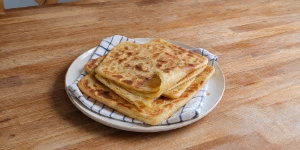
Authentic Moroccan Msemmen Recipe (Laminated Square Flatbread)
Msemmen is a cornerstone of North African baking, celebrated for its unique structural design. Achieving the perfect balance between a crisp, shattered exterior and a soft, highly laminated interior requires an understanding of gluten development and temperature control. This recipe details the precise mechanical steps needed to stretch, fold, and cook this traditional flatbread to culinary perfection.
What is Msemmen (Laminated Square Flatbread) & Its Origins
Msemmen (sometimes spelled msemen or rghaif) is a Maghrebi flatbread made in Morocco and neighboring countries. Its exact origin date is not established here. Msemmen may be unleavened or contain a little yeast; folding with fat and semolina creates its layers. Cooked on a heavy griddle, it has evolved into a daily staple across North Africa, served in homes and street food stalls alike.
What Does It Taste Like?
When executed correctly, Msemmen offers a complex play of textures. The outer crust features blistered, paper-thin golden layers that crackle upon biting. Inside, the flatbread consists of dozens of micro-thin, chewy layers saturated with the rich, clean flavor of butter. While the dough itself is neutral, the caramelized milk solids from the butter and the toasted, nutty undertones of fine semolina dominate the flavor profile, creating a mildly sweet, deeply savory finish.
Popular Variations
The versatile dough of Msemmen serves as a base for several regional variations. Meloui uses the exact same dough but is rolled into a long strip, coiled like a snail, and flattened into a round disc, resulting in concentric, circular layers. Msemmen Maamer is a savory, stuffed version folded around a spiced filling of onions, garlic, peppers, suet (spiced fat), and sometimes ground beef or khlii (preserved dried meat). There is also Milawi, which is common in Tunisia and prepared with slight flour ratio variations.
What To Serve With Msemmen (Laminated Square Flatbread)
Traditionally, Msemmen is served warm alongside Moroccan mint tea. To accompany the bread, prepare a classic warm syrup by melting equal parts unsalted butter and honey together for dipping. For a savory profile, pair it with soft cheeses like Jben, goat cheese, or black olives. In ceremonial Moroccan cuisine, shredded, warmed Msemmen is used as the structural base for Rfissa, an incredibly rich dish featuring stewed chicken, lentils, fenugreek, and a highly spiced broth.
Expert tips:
Gluten Relaxation is Vital
If the dough snaps back or resists stretching, the gluten is too tense. Do not force it, as this will tear the dough. Cover it and let it rest for another 10 to 15 minutes before proceeding.
Semolina Granule Size
Always use extra-fine or fine semolina (smida). Coarse semolina or semolina flour that is too gritty will puncture the delicate dough sheet during the stretching phase, ruining the lamination process.
The Rapid Flip Method
Do not leave the flatbread on one side for too long. Turn frequently and adjust the heat if the surface browns before the center cooks.
Optimal Cooking Fat
Oil prevents sticking during stretching; butter adds flavor inside the folds. An oil-and-butter mixture is also used. Water in the dough provides steam during cooking.
Storage:
How to store
Once completely cooled, wrap the flatbreads tightly in plastic wrap or aluminum foil, then store them in a zip-top freezer bag to prevent them from drying out.
Shelf life
Msemmen will keep fresh at room temperature for up to 2 days, or in the refrigerator for up to 5 days.
Freezing instructions
Msemmen freezes exceptionally well. Place sheets of parchment paper between individual flatbreads, wrap the stack in heavy-duty foil, and freeze for up to 3 months. Reheat directly from frozen on a dry, medium-hot skillet for 2 minutes on each side.
Recipe information:
Dough Ingredients
Lamination & Shaping
Substitutions for ingredients:
- Fine Semolina - Finely milled durum flour can replace the fine semolina by weight; adjust the water as needed. Product names vary, so check the grind rather than whether the label mentions pasta.
- Unsalted Butter - Clarified butter (ghee) can be used. Ghee has a higher smoke point and yields a deeply nutty flavor, though it contains less water for steam-assisted rise.
- All-Purpose Flour - Bread flour with a protein content of 12-14% can be substituted to yield a chewier texture and stronger gluten structure during stretching.
Dough Preparation
1. Mixing the Ingredients
2. Kneading for Gluten Development
3. Portioning and First Rest
Lamination & Folding
1. Stretching the Dough
2. Applying Fats and Fine Semolina
3. Folding into a Square Packet
Shaping and Cooking
1. Second Rest and Flattening
2. Pan Frying
3. Resting and Serving
Frequently Asked Questions (FAQ):
Why is my Msemmen not puffing up during cooking?
A lack of puffing is usually due to a pan that is not hot enough, or because you did not flip the bread early and frequently. Rapid, early heat converts the water in the dough to steam, which inflates the layers.
Can I make Msemmen dough ahead of time?
Yes. You can knead the dough, portion it into oiled balls, place them on a tray, cover tightly with plastic wrap, and refrigerate overnight. Let the dough come to room temperature for 30 minutes before stretching.
What is the purpose of yeast in a flatbread that does not rise?
A little yeast produces light fermentation. It is optional; kneading, hydration and resting are the main controls for stretchability.
Is it possible to make Msemmen gluten-free?
Msemmen relies entirely on a strong, highly developed gluten network from wheat flour and semolina to stretch paper-thin without tearing. Standard gluten-free flour blends cannot duplicate this physical elasticity.