
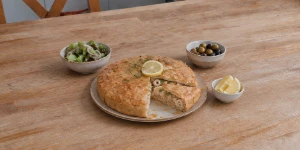
Authentic Moroccan Seafood Pastilla Recipe (Pastilla bil Hout)
Seafood Pastilla (Pastilla bil Hout) represents the pinnacle of Moroccan celebratory cuisine. While the sweet-and-savory pigeon or chicken pastilla often dominates global culinary discussions, this coastal seafood variant is preferred by many connoisseurs for its complex, savory, and zesty flavor profile. This recipe describes a home method to construct this showstopping pie, focusing on pristine seafood prep, robust chermoula seasoning, and achieving the ultimate crisp, shatteringly thin pastry exterior.
What is Pastilla bil Hout & Its Origins
Pastilla is part of Moroccan festive cooking, with a history often connected to Andalusian culinary exchange. A direct origin in the refugee movements after 1492, or in a specific coastal city, is not securely established here. The seafood version is savory, unlike the poultry-and-almond version. It celebrates Morocco's rich marine biodiversity, wrapping fresh catch in paper-thin pastry called warqa.
What Does It Taste Like?
This dish is a masterclass in texture and flavor layering. The first bite yields a loud, satisfying crunch of buttery, golden-brown pastry. Beneath this crisp canopy lies a rich, savory, and moderately spiced filling of succulent white fish, tender shrimp, and calamari. The seafood is bound together by translucent vermicelli noodles that act as sponges, absorbing the vibrant flavors of chermoula—a traditional Moroccan marinade packed with fresh coriander, flat-leaf parsley, garlic, cumin, paprika, sharp preserved lemons, and a kick of harissa. It is deeply savory, refreshingly citrusy, and subtly fiery.
Popular Variations
Depending on the region and the household, home cooks modify the seafood filling based on local catches. Premium versions incorporate lobster, sea bass, or monkfish. Modern interpretations frequently add sliced button mushrooms or black wood-ear mushrooms to introduce earthy undertones and contrasting chew. While the traditional shape is one massive, circular family-style pie, contemporary Moroccan catering often presents them as individually portioned mini-pastillas, or folded into triangular shapes (briouates) and cigar-like rolls for easier finger-food service.
What To Serve With Pastilla bil Hout
Due to the rich, buttery nature of the pastry and the concentration of seafood, Pastilla bil Hout is best paired with bright, acidic side dishes. A traditional Moroccan tomato and cucumber salad tossed in light vinaigrette, or a warm Taktouka (cooked bell peppers and tomatoes) work beautifully. To drink, there is no better companion than hot Moroccan mint tea, which cuts through the richness of the pastry and cleanses the palate between bites.
Expert tips:
Avoid Excess Moisture at All Costs
Soggy pastry is the enemy of a perfect pastilla. Ensure your seafood is dried completely with paper towels before cooking. Furthermore, drain the cooked seafood and noodle mixture well after tossing it with the chermoula to prevent liquid from pooling at the base.
Always Cool the Filling Fully
Do not rush the assembly. Putting warm filling onto thin phyllo sheets melts the butter immediately and creates steam, which will turn your pastry soggy and cause it to tear during baking.
The Crucial Oil and Butter Blend
While butter provides that irresistible rich flavor, mixing it with vegetable oil is a pastry chef's secret. Oil makes the mixture easy to spread, while butter adds flavor. Adding oil does not prevent butter solids from burning; crispness also depends on dry filling and thorough baking.
Do Not Overcook the Seafood
Keep in mind that the seafood will bake inside the oven for an additional 40 minutes. Ensure you only flash-fry the calamari and lightly sear the white fish in the skillet so they remain tender and juicy after baking.
Storage:
How to store
Refrigerate in shallow containers within 2 hours (1 hour above 32°C), at 4°C or colder. Place any leftovers in an airtight container and refrigerate. Reheat in a preheated oven at 350°F / 175°C until the center reaches 74°C, checking after 15 minutes, to restore the pastry's crisp texture. Do not microwave.
Shelf life
Reheat cooked leftovers to 74°C throughout. Store-bought or homemade seafood pastilla can be kept in the refrigerator for up to 2 days maximum, due to the sensitive nature of the seafood.
Freezing instructions
You can freeze the assembled, unbaked pastilla. Wrap it tightly in multiple layers of plastic wrap and then aluminum foil. Freeze for up to 2 months. Bake from frozen at 175°C, tenting if needed, until the center reaches 74°C. A large frozen pie may take substantially longer; do not rely on a fixed extra 15-20 minutes.
Recipe information:
The Seafood Filling
The Chermoula Marinade
The Pastry Assembly
Substitutions for ingredients:
- Phyllo Pastry - Use authentic Moroccan warqa if you can find it at specialty halal grocers. Alternatively, spring roll wrappers can be layered to yield a similar crispy skin.
- Preserved Lemons - If you cannot source preserved lemons, use the fresh zest of 1 organic lemon combined with 1/2 tsp of sea salt as a fresh-citrus alternative; it will not reproduce preserved-lemon flavor.
- Calamari - Bay scallops are a practical alternative. Octopus and larger cuttlefish need separate cooking until tender; they are not interchangeable with quick-cooked calamari.
Preparation
1. Make the Chermoula Marinade
2. Prepare the Vermicelli
3. Sauté the Seafood
4. Combine and Cool the Filling
5. Assemble the Pastilla
6. Fill, Fold, and Seal
7. Bake to Golden Perfection
Frequently Asked Questions (FAQ):
What is the main difference between Seafood Pastilla and Chicken Pastilla?
While chicken pastilla relies heavily on a sweet-and-savory profile using cinnamon, sugar, and almonds, seafood pastilla (Pastilla bil Hout) is strictly savory, zesty, and spicy, fueled by garlic, preserved lemons, and chermoula.
Can I make this recipe gluten-free?
This version contains wheat pastry. A gluten-free version requires a suitable gluten-free pastry and gluten-free noodles and tamari; rice paper is not a direct phyllo replacement. Baking behavior needs separate testing.
Can I prepare Seafood Pastilla ahead of time?
Yes. You can assemble the entire pastilla up to 24 hours in advance. Wrap it securely in plastic wrap and store it in the refrigerator. Brush with melted butter again just before baking.
How do I prevent the fish from turning to mush in the filling?
Cook your white fish in large chunks and fold it into the vermicelli very gently at the very end of mixing. Avoid overworking the filling so that diners can enjoy distinct pieces of succulent fish.