
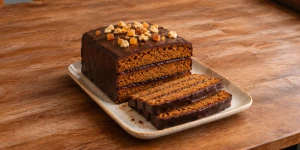
Piernik staropolski dojrzewający (Traditional Polish Maturing Gingerbread)
What is Piernik Staropolski Dojrzewający?
Piernik staropolski dojrzewający is a Polish honey gingerbread prepared several weeks before baking. Its raw dough rests in the cold, then shortly before Christmas it is rolled into thin sheets, baked, layered with thick plum preserves and left under a light weight until the initially firm gingerbread softens.
The combination of natural honey, a large quantity of aromatic spices and a long preparation period gives this cake a very different character from quick gingerbread baked immediately after mixing.
Today it is strongly associated with Christmas. Preparing the dough in November and finishing the cake shortly before Christmas Eve has become a familiar ritual in many Polish homes.
Where does the famous Piernik Staropolski recipe come from?
The exact formula now widely circulated under the name piernik staropolski can be traced to the twentieth-century book W staropolskiej kuchni i przy polskim stole, published under the names Maria Lemnis and Henryk Vitry. Both were literary pseudonyms used by Tadeusz Żakiej.
The book gives the characteristic proportions that define the modern recipe: 500 g of natural honey, 2 cups of sugar, 250 g of butter or lard, 1 kg of wheat flour, 3 eggs, 3 teaspoons of baking soda dissolved in half a cup of cold milk, salt and a generous quantity of gingerbread spices.
The authors recommend preparing the dough about four weeks before baking, with two weeks given as the minimum maturation period, and baking the gingerbread several days before Christmas.
This is important historically. The word staropolski in the modern recipe name should not be interpreted as proof that this exact combination of wheat flour, milk, soda, eggs, plum preserves and chocolate has survived unchanged from medieval or early modern Poland. The recipe is better understood as a twentieth-century formulation inspired by the much older Polish gingerbread tradition.
Polish gingerbread is much older than this recipe
Although this exact formula is relatively modern, Polish gingerbread culture itself is centuries old. Honey cakes seasoned with expensive imported spices became an important part of Central European baking during the Middle Ages.
Toruń became the most famous Polish center of gingerbread production. The Polish Ministry of Culture describes the history of Toruń gingerbread as reaching back to the Middle Ages, and in 2025 the culture of Toruń gingerbread was entered on Poland's National List of Intangible Cultural Heritage.
Historic Polish gingerbread was not one single cake. Recipes, flour types, spice mixtures, forms and preparation methods varied enormously. Pierniki could be shaped in carved wooden molds, baked as small cakes, made from rye or wheat flour and used both as sweets and as ingredients in savory sauces.
Piernik Staropolski is not the same as Piernik Toruński
Because Toruń lies in today's Kujawsko-Pomorskie, it is tempting to classify every traditional Polish gingerbread recipe as originating there. That would be misleading.
Traditional Toruń gingerbread represents its own regional craft tradition, historically associated especially with molded honey-and-spice cakes. The modern layered piernik staropolski made from the Lemnis and Vitry formula is a broader Polish Christmas recipe rather than a specific Toruń product.
For that reason this recipe is classified simply as Polish. Toruń and Kujawsko-Pomorskie remain essential to the history of Polish gingerbread, but they should not be presented as the proven birthplace of this exact cake.
Historical Polish Gingerbread recipes were diverse
Older Polish-language cookbooks demonstrate how varied the piernik tradition was. The 1913 edition of Wincenta Zawadzka's Kucharka litewska contains several very different gingerbread recipes.
Its rural rye gingerbread uses honey, rye flour, orange peel, pepper, cloves, ginger or cardamom and alcohol. The same book gives Pierniki mazowieckie made with equal quantities of wheat and rye flour, hot honey, cloves, pepper, citrus peel and alcohol.
Another recipe describes gingerbread filled with preserves. These historical examples confirm the old Polish combination of honey, flour, spices and fruit preserves, while also showing why it is risky to describe one modern formula as the single authentic old Polish gingerbread.
Did Gingerbread dough really mature for years?
Stories about gingerbread dough being kept for extremely long periods are an enduring part of gingerbread folklore. One often repeated legend claims that a family prepared dough when a daughter was born and baked it for her wedding.
Such stories should be treated as folklore rather than documentary evidence for this particular recipe. Long maturation of dense honey dough has historical precedents, but that does not demonstrate that the modern Lemnis and Vitry dough containing fresh eggs and milk was traditionally stored for years.
For this recipe, use the documented modern schedule of approximately four weeks under refrigeration rather than attempting extremely long aging.
Why the dough rests before baking
Immediately after mixing, the dough is soft and sticky. This is normal and is not a reason to add large quantities of extra flour.
During cold storage, moisture becomes more evenly distributed through the flour and the fat becomes firm. The dough therefore becomes substantially stiffer and easier to roll. The aromas of honey and spices also become more evenly distributed throughout the mixture.
This process is usually called dojrzewanie, or maturation. It should not be described simply as yeast fermentation because the dough contains no yeast and uses baking soda as its leavening agent.
Keep the dough refrigerated
Traditional descriptions mention a cold cellar or pantry, but a modern refrigerator provides much more predictable temperature control.
This dough contains raw eggs, milk and untreated flour. Keep it continuously refrigerated at approximately 2-4°C / 36-39°F in a clean covered container. Do not leave it for weeks in a room that merely feels cool.
Do not taste the raw dough. Raw flour can contain harmful bacteria and raw eggs may contain Salmonella. Baking is the stage that makes these raw ingredients suitable for eating.
Choosing honey
The classic formula calls simply for genuine natural honey and does not require one specific variety.
Multifloral or linden honey gives a balanced flavor. Buckwheat honey can also be used and produces a much stronger, darker and more distinctive aroma. Honeydew honey is another flavorful option.
There is therefore no need to claim that mild honey is inferior. The best choice depends on whether you want the spices or the honey itself to dominate the finished cake.
Butter or Lard?
The Lemnis and Vitry formula allows either butter or lard. Both are therefore legitimate within this particular recipe tradition.
This version uses butter because it gives a familiar flavor and keeps the finished recipe vegetarian. Replacing some or all of the butter with plain pork lard follows the documented formula but changes the dietary classification.
The spice mixture
The spice mixture should be strong enough to remain noticeable after several weeks of maturation and after the cake is filled with plum preserves.
Cinnamon, cloves, ginger and cardamom form a good base. Nutmeg, allspice, star anise and a small quantity of black pepper can also appear in Polish gingerbread blends.
If using a commercial mixture, check the ingredients. Some inexpensive mixes contain a substantial proportion of flour, cocoa or sugar and therefore need to be used in larger quantities than a concentrated homemade blend.
Why Baking Soda is dissolved in Milk
The classic recipe dissolves baking soda in cold milk before adding it to the dough. This distributes the leavening agent more evenly through a very large and dense batch of dough.
Use level teaspoons rather than heaped ones. Excess soda can give the finished gingerbread an unpleasant alkaline taste.
Rolling and baking the layers
After four weeks of refrigeration, let the dough stand at room temperature briefly until it becomes pliable enough to roll. Divide it into three equal portions.
Roll each piece to approximately 5 mm thick and fit it into a baking tray around 39 × 26 cm. The layers rise significantly during baking.
Bake at about 170°C / 340°F for approximately 15-20 minutes per layer. Honey-rich dough darkens quickly, so watch the final minutes carefully.
The baked layers will feel surprisingly firm when they cool. This is expected and does not mean the gingerbread has failed.
Why the layers soften after baking
The characteristic soft texture develops after the baked sheets are filled with moist plum preserves and left for several days.
Moisture gradually moves from the preserves into the gingerbread layers, softening the crumb. This second resting stage is separate from the maturation of the raw dough.
Allow about three days after assembling the cake before judging its final texture.
Why Powidła Śliwkowe work so well
Thick Polish plum preserves, or powidła śliwkowe, balance the sweetness of the honey dough with concentrated fruit acidity.
Use thick preserves that remain in place when spread. Warm them only enough to make spreading easy; very hot or runny preserves can soak the layers unevenly and escape from the sides under pressure.
The Lemnis and Vitry tradition also allows other fillings such as nut, marzipan or caramel-based layers, but plum preserves have become the most recognizable choice.
Pressing the assembled Gingerbread
After spreading the preserves, stack the three layers and wrap the cake in baking paper. Place a clean board or tray on top and add an even moderate weight.
The purpose is not to crush the cake. Gentle pressure keeps the layers flat and in close contact with the preserves while they soften.
Leave the assembled gingerbread in a cool place for about three days before trimming and glazing.
Chocolate glaze or icing?
Chocolate glaze is now a very common finish for piernik staropolski, but it is not the only option. The recipe tradition also allows a simple sugar icing.
A dark chocolate glaze works particularly well with plum preserves because its bitterness balances the sweet honey cake.
When should you start Piernik Staropolski for Christmas?
For a Christmas Eve serving, preparing the raw dough in the second half of November works well. Allow about four weeks for the dough to mature, then bake and fill the layers approximately three to four days before serving.
The original published guidance also permits a shorter maturation period, with about two weeks given as the minimum. A longer four-week rest is preferable when the schedule allows it.
Expert tips:
This exact recipe is not medieval
The modern formula is strongly associated with Maria Lemnis and Henryk Vitry's twentieth-century W staropolskiej kuchni i przy polskim stole. It reflects older Polish gingerbread traditions but should not be presented as an unchanged medieval recipe.
Do not add extra flour to fresh dough
The dough is supposed to be soft immediately after mixing. It becomes much firmer during cold maturation.
Use natural honey but choose the variety by taste
Multifloral and linden honey are balanced choices. Buckwheat or honeydew honey give a considerably stronger flavor but are not required for authenticity.
Butter and lard are both documented
The Lemnis and Vitry formula allows either fat. This version uses butter; replacing it with lard is a traditional option but makes the cake non-vegetarian.
Use a strong spice mixture
A spice blend diluted heavily with flour, cocoa or sugar may need a larger quantity. A concentrated homemade mixture requires less.
Keep the raw dough refrigerated
A historical cold cellar is difficult to standardize in a modern home. A refrigerator at approximately 2-4°C provides more predictable conditions for the dough containing eggs and milk.
Never taste raw Gingerbread dough
Raw wheat flour and raw eggs can contain foodborne pathogens. Wait until the dough has been fully baked before tasting it.
Hard layers after baking are normal
Do not extend baking simply because the cooled layers seem firm. The characteristic soft texture develops after they are filled with plum preserves and rested for several days.
Do not overbake
Thin honey-rich layers darken rapidly. Begin checking them after about 14 to 15 minutes rather than waiting for them to become dry and rigid.
Storage:
Raw maturing dough
Keep the dough covered and continuously refrigerated at approximately 2-4°C / 36-39°F during the maturation period. Do not store it for weeks at ordinary room temperature.
Finished Gingerbread
Once filled and glazed, keep the gingerbread tightly wrapped in baking paper and an airtight container in a cool place. Refrigerate it if your home is warm.
Shelf life
For best quality, eat the finished plum-filled gingerbread within about 1 to 2 weeks. Check it before serving and discard the entire cake if mold appears.
Freezing
Finished gingerbread freezes well. Wrap individual pieces or whole cakes tightly and freeze for up to about 2 to 3 months. Thaw while wrapped to reduce surface condensation.
Recipe information:
Maturing Gingerbread Dough
Filling
Chocolate Glaze
Substitutions for ingredients:
- Natural Honey - Use multifloral, linden, buckwheat or honeydew honey according to the flavor you want. Buckwheat is much stronger but is not required.
- Butter - Plain pork lard can replace some or all of the butter, as allowed by the classic Lemnis and Vitry formula. The finished cake will no longer be vegetarian.
- Commercial Gingerbread Spice - Make your own blend from cinnamon, ginger, cloves and cardamom, with optional nutmeg, allspice or a small amount of black pepper.
- Plum Preserves - A nut or marzipan filling is documented as an alternative in the modern recipe tradition, although thick powidła śliwkowe give the most recognizable contemporary version.
- Chocolate Glaze - Use a simple sugar icing. Both chocolate and icing are established finishes for modern Polish Christmas gingerbread.
Prepare the Dough
1. Heat the honey mixture
2. Cool the mixture
3. Dissolve the baking soda
4. Mix the dough
5. Do not add unnecessary flour
Mature the Dough
1. Transfer to a clean container
2. Cover
3. Refrigerate
Bake the Gingerbread Layers
1. Soften the dough slightly
2. Divide into three portions
3. Roll the layers
4. Bake
5. Cool completely
Fill and Mature the Baked Cake
1. Warm the plum preserves
2. Layer the cake
3. Press gently
4. Leave to soften
Trim and Glaze
1. Trim the edges
2. Divide into cakes
3. Prepare the glaze
4. Glaze
Frequently Asked Questions (FAQ):
Is Piernik Staropolski really an Old Polish medieval recipe?
Not in this exact form. Polish gingerbread traditions are centuries old, but the specific modern recipe with 500 g honey, 1 kg wheat flour, eggs, milk, baking soda and several weeks of maturation is best documented through the twentieth-century book W staropolskiej kuchni i przy polskim stole.
Who were Maria Lemnis and Henryk Vitry?
They were literary pseudonyms used by Polish writer and musicologist Tadeusz Żakiej. His book W staropolskiej kuchni i przy polskim stole popularized the recipe now widely known as piernik staropolski.
Is Piernik Staropolski the same as Toruń Gingerbread?
No. Toruń has its own centuries-old regional gingerbread tradition, particularly associated historically with molded honey-and-spice cakes. This layered maturing Christmas cake is a broader Polish recipe.
Why is this recipe not classified as Kujawsko-Pomorskie?
Kujawsko-Pomorskie is strongly associated with Toruń gingerbread, but there is no good basis for assigning this particular Lemnis and Vitry-style layered maturing cake exclusively to that region.
How long should Piernik Staropolski mature?
About 4 weeks is a good traditional schedule for this specific recipe. The published Lemnis and Vitry tradition gives about 4 weeks before baking and approximately 2 weeks as a minimum.
Can the dough mature for 6 weeks?
Many modern versions use 4 to 6 weeks. Longer is not automatically better, so keep the dough continuously refrigerated and stay close to a tested version of the recipe rather than extending maturation indefinitely.
Can Piernik dough mature for years?
Stories of gingerbread dough being kept for many years belong largely to gingerbread folklore and historical anecdotes. They should not be applied to this modern dough containing fresh eggs and milk.
Why does the dough become firmer in the refrigerator?
The fat solidifies and moisture gradually distributes through the flour during storage. The freshly mixed sticky dough therefore becomes substantially easier to roll after maturation.
Is the maturation a fermentation?
Not in the ordinary yeast-fermentation sense. This recipe contains no yeast. The dough rests and matures while moisture and aromas redistribute, and baking soda provides the main chemical leavening during baking.
What honey is best for Piernik Staropolski?
Use genuine natural honey. Multifloral or linden honey gives a balanced flavor, while buckwheat and honeydew honey produce a stronger and darker-tasting gingerbread.
Can I use lard instead of butter?
Yes. The classic modern formula explicitly permits butter or lard. This recipe uses butter, but lard is a documented alternative.
Can I use rye flour?
Historic Polish gingerbread recipes often use rye flour or mixtures of rye and wheat flour, but this particular piernik staropolski formula is based on wheat flour. Replacing a large proportion changes the structure and should be treated as a separate variation.
Why are Plum Preserves used?
The tart concentrated plum flavor balances the sweet honey cake and, just as importantly, supplies moisture that softens the initially firm baked layers during the final resting period.
Why is the cake pressed after filling?
Gentle even pressure keeps the layers flat and in close contact with the plum preserves while the cake softens. It should be weighted, not crushed.
Why is the Gingerbread hard immediately after baking?
That is normal for this recipe. The thin honey layers become tender only after they are filled with preserves and rested for several days.
Can I taste the dough while it matures?
No. The dough contains raw flour and raw eggs, both of which can carry foodborne pathogens. Taste the gingerbread only after it has been fully baked.
How long can finished Piernik Staropolski be stored?
Keep it tightly wrapped in a cool place and aim to eat the plum-filled cake within about 1 to 2 weeks for best quality. Refrigerate it when room conditions are warm.