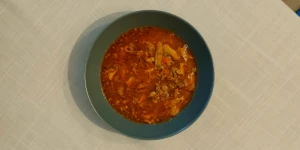
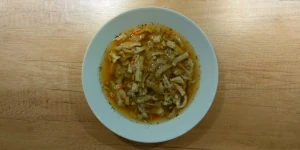
Polish Beef Tripe Soup (Flaczki Wołowe)
What is Polish Flaczki?
Flaczki, also called flaki, is a traditional Polish soup made from cleaned beef tripe cut into thin strips and cooked in a rich meat broth with root vegetables and warming spices. Marjoram, black pepper and ginger are especially characteristic, while recipes may also include allspice, bay leaf, nutmeg or mace, garlic and sometimes paprika.
The word flaki literally refers to the tripe itself. In modern Polish cooking, beef tripe is the standard choice. The finished soup should be aromatic and substantial, with tender strips of tripe and enough broth to remain clearly a soup rather than a thick stew.
A very old Polish dish
Flaki have a long history in Polish cooking. Polish official descriptions of traditional regional foods repeat the tradition that the dish was already eaten in Poland in the fourteenth century and was associated with King Władysław Jagiełło. That connection is part of established culinary tradition, although it should not be treated as if a surviving fourteenth-century recipe proved the exact form of the soup eaten today.
Much stronger written evidence survives from later centuries. In the seventeenth century, Stanisław Czerniecki used the term kruszki for edible offal including tripe in Compendium ferculorum. Historical Polish recipes show that tripe could be served in rich broths, fried, combined with dumplings or sausages and seasoned much more heavily than many modern versions.
A nineteenth-century hunting cookbook by Jan Szyttler also describes elaborate flaki with vegetables, wine, cinnamon, cloves and thickened sauce. These recipes show that tripe was not simply a food of poverty. It appeared in sophisticated cooking as well as in practical household food.
A recipe recorded by Ćwierczakiewiczowa
Lucyna Ćwierczakiewiczowa gives a detailed nineteenth-century method that remained in later editions of 365 obiadów za pięć złotych. Her recipe cooks thoroughly cleaned tripe for several hours before slicing it and finishing it in a separate meat broth with vegetables.
Osobno zaś wziąć parę funtów wołowego mięsa, ugotować na rosół, jak zwykle, nalać tym rosołem pokrajane flaki, oddzielnie nakrajać selerów, pietruszki, marchwi, wszystko cienko, podługowato, jak makaron i gotować, póki miękkie zupełnie nie będzie.Translation:
Separately, take a few pounds of beef and prepare a broth in the usual way. Pour this broth over the sliced tripe. Cut celery root, parsley root and carrots into thin, long strips, like noodles, and cook until completely tender.recipe no. 49, Flaki, p. 215.
Her full recipe also uses pepper, allspice and marjoram, with mace as an alternative, and suggests finishing the dish with ground ginger or grated Parmesan. Dumplings made with beef suet or buckwheat-filled beef intestine could also be served alongside it. The modern version below is simpler, but its beef broth, root vegetables, marjoram and ginger follow the same established flavor family.
Flaki were not only poor people's food
Tripe is economical because it uses a part of the animal that might otherwise be wasted, but describing flaki simply as a peasant dish is misleading. Historical recipes place tripe in noble and urban cooking as well as in ordinary households.
The Polish tradition also includes regional calf-tripe dishes. The Ministry of Agriculture records flaki cielęce z Radziwiłłowa, prepared with beef broth, root vegetables and spices including marjoram, paprika, nutmeg and ginger. The same source describes the local method of cooking calf tripe for four to five hours and changing the water during preparation.
Preparing the tripe
How much preparation the tripe needs depends entirely on what you buy. Raw, minimally cleaned tripe requires much more work than commercially cleaned, blanched or partially cooked tripe. Read the package or ask your butcher before automatically boiling it several times.
Older Polish methods often cooked tripe for several hours and sometimes changed the water repeatedly. This was useful for less processed stomachs with a strong aroma. It is not a universal requirement for modern pre-cleaned tripe. Excessive repeated boiling of already prepared tripe can remove flavor and make the texture unnecessarily soft.
For this recipe, use cleaned beef tripe. If it is sold raw or only lightly blanched, simmer it separately until almost tender before adding it to the broth. If it is already fully cooked, it only needs enough time in the finished soup to absorb the seasonings.
Do not judge tripe only by color
Raw and commercially processed tripe can vary considerably in color. Some cleaned products are pale or white because of commercial processing. Color alone does not tell you whether the product is good, safe or flavorful.
Instead, buy tripe from a reliable butcher or supplier and check how it has been cleaned and prepared. A fresh product should not have signs of spoilage. Follow the producer's preparation instructions when using packaged blanched or cooked tripe.
The beef broth
A strong beef broth gives Polish flaczki much of its body. Beef shank, brisket, soup bones or a mixture of meat and bones can all be used. Root vegetables - carrot, parsley root, celeriac and leek - provide the familiar Polish soup base.
You do not need to blanch the beef and discard the first pot of water. Start the meat in cold water, heat it slowly and skim the foam that rises to the surface. This keeps the flavor in the broth while still allowing you to make it reasonably clear.
If you already have a good homemade beef broth, use it. That shortens the preparation considerably and is completely compatible with the traditional method, which often treats the broth and tripe as separately prepared components that are combined later.
Traditional seasoning
Marjoram is one of the most recognizable seasonings in modern Polish flaczki. Ginger also has a long documented connection with the dish and appears in historical recipes. Pepper, allspice, bay leaf and nutmeg or mace complete the warm spice profile.
Three tablespoons of marjoram can be quite assertive, so this recipe uses two generous tablespoons and allows more to be added at the end. Rub the dried marjoram between your palms before adding it to release its aroma.
Nutmeg should be used with restraint. Its purpose is to add warmth in the background rather than make the soup taste primarily of nutmeg.
Texture and thickness
Flaczki varies in thickness. Some historical and modern versions are thickened with bread or a light roux, while others rely only on concentrated broth and the gelatin released from the meat.
This recipe is left unthickened by default. If you prefer a more substantial consistency, a small light roux can be added near the end. The result should still be a broth-based soup with clearly visible strips of tripe and vegetables.
Expert Tips for Cooking Tripe
- Check how the tripe was prepared: Raw tripe, blanched tripe and fully cooked tripe need very different cooking times. Follow the supplier's information instead of judging preparation only by color.
- Pre-cook only as much as necessary: Raw or strongly flavored tripe may benefit from initial boiling and a change of water. Modern pre-blanched tripe usually does not need three compulsory rounds of boiling.
- Use a strong beef broth: Flaczki depends heavily on its broth. If you already have good homemade beef stock, you can skip making a new batch and concentrate on cooking and seasoning the tripe.
Recipe information:
Beef Broth Base
Tripe and Seasoning
Step-by-Step Instructions
1. Start the beef broth
2. Add the vegetables
3. Simmer the broth
4. Check the type of tripe you are using
5. Cook raw or partially prepared tripe
6. Slice the tripe
7. Strain the broth
8. Combine the soup
9. Add the vegetables and marjoram
10. Season and serve
Frequently Asked Questions (FAQ):
Do you have to boil beef tripe several times before making Flaczki?
Not always. Older methods often cooked tripe in several changes of water, especially when using minimally processed stomachs. Modern cleaned or blanched tripe may need only one pre-cooking stage, while fully cooked commercial tripe can often go directly into the broth. Follow the supplier's preparation instructions.
How long should Flaczki be cooked?
Raw or only lightly blanched tripe may need 2 to 3 hours or more to become tender before it is finished in the seasoned broth. Fully cooked commercial tripe needs much less time. The final soup should simmer long enough for the tripe to become tender while retaining a slight chew.
Which spices give Polish Flaczki their traditional flavor?
Marjoram, black pepper and ginger are especially characteristic. Bay leaf, allspice and nutmeg or mace are also well established in Polish recipes, while garlic appears in many modern versions.
Are Flaczki really a medieval Polish dish?
Polish traditional-food sources associate flaki with the fourteenth century and King Władysław Jagiełło, but the exact medieval form cannot be reconstructed from a surviving recipe. Clear written evidence for tripe dishes appears in later Polish culinary sources, including seventeenth- and nineteenth-century cookbooks.
Can Flaczki be prepared ahead of time?
Yes. Flaczki reheats well and can be prepared a day ahead. Cool it promptly, refrigerate it and reheat gently until thoroughly hot before serving.
How can the soup be thickened?
A light flour-and-fat roux can be stirred into the soup near the end if you prefer a thicker version. Historical recipes also used bread as a thickener. Thickening is optional; many modern flaczki are served in an unthickened but concentrated beef broth.
Can I use ready-made beef broth?
Yes. Historical recipes often prepared the tripe and the meat broth separately before combining them, so using a good homemade beef broth is entirely appropriate and shortens the cooking time considerably.