
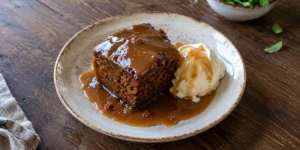
Sticky Toffee Pudding: Traditional British Date Sponge with Toffee Sauce
What Sticky Toffee Pudding is
Sticky toffee pudding is a soft British date sponge served with a warm toffee sauce made from butter, brown sugar and cream. The sponge is moist rather than dry, with the dates giving it a soft, almost fudgy texture. The hot sauce is poured over the pudding so that some of it sinks into the cake while the rest coats the outside.
It is often served with custard, vanilla ice cream or cream. It is a filling dessert, and the combination of warm sponge and rich sauce is very much part of its appeal.
A relatively modern British pudding
Despite its reputation as an old-fashioned British dessert, sticky toffee pudding does not have a clear centuries-old history. Several places have claimed an early connection with it. The Gait Inn in Millington, Yorkshire, has traditionally associated the pudding with its menu as far back as 1907, while the Udny Arms Hotel in Aberdeenshire has also claimed an origin in the 1960s.
The version that became widely known is strongly associated with Francis Coulson and Robert Lee at Sharrow Bay Country House Hotel in Cumbria. The pudding was served there in the 1970s and helped turn it into one of Britain's best-known modern puddings.
There is another story behind the Sharrow Bay recipe. Coulson reportedly said that he had received a recipe from Patricia Martin, a cook and hotelier in Lancashire. Food writer Simon Hopkinson later traced the story further and found that the recipe was said to have come to Martin from Canadian airmen who stayed at her establishment during the Second World War. The exact origin remains uncertain, so it is better to treat these accounts as part of the pudding's history rather than as a proven single origin.
The dates are the important part
Dates are what give sticky toffee pudding its characteristic texture. They are chopped and softened with boiling water and bicarbonate of soda before being mixed into the sponge batter. The softened fruit becomes part of the cake rather than remaining as hard pieces of dried fruit.
There is no need to make a complicated pastry batter. Soft butter and sugar are beaten together, eggs are added, followed by flour and the softened dates. The mixture is then baked until the sponge is cooked through but still moist.
The toffee sauce
The sauce is deliberately simple. Butter, brown sugar and cream are heated together until the sugar dissolves and the mixture becomes smooth and glossy. It does not need to be cooked like a hard caramel. The finished sauce should remain pourable while still being thick enough to coat the pudding.
For the traditional serving style, some of the hot sauce is poured over the freshly baked sponge so it can soak into the surface. The remaining sauce is served separately or poured over each portion at the table.
How it is traditionally served
Sticky toffee pudding is usually served warm. Vanilla custard, vanilla ice cream and cream are all common accompaniments. The cold creaminess of ice cream or custard works particularly well with the hot sponge and sweet sauce.
The pudding can be baked ahead and reheated, which also makes it practical for a family meal. It is one of those desserts that is often better suited to a generous spoonful of sauce than to a carefully decorated presentation.
Expert tips:
Do not drain the dates
The hot water used to soften the dates becomes part of the batter. Add the dates together with the soaking liquid.
Use properly softened butter
Soft butter mixes much more evenly with the sugar and helps produce a light sponge.
Do not overbake the sponge
Sticky toffee pudding should remain moist. Bake it until the centre is set and springy, but do not leave it in the oven until it becomes dry.
Keep the sauce pourable
The sauce only needs a short simmer. Cooking it for too long can make it unnecessarily thick or cause the butter and cream to separate.
Serve it hot
The pudding is at its best when the sponge and sauce are warm. Cold vanilla ice cream or custard makes a good contrast.
Let the sauce soak in
Pricking the hot sponge before adding some of the sauce allows the sauce to penetrate the surface and gives the pudding its characteristic sticky texture.
Storage:
How to store
Cool the pudding completely, cover it well and refrigerate. Store the sauce separately in a covered container in the refrigerator.
Shelf life
The baked pudding is best used within 3 days when refrigerated. Reheat individual portions before serving.
Freezing instructions
The baked sponge can be frozen without the sauce for up to 2 months. Wrap it tightly and thaw it before reheating. Make fresh sauce or reheat separately stored sauce when serving.
Recipe information:
Date Sponge
Toffee Sauce
Substitutions for ingredients:
- Black treacle - Dark molasses can be used, although British black treacle has a slightly different flavour. You can also leave it out for a milder sponge.
- Self-raising flour - Use plain flour with baking powder if necessary. For 225g plain flour, add about 2 teaspoons of baking powder.
- Dates - Dried prunes can be used in a variation of the pudding, but dates give the characteristic flavour and texture of sticky toffee pudding.
- Double cream - Heavy cream can be used for the toffee sauce.
Prepare the dates
1. Chop the dates
2. Soften the dates
Make the sponge
1. Cream the butter and sugar
2. Add the eggs
3. Add the flour
4. Add the dates
Bake the pudding
1. Prepare the baking dish
2. Bake
Make the toffee sauce
1. Melt the ingredients
2. Simmer the sauce
Finish and serve
1. Soak the sponge
2. Serve
Frequently Asked Questions (FAQ):
Where did sticky toffee pudding originate?
Its exact origin is disputed. Yorkshire, Cumbria and Aberdeenshire all have claims connected with the pudding. The modern dessert was particularly popularised by Francis Coulson and Robert Lee at Sharrow Bay in Cumbria during the 1970s.
Is sticky toffee pudding an old traditional British dessert?
It is a traditional British dessert today, but it is not known to be an ancient pudding. The familiar date sponge and toffee sauce combination appears to be a relatively modern creation, with the strongest documented association being with the twentieth century.
Why is sticky toffee pudding associated with Yorkshire?
The Gait Inn in Millington, East Riding of Yorkshire, has a long-standing claim that the pudding was served there as early as 1907. This is one of several competing origin stories rather than a universally established origin.
Why is sticky toffee pudding associated with Cumbria?
Sharrow Bay Country House Hotel on Ullswater became closely associated with the dessert after Francis Coulson served and developed his version there. The pudding was popularised nationally through this association during the 1970s.
What fruit is used in sticky toffee pudding?
Dates are the standard fruit. They are softened in boiling water, usually with bicarbonate of soda, before being added to the sponge.
Why are bicarbonate of soda and boiling water used with the dates?
The combination softens the dates and helps them break down into the sponge mixture. It also contributes to the light, moist texture of the finished pudding.
What sauce goes with sticky toffee pudding?
The traditional sauce is a simple toffee sauce made from butter, brown sugar and cream. Some recipes also use treacle or another dark sugar for a deeper flavour.
What is sticky toffee pudding served with?
Warm custard, vanilla ice cream and cream are all common accompaniments. The contrast between the warm pudding and a cold scoop of vanilla ice cream is especially popular.
Can sticky toffee pudding be made ahead?
Yes. The sponge can be baked ahead and reheated before serving. Warm the sauce separately and pour it over the hot pudding just before serving.
Is sticky toffee pudding the same as sticky date pudding?
They are closely related desserts. Sticky date pudding is the name commonly used for very similar desserts in Australia and New Zealand, while sticky toffee pudding is the traditional British name.