
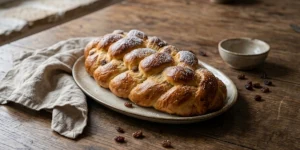
Vánočka - Bohemian Christmas sweet bread
Traditional Czech Vánočka
Vánočka is a traditional Czech Christmas sweet bread made from a rich yeast dough with butter, milk, eggs, raisins and almonds. It is shaped into several braided layers and baked into a tall, golden loaf. The crumb is soft and lightly sweet, with a buttery texture, small pieces of dried fruit and a delicate lemon aroma.
The bread is closely associated with Christmas in the Czech Republic. Its name comes from Vánoce, the Czech word for Christmas. Vánočka has a long history in Czech Christmas baking, although the bread has changed over time. Earlier versions were simpler and were not necessarily made as the tall, layered braid known today. Different regions and periods also used other names, including houska, štědrovice and pletenka.
A bread with a Christmas tradition
Vánočka was traditionally prepared for the Christmas season and served as a special sweet bread rather than as an everyday loaf. It could be eaten for breakfast or as part of the Christmas meal, usually sliced and served with butter, honey or jam. A cup of coffee, tea or another warm drink is a natural accompaniment.
The braided shape also has a symbolic meaning in Czech tradition. The layers have been associated with a baby wrapped in swaddling clothes, which fits the Christmas setting. Various customs and beliefs became connected with baking Vánočka as well. One old tradition held that the baker should jump while the dough was rising so that the bread would rise properly. Other customs involved placing a coin in the dough as a sign of good fortune.
The rich yeast dough
Unlike an ordinary loaf of bread, Vánočka is made from an enriched yeast dough. Butter, milk, eggs and sugar make the dough soft and tender, while yeast gives it the light texture needed for a tall braided loaf. Lemon zest adds a fresh note and balances the sweetness.
Raisins are one of the traditional additions. They can be soaked briefly in rum, water or tea before being added to the dough. This makes them softer and prevents them from becoming dry during baking. Almonds are also characteristic of Vánočka and are commonly mixed into the dough or scattered over the top before baking.
Why the dough needs time
There are two important rising stages. The first takes place before shaping and allows the yeast to increase the volume of the dough. The second takes place after the loaf has been braided. This gives the individual strands time to expand and join together before the bread goes into the oven.
The dough should be kept somewhere warm and away from strong drafts. The exact rising time depends on the temperature of the kitchen and the yeast, so the increase in volume is more useful than following a fixed time too closely.
The traditional braid
One of the best-known ways of shaping Vánočka uses nine strands of dough. Four strands form the bottom braid, three make the middle layer and two are twisted together for the top. The three sections are then stacked on top of each other to create the characteristic tall shape.
The strands should not be pulled too tightly during braiding. The dough continues to expand during the second rise and in the oven. Wooden skewers can be pushed vertically through the finished loaf before baking to help keep the layers in place as they rise.
Baking Vánočka
Before baking, the loaf is brushed with beaten egg and usually finished with sliced or slivered almonds. The egg gives the crust its shiny golden colour, but it can also cause the surface to brown before the centre has finished baking.
A tall Vánočka therefore needs to be watched during the last part of baking. If the top becomes too dark, it can be covered loosely with aluminium foil while the centre continues to cook. A wooden skewer inserted into the middle should come out without wet dough attached to it.
How Vánočka is served
Vánočka is best allowed to cool before slicing. The bread can be eaten on its own, but a slice spread with butter is one of the simplest ways to serve it. Honey, jam and other sweet spreads also work well.
The loaf is at its softest when fresh, but it keeps well for several days. Once it begins to dry, the slices can be toasted or used for French toast. This makes Vánočka useful beyond Christmas morning and avoids wasting leftover bread.
Regional variations
There is no single recipe that has been followed in every Czech household. The amount of sugar, butter, raisins and almonds can vary, and some recipes include additional flavourings or spices. Historical and regional versions have also been made under different names.
The familiar Czech Vánočka, however, is defined by its rich yeast dough, dried fruit, almonds and distinctive braided shape. It is this combination that has made the bread a lasting part of Czech Christmas baking.
Expert tips:
The skewer trick
Because this is a tall stacked bread, it likes to slide around in the oven as it expands. To stop your beautiful braid from falling over and baking lopsided, push two or three wooden skewers straight down through the layers of the loaf before baking. Leave them in while it bakes, then slide them out once the bread cools down.
Softening the butter
Do not melt the butter in the microwave until it is a hot puddle. If you do, the dough gets greasy and heavy. Just leave the butter on the kitchen counter for an hour before you start baking so it is soft enough to squish easily with your thumb.
Storage:
How to store
Wrap the cooled bread tightly in a clean cotton tea towel or put it inside a large plastic bread bag to keep the air out.
Shelf life
It stays soft and nice for about three days. By the fourth day, it gets a bit dry, which is the perfect excuse to slice it up, dip it in beaten egg and milk, and fry it up as French toast.
Freezing instructions
You can freeze this bread. I slice it first, then put parchment paper between the slices and freeze them in a zip-top bag. That way, you can just pull out one or two slices to toast in the morning without thawing the whole loaf.
Recipe information:
Ingredients
Substitutions for ingredients:
- Active dry yeast - You can use fresh cake yeast if you can get it. Use about 20 grams of fresh yeast crumbled into the warm milk instead of the dry packet.
- Lemon zest - If you do not have fresh lemons, a splash of orange juice or some orange zest works too, though lemon gives that classic traditional taste.
- Golden raisins - If your kids hate raisins, leave them out. You can use dried cranberries or even small chocolate chips, though chocolate is not traditional.
Preparation
1. Soak the raisins
2. Wake up the yeast
3. Mix the dough
4. The first rise
5. Divide and braid
6. Second rise and bake
Frequently Asked Questions (FAQ):
Can I make this dough in a bread machine?
You can definitely let your bread machine do the mixing and the first rise. Put the wet ingredients in first, then the dry ones, and run the dough cycle. Once the cycle finishes, take the dough out, braid it by hand on your table, and bake it in your regular oven. Do not try to bake it in the machine or you will lose the beautiful braid shape.
Why is my Vánočka dry inside?
It usually means it stayed in the oven too long. Every oven runs a little different, so start checking the bread with a wooden toothpick or skewer around the 35-minute mark. As soon as the toothpick comes out clean, take the bread out. Overbaking dried sweet doughs out very quickly.
Do I have to soak the raisins in rum?
No, you do not have to use alcohol. If you are baking for kids or just do not want rum, soak the raisins in warm black tea or even just warm water for fifteen minutes. The main goal is to plump them up so they do not dry out and burn on the outside of the loaf.